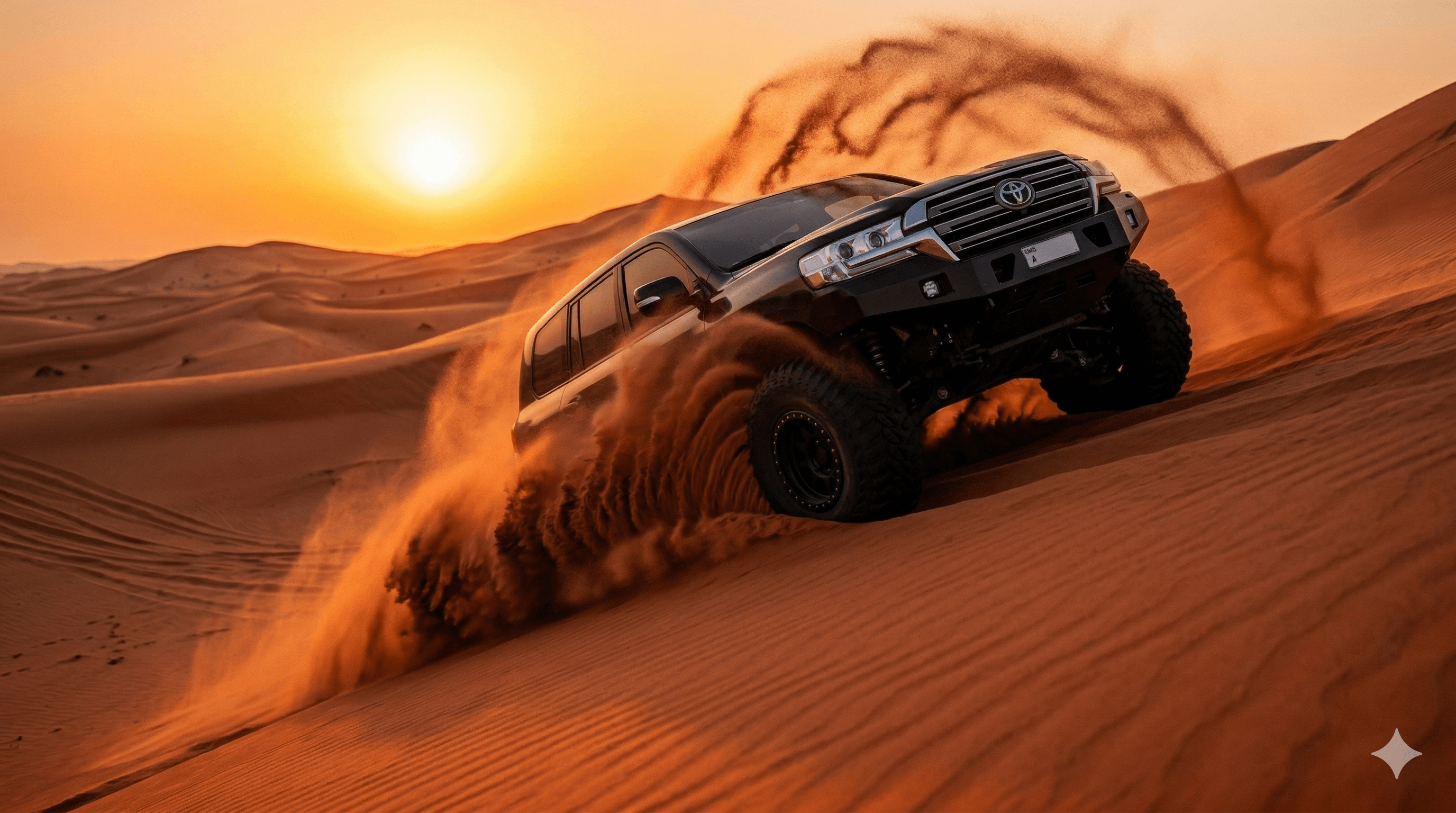
Modifying a 4x4 for the Dubai Desert — What's Worth Doing
A practical look at modifying a 4x4 for UAE desert driving: which upgrades actually matter, how to think about cost and order, and what to check before you hand over your keys.

Modifying a 4x4 for the Dubai Desert: What's Worth Doing
The first thing worth saying is that you need far less than the build threads suggest. Most weekend dune driving in the UAE is done in near-stock vehicles on the right tyres at the right pressure. Before you spend a dirham on a lift or a winch, drop your tyres to sand pressure and learn to read the dunes — that single free change does more than most bolt-on parts. With that out of the way, here's how I'd think about modifications if you do decide to build the car up.
Start with the things that actually fail in the heat
The desert here punishes two things above all: cooling and air. Sustained low-speed dune work in 45°C-plus heat loads up the transmission and engine in a way highway driving never does, and the fine sand gets into everything.
If I were spending first money, it would go on heat and intake before anything cosmetic. An auxiliary transmission cooler is cheap insurance on an automatic that spends summer weekends crawling up soft sand. A good air filtration setup — and a snorkel if you ever drive after rain or near standing water in the wadis — keeps the dust out of the engine. None of this changes how the car looks, but it's what keeps a desert car alive over years.
Tyres and pressure beat suspension, almost every time
Newcomers reach for a lift kit first. In practice, the move that transforms a vehicle in sand is tyres and the discipline to air them down. A decent set of all-terrains in a sensible size, run soft, will float over dunes that bog down a stiff highway tyre at road pressure. Get yourself a reliable gauge and a way to reinflate before you tarmac. If you need to kit out, the gear directory is a good place to start.
A suspension lift has its place once you're driving harder terrain or carrying weight, but it's an upgrade that matches a growing skillset rather than a starting point. A mild lift improves clearance and lets you fit larger tyres; bigger lifts get into geometry and compliance questions that are easy to get wrong. If you're at that stage, the suspension lift kit write-up goes deeper.
A sensible order to build in
For most people running family-friendly dune trips, a reasonable progression looks like this:
- Tyres and a way to air up and down
- Cooling and air protection for the engine and gearbox
- Recovery basics — proper rated recovery points, and recovery boards or a strap (and someone who knows how to use them)
- Underbody and sill protection if you start scraping
- A mild suspension lift only once you're regularly out-driving the stock setup
The competition and rock-crawling end — long-travel suspension, lockers, cages — is real, but it's a different sport from desert touring and a different budget. Don't build for it because a video looked cool; build for the driving you actually do.
Costs: get quotes, don't trust round numbers
Modification pricing in the UAE moves with parts availability and the exchange rate, and it varies a lot between vehicles. Japanese platforms like the Land Cruiser, Prado and Patrol have deep aftermarket support and parts on the shelf, so jobs are usually quicker and cheaper. European vehicles can mean waiting weeks on imported components. Rather than budget off a number you read online, get two or three itemised quotes from shops that know your specific vehicle, and ask what's parts and what's labour.
Stay legal and tell your insurer
Modifications have to stay within RTA rules — there are limits on how much you can lift a vehicle and how far you can go on tyre size, and a modified car can be flagged at inspection or registration if it's outside them. The rules change, so confirm the current limits with the RTA or a shop that does compliant builds rather than relying on a forum post.
Just as important: tell your insurer about anything you fit. An undeclared modification can void a claim, which is a far more expensive lesson than the upgrade itself. A reputable garage will know what passes inspection and can document the work — that paperwork is worth paying for.
Picking a shop
Match the shop to your vehicle. A garage that lives and breathes Land Cruisers will do a better Land Cruiser build than a generalist, and the parts will be on hand. Beyond that, the signals are ordinary ones: a portfolio of real builds, a clear itemised quote, a warranty they'll put in writing, and straight answers about timelines and what's included. Lowest price is rarely the thing that matters most on a car you're going to trust in the middle of nowhere.
You can browse and compare workshops in our garages directory, with profiles and reviews to narrow it down.
A few honest answers
Do I need a lift kit to drive in the dunes? No. Tyres at the right pressure and good technique matter far more. A lift is something you add later if your driving outgrows the stock setup.
What's the single best first upgrade? Cooling and air protection for the engine and gearbox, plus good tyres. They're not exciting, but they're what keeps a car reliable in UAE heat and sand.
Will modifying my car affect insurance? It can. Declare every modification to your insurer, and have the work done somewhere that can document it for compliance. Undeclared changes can void a claim.
Reviewed by experienced desert drivers. Our team personally visits operators and tests courses across the UAE.
Find a 4x4 Garage
Compare off-road garages for suspension, mods and fabrication in Dubai.
View Directory →