Taking a Beginner Off-Road Course in Dubai — What to Expect
An honest look at booking your first desert driving course in Dubai: what you actually learn, what to bring, and whether it's worth it before you hit the sand.
Taking a Beginner Off-Road Course in Dubai — What to Expect
The desert looks easy until you're sitting in it. Plenty of people drive a brand-new Patrol or Prado straight off the lot, head out to Al Qudra with a few mates, and bog the thing down to the chassis within twenty minutes. Sand driving has almost nothing in common with road driving, and the fastest way to skip the expensive, embarrassing learning curve is to spend a morning with someone who already knows what they're doing.
That's what a beginner course buys you. Not a certificate — confidence, and the muscle memory to read terrain before it catches you out. Here's an honest look at what these courses actually involve so you know whether one is worth your time.
What you'll actually learn
The single most useful thing you'll take away is airing down. Dropping your tyre pressure dramatically increases your footprint on soft sand, and a good instructor will make you feel the difference back-to-back — drive a dune at road pressure, get stuck, air down, do it again and float over it. Once you've felt that, you'll never head into the desert at 35 PSI again.
After that it's throttle and momentum. The instinct from road driving is to brake when things get hairy; in sand, lifting off and braking is often exactly what buries you. You learn to carry steady momentum, keep your inputs smooth, and read where the soft patches and slip faces are before you reach them. Steering technique on a dune face, when to commit to a climb and when to abort, how to turn around without rolling onto your side — that's the core of a first session.
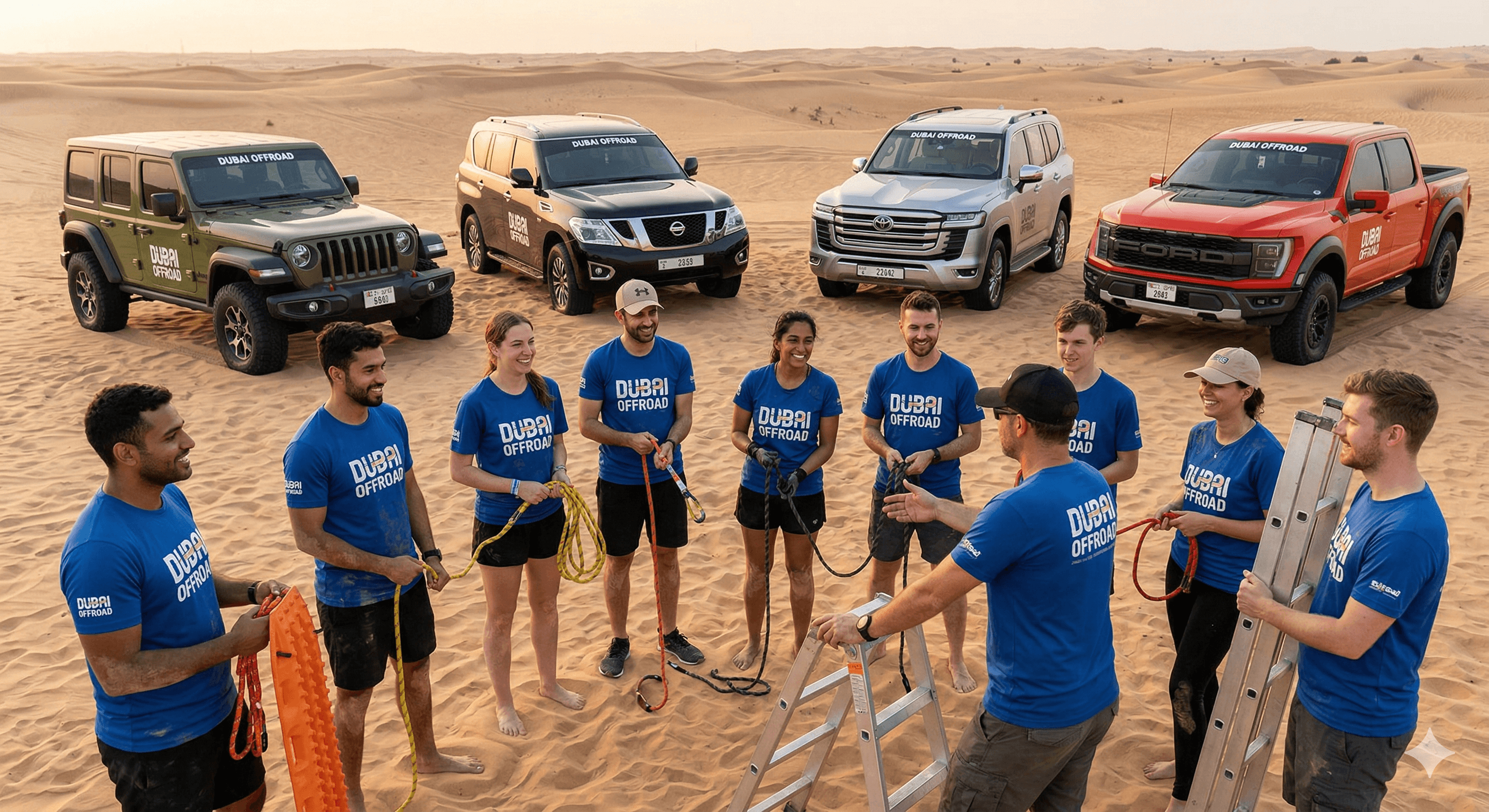
The other half is recovery. Knowing how to get yourself unstuck with a shovel and a set of recovery tracks, how to do a basic snatch recovery safely, and — just as important — what not to do, because recovery gear under load is genuinely dangerous. A decent course drills the safety side hard.
What to bring and what's provided
Most beginner courses run on the instructor's vehicle or your own, depending on the operator. If you're using your own 4x4, you'll want a proper one — a low-range-equipped Land Cruiser, Patrol, Prado or similar, not a soft crossover. Bring a tyre deflator and gauge if you have them, though the instructor will usually have their own.
For yourself: closed shoes, a hat, sunglasses, and far more water than you think you need. Go early — the good months for this are roughly November through March, and even then sessions tend to start at or before sunrise to dodge the heat. In summer it's dawn or nothing.
If you don't own gear yet, hold off buying until after the course. You'll get a much better sense of what's actually worth spending on once you've used recovery tracks and a deflator in anger.
Where courses run
Most beginner sessions happen on the gentler, accessible dunes within easy reach of the city — the Al Qudra and Al Marmoom stretch is a common choice because it has soft sand for learning without committing you to anything technical. As you progress, instructors move you onto bigger faces and steeper climbs. Spots like Fossil Rock add rocky, mixed terrain once you're past the basics, but that's not where a true beginner starts.
Is it worth it?
If you've never driven sand, yes. The cost of one session is a fraction of one serious recovery or one damaged underbody, and you'll enjoy the desert far more when you're not white-knuckling every dune. It also makes you a better convoy member — clubs and groups are much happier taking out someone who already understands airing down and basic recovery than someone learning it live with the group waiting.
When you're ready to book, browse current providers and what they offer on the courses directory, and compare it against your own goals — a half-day taster is plenty for most people to get going, while a longer course makes sense if you want recovery training in more depth.
A few common questions
Do I need my own 4x4? Depends on the operator. Some provide a vehicle, others expect you to bring a capable low-range 4x4. Check before you book, and don't turn up in a crossover.
Do I need off-road experience first? No — these courses are built for complete beginners. A valid UAE licence and the willingness to take instruction is all you need.
Will a course make me safe to go out alone? It makes you a lot safer, but for your first real trips you should still go out with others. Sand changes, vehicles get stuck, and a second car is your recovery plan. Build experience with a group before heading out solo.
Reviewed by experienced desert drivers. Our team personally visits operators and tests courses across the UAE.
Browse All Desert Driving Courses
Compare prices, locations and reviews for every course in Dubai & UAE.
View Directory →