Off-Road Driving Lessons in Dubai — What to Expect
A plain-English look at booking off-road driving lessons in Dubai: what a course actually teaches, how levels progress, and whether it's worth it before you head into the dunes alone.
Off-Road Driving Lessons in Dubai — What to Expect
Plenty of people buy a 4x4, watch a few YouTube videos and drive straight into the dunes. Some get away with it. A lot of them spend the afternoon buried to the axles, learning the expensive way. A proper lesson is the shortcut: a few hours with someone who has read this sand a thousand times will save you a season of bad habits, and probably a tow bill or two.
This is a rundown of what off-road lessons in Dubai actually involve, how they're usually structured, and how to decide whether you need one.
What a beginner course actually teaches
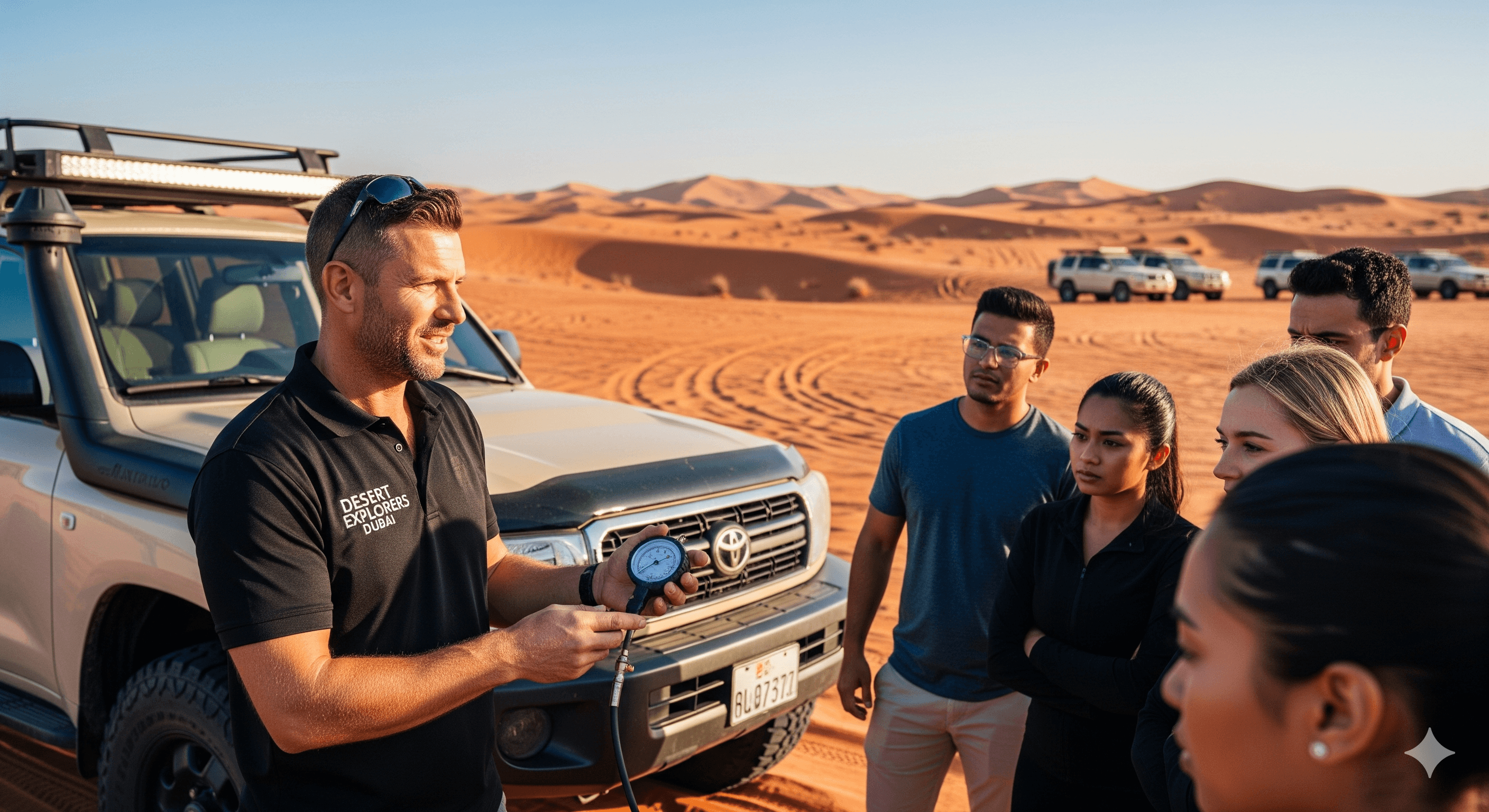
The first thing most courses do is drop your tyre pressures. Going from road pressure down into the low-to-mid teens (PSI) is the single biggest change between driving on tarmac and driving on sand — it flattens the tyre's footprint so you float instead of dig. You'll air down at the start and air back up before you leave, and you'll do it yourself so it sticks.
After that it's the fundamentals that genuinely matter:
- Throttle and momentum control — when to commit and when to back off
- Steering and line choice up and over a dune
- Reading the sand: spotting soft patches, slip faces and the steep "bowl" edges you don't want to crest blind
- Getting unstuck — recovery boards, basic self-recovery, and how not to make a stuck car worse
None of this is complicated, but it's much easier shown than read. A good instructor sits beside you, lets you make the small mistakes in a safe spot, and corrects them before they become reflexes.
How the levels usually run
Most providers structure things in rough tiers, even if they call them different names:
- Beginner / half-day: the basics above, on gentle, forgiving dunes. This is where everyone should start.
- Intermediate / full-day: steeper climbs, side-slopes, longer drives, more recovery practice.
- Private / one-to-one: flexible, useful if you want to focus on a specific weakness or you're prepping a particular vehicle.
Prices vary a fair bit by provider, vehicle and group size, so check current rates rather than trusting a number you read months ago. The courses directory lists active providers with up-to-date pricing and what's included. As a rule, the fee covers the vehicle, fuel and recovery gear; bringing your own 4x4 sometimes earns a discount, but expect a quick safety check first.
If you're going in completely cold and want to know what the experience feels like minute to minute, what actually happens in your first off-road lesson walks through it.
Your car or theirs
Many schools run their own vehicles — typically a Land Cruiser or Patrol set up for the job — which means you're not risking your own car while you flail around learning. The trade-off is that you don't learn your car. If you've already got a 4x4 you intend to drive in the desert, doing at least one lesson in it is worth a lot: you'll learn where its diff lock or traction control lives, how it behaves when it's light at the rear, and where its limits are.
If you bring your own, expect to need a working low-range 4WD system, decent ground clearance, and some basic recovery kit. Anything front-wheel-biased or low-slung is going to struggle, and a good instructor will tell you so before you waste a morning.
When and where lessons happen
Almost all of this happens in the cooler months, roughly October through April, with early-morning starts to beat the heat. In summer the only sane options are very early starts or late afternoon, and many providers wind down entirely. The training areas tend to be the accessible desert close to the city for beginners, with the steeper, more technical terrain saved for people who've already got the basics.
Book ahead in peak season — winter weekends fill up. Beyond that, the booking side is straightforward: licence details, any medical conditions worth flagging, and your honest experience level so they put you in the right group.
Is it actually worth it
Here's the honest version. You can learn off-roading from a patient friend who knows the desert, and many people do. What a lesson buys you is structure and someone whose only job that day is watching you and correcting you — not also minding their own car, the convoy and the route. The maths is simple too: a recovery callout or a sand-fouled mechanical bill dwarfs the cost of a half-day course. One lesson won't make you an expert; that comes from putting in the seasons. But it gets you over the early hump safely, and that's exactly the part where people do the most damage.
A few common questions
Do I need my own 4x4? No. Most schools provide a training vehicle and gear. Bringing your own is optional, and occasionally cheaper, but the vehicle will usually be checked first.
How long until I can drive the desert on my own? You'll have the basics after one or two structured courses. Real confidence on easy terrain tends to come after a handful of trips with people who know more than you — go with a club or experienced group before you head out solo.
What if I get the car stuck during the lesson? That's the point. Getting stuck in a controlled setting, then watching it get recovered properly, is some of the most useful learning you'll get. The instructor handles it safely.
Reviewed by experienced desert drivers. Our team personally visits operators and tests courses across the UAE.
Browse All Desert Driving Courses
Compare prices, locations and reviews for every course in Dubai & UAE.
View Directory →