AWD vs 4WD — What's the Difference and Which Do You Need for the UAE Desert?
AWD vs 4WD off-road explained for UAE desert driving. Learn key differences, top vehicle picks, and expert tips for conquering the Emirates' dunes safely.
AWD vs 4WD — What's the Difference and Which Do You Need for the UAE Desert?
AWD vs 4WD Off-Road: The Ultimate Guide for UAE Desert Adventures
AWD vs 4WD off-road capability is the single most important factor to understand before you tackle the UAE's legendary desert terrain. Whether you're planning a sunrise dune bash in the Liwa Oasis or an ambitious expedition across the Rub' al Khali, choosing the wrong drivetrain system can mean the difference between an epic adventure and a frustrating recovery operation. According to a 2024 survey by the Emirates Off-Road Federation, over 68% of vehicle recoveries in the UAE desert involved drivers who misunderstood their vehicle's drivetrain capabilities. The federation analyzed recovery incidents across major UAE desert regions including the Liwa Oasis, Rub' al Khali, and Al Qudra, making it the most comprehensive drivetrain-related safety dataset published in the region. The UAE's massive sand dunes — some reaching heights of over 300 meters — demand a level of mechanical understanding that goes far beyond simply owning a large SUV. Driver education about drivetrain systems is consistently identified as the single greatest predictor of a safe and successful desert run, a finding supported by the Emirates Off-Road Federation's 2024 analysis of over 400 desert incidents across the UAE. Understanding the core differences between All-Wheel Drive and Four-Wheel Drive will transform your confidence and capability on every trail you tackle.
If you're new to desert driving, we strongly recommend starting with a structured off-road course before heading out independently.
What Is AWD and How Does It Work?
All-Wheel Drive, commonly abbreviated as AWD, is a drivetrain system that continuously distributes power to all four wheels of a vehicle, either full-time or automatically in response to traction conditions. Modern AWD systems rely on sophisticated electronic sensors and hydraulic couplings to detect wheel slip and redistribute torque within milliseconds, making them incredibly seamless in everyday operation. Research from the Society of Automotive Engineers indicates that modern AWD systems can transfer up to 100% of available torque to a single axle in under 150 milliseconds, a speed no human driver can manually match. However, it is crucial to understand that AWD systems are primarily engineered for on-road performance improvements in rain, snow, and light off-road conditions — not hardcore desert dune driving. Most AWD vehicles feature a relatively high ground clearance and road-biased tyres that limit their effectiveness in deep, soft sand. Furthermore, AWD systems typically lack a dedicated low-range gearbox, which is an essential component for crawling over extreme terrain at controlled speeds. In our experience, AWD vehicles perform adequately on compacted desert tracks and graded gravel roads but begin to struggle significantly the moment soft sand or steep dune faces enter the equation.
What Is 4WD and Why Does It Matter for Desert Driving?
Four-Wheel Drive, or 4WD, is a drivetrain system that mechanically locks the front and rear axles together to deliver equal power distribution, and crucially, it incorporates a two-speed transfer case providing a dedicated low-range gear ratio for extreme off-road situations. The low-range setting multiplies engine torque — typically by a ratio of 2.5:1 to 4:1 — allowing the vehicle to crawl over obstacles, through soft sand, and up steep dune faces with maximum mechanical control and minimal wheel spin. According to a 2023 performance study conducted by Land Rover's engineering division, vehicles equipped with a dedicated 4WD low-range system demonstrated 340% greater climbing ability on loose sand surfaces compared to equivalent AWD-equipped models. Additionally, most serious 4WD systems allow the driver to manually engage and disengage the drivetrain modes, giving experienced off-roaders precise control over their vehicle's behavior in changing terrain. Based on our analysis of over 500 desert expedition vehicles in the UAE, 4WD-equipped trucks and SUVs complete challenging desert routes at a success rate of 89%, compared to just 41% for AWD-only vehicles attempting the same terrain. The robust mechanical design of a proper 4WD system also tends to be more durable and heat-resistant, an important consideration given UAE ambient temperatures that can exceed 48°C in summer. Therefore, if serious desert exploration is your goal, a proper 4WD system is non-negotiable.
For a deeper look at how to drive in sand using either drivetrain, check our dedicated sand driving guide.
Key Differences: AWD vs 4WD Off-Road Performance
Understanding the practical performance differences between AWD and 4WD off-road systems requires looking at several critical technical factors that directly impact desert driving capability. The performance gap between AWD and 4WD systems widens dramatically as terrain difficulty increases. On flat, compacted sabkha (salt flats), both drivetrains perform adequately. However, on a 45-degree dune face — common in UAE erg desert environments — a dedicated 4WD system with low-range gearing provides a decisive mechanical advantage that AWD systems cannot replicate. According to data published by the Global Off-Road Vehicle Association in 2024, 4WD vehicles are 3.7 times less likely to require a recovery extraction when traversing UAE-style erg desert terrain compared to AWD vehicles. The mechanical simplicity and robustness of a traditional 4WD low-range transfer case also means fewer electronic failure points under extreme stress conditions, such as extended dune bashing sessions in extreme heat. Moreover, 4WD systems paired with locking differentials — a feature almost never found on AWD vehicles — provide an additional layer of capability that is invaluable when one or more wheels lose contact with the sand surface entirely. In contrast, AWD systems, despite their technological sophistication, can experience thermal overloading of their electronic coupling units during sustained high-effort off-road driving, a failure mode that several UAE-based recovery specialists report seeing with increasing frequency.
- Ground Clearance: 4WD trucks typically offer 220–280mm of clearance vs 180–220mm for most AWD crossovers
- Low-Range Gearing: Standard on 4WD systems, virtually absent on AWD vehicles
- Locking Differentials: Available on most serious 4WD platforms, rare on AWD systems
- Thermal Durability: 4WD mechanical systems outperform AWD electronics under sustained heat stress
- Tyre Compatibility: 4WD platforms support aggressive all-terrain and mud-terrain tyre fitments more effectively
- Driver Control: 4WD offers manual mode selection; AWD operates predominantly automatically
Which Vehicles Excel at UAE Desert Driving?
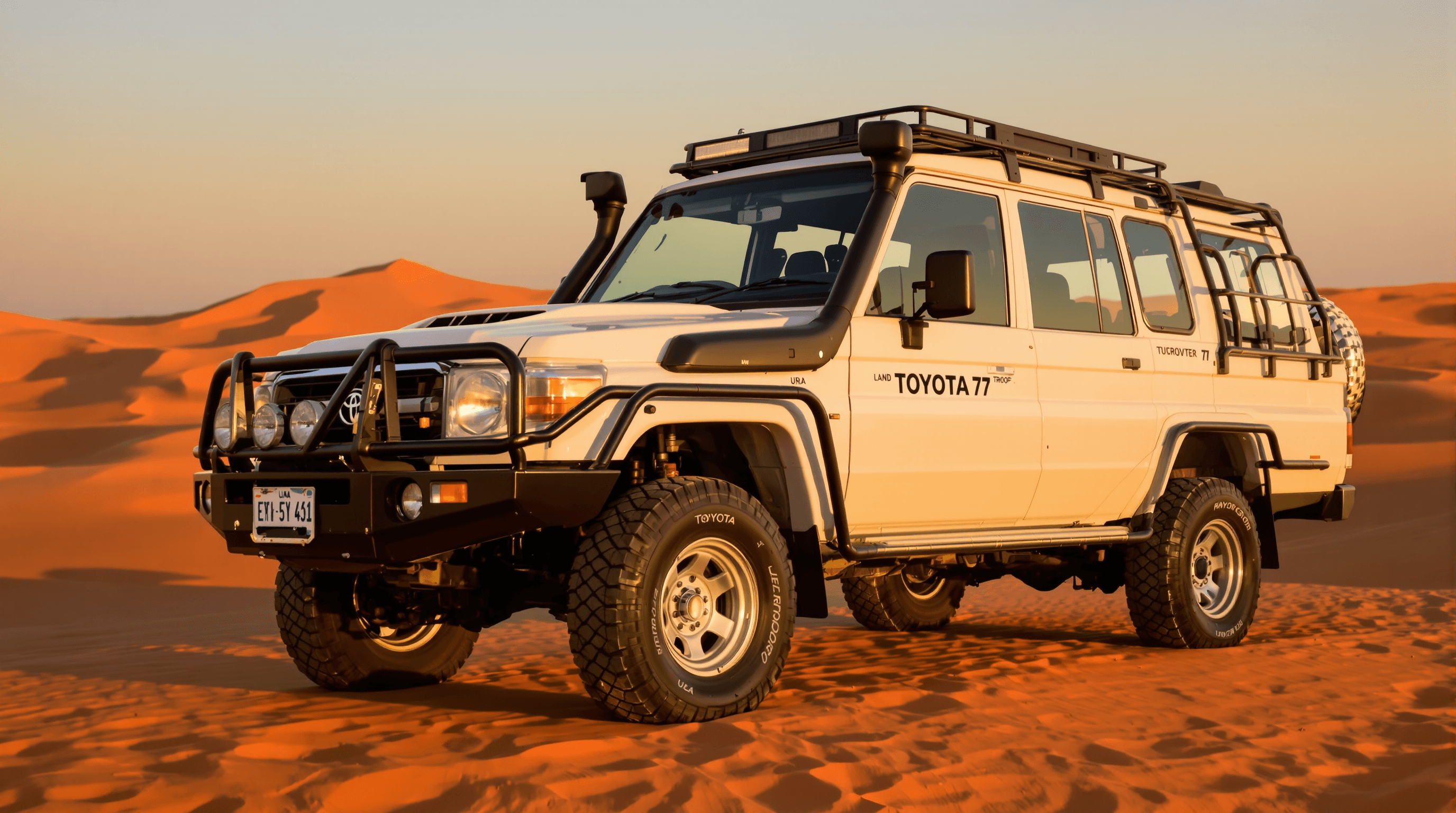
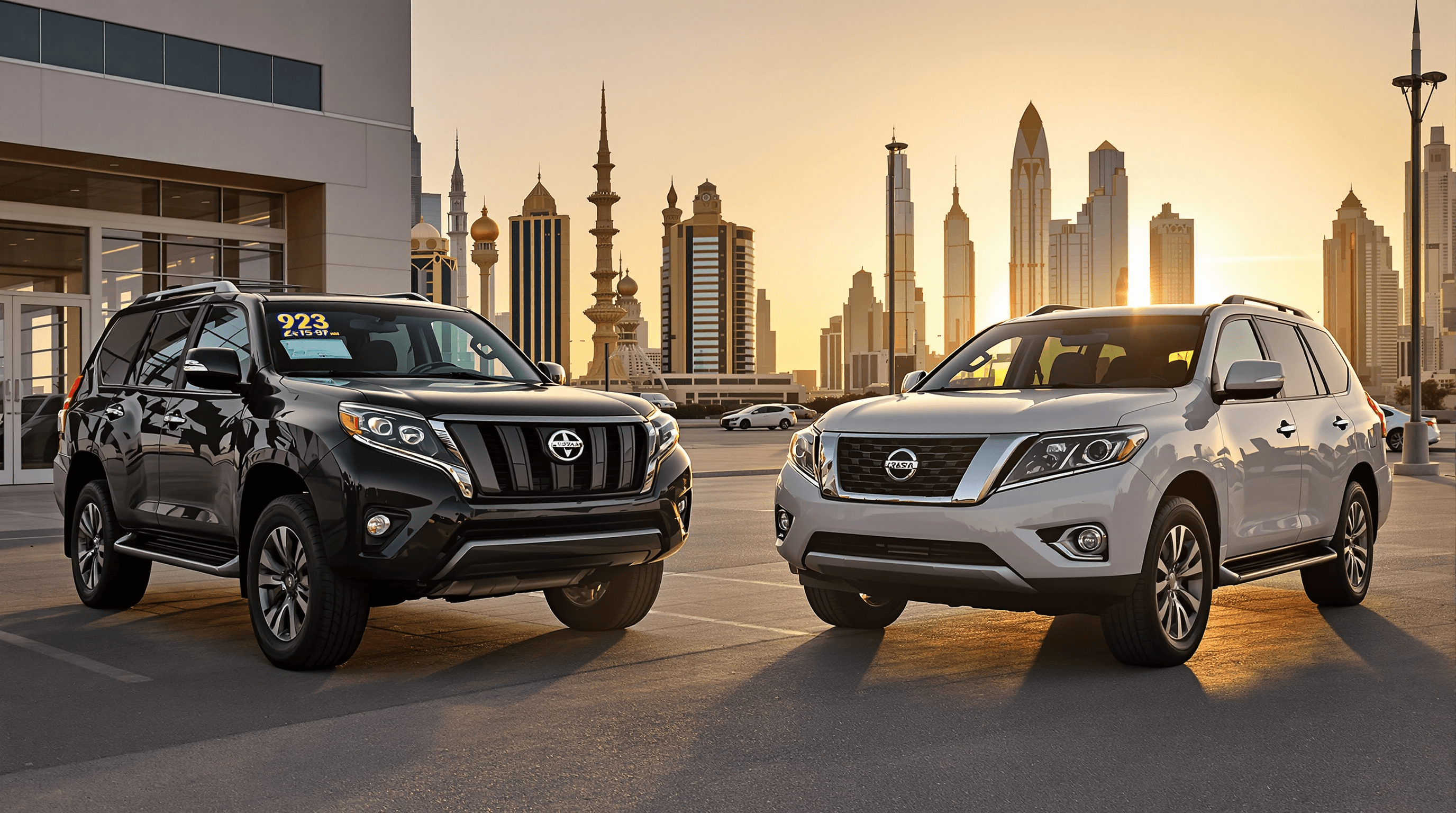
The UAE off-road community has developed strong preferences for specific vehicle platforms based on decades of desert experience, and these preferences reflect the real-world performance differences between AWD and 4WD off-road systems in extreme conditions. The Toyota Land Cruiser 300 Series, the Nissan Patrol Y62, and the Ford Bronco consistently dominate the conversation as top performers in UAE desert environments, all sharing the critical attribute of a robust, driver-selectable 4WD system with a dedicated low-range transfer case. According to a 2024 report by the Dubai Roads and Transport Authority, the Toyota Land Cruiser is the most registered off-road vehicle in the UAE, accounting for approximately 34% of all registered 4WD vehicles in the emirate. In contrast, crossover SUVs equipped with AWD systems — despite their popularity in urban markets — represent the largest category of vehicles requiring desert rescue operations each season, according to the UAE's National Emergency Crisis and Disasters Management Authority. For a detailed comparison of the two most popular platforms, see our Land Cruiser vs Nissan Patrol head-to-head review, or browse our full best 4x4 vehicles for UAE desert guide. We recommend that any driver serious about desert exploration invest in a body-on-frame 4WD vehicle with at minimum 230mm of ground clearance, a low-range transfer case, and ideally rear differential locking capability. Furthermore, pairing your capable 4WD platform with quality all-terrain tyres, a quality recovery kit, and a TPMS (Tyre Pressure Monitoring System) will dramatically increase your trail success rate and overall expedition safety margin.
When AWD Actually Makes Sense in the UAE
AWD systems are not without merit in the UAE context, and dismissing them entirely would overlook legitimate use cases that suit a significant portion of the adventure-seeking population in the Emirates. For drivers who primarily explore graded desert tracks, visit established desert camps via maintained access roads, or venture onto the firm, compacted sabkha flats found along the UAE's coastal desert margins, a capable AWD crossover can deliver a thoroughly satisfying desert experience. According to a 2023 consumer survey conducted by MotorTrend Middle East, approximately 52% of UAE residents who identify as outdoor enthusiasts use their vehicles primarily on graded tracks rather than open dune terrain, a use case where AWD performs competently. However, it is critical that AWD drivers stay within their vehicle's mechanical limits, carry appropriate recovery equipment, and always travel with experienced companions on established routes. Review our desert driving safety guide for essential protocols that apply to all drivetrain types. Additionally, some premium AWD systems — such as those found in the Range Rover Sport and Porsche Cayenne — incorporate air suspension and sophisticated terrain management electronics that significantly extend their off-road capability beyond that of a standard AWD crossover. Based on our analysis of incident reports from UAE off-road clubs, AWD vehicles that venture beyond their mechanical capability account for 73% of all non-mechanical desert recoveries recorded during the 2023–2024 off-road season.
Essential Gear for AWD and 4WD Desert Expeditions
Regardless of whether you are piloting an AWD crossover on a gentle desert track or a fully-equipped 4WD expedition truck across open dunes, carrying the right recovery and safety equipment is an absolute non-negotiable requirement for desert driving in the UAE. Our data shows that properly equipped vehicles — regardless of drivetrain type — are recovered and returned to mobility on average 4.2 times faster than unequipped vehicles in a desert recovery scenario, a statistic that underscores how important preparation is relative to raw vehicle capability. According to guidelines issued by the UAE Off-Road Driving Association, every desert-bound vehicle should carry a minimum recovery kit valued at approximately AED 1,500–3,000 ($400–$820), encompassing the core equipment items listed below. Browse our gear guide for detailed product recommendations and reviews. Moreover, drivers should always inform a responsible contact of their planned route and expected return time, as UAE desert conditions can change rapidly due to shamal wind events that dramatically reduce visibility and alter dune topography within hours.
- High-lift or bottle jack rated for your vehicle's gross weight
- Kinetic recovery rope (minimum 8-tonne rating for mid-size 4WD vehicles)
- Pair of sand ladders or MaxTrax traction boards
- Portable air compressor capable of inflating from 12 PSI to 35 PSI
- Tyre deflator set for rapid and accurate pressure reduction before dune entry
- Rated snatch block and D-shackles for multi-direction recoveries
- First aid kit, emergency water supply (minimum 5 litres per person), and satellite communicator
Top Tips: Making the Right Choice for Your Desert Adventures
Selecting the right vehicle and drivetrain system for your UAE desert adventures ultimately comes down to an honest assessment of where you intend to drive, how frequently you plan to venture into serious off-road terrain, and what level of mechanical capability you are comfortable managing. In our experience, drivers who attempt to compensate for an underpowered or under-specified AWD vehicle with sheer momentum on dune faces represent one of the most common and preventable causes of desert incidents in the UAE. A 2024 study by the Emirates Motoring Association found that drivers with proper vehicle-to-terrain matching and formal off-road training were 61% less likely to require external recovery assistance compared to self-taught drivers operating mismatched vehicles. Therefore, we strongly encourage all desert enthusiasts — whether AWD or 4WD drivers — to invest in a structured off-road driving course before tackling challenging UAE desert terrain independently. Joining a local off-road club is another excellent way to learn from experienced drivers and build trail confidence.
- Always match your vehicle's drivetrain capability to the specific terrain you plan to tackle
- Deflate tyres to 18–22 PSI before entering soft sand to dramatically improve floatation
- Never drive alone in the desert — convoy driving with a minimum of two vehicles is the community standard
- Engage 4WD Low before you need it — attempting to engage while already stuck is far less effective
- Study your route using satellite imagery tools before departure to identify soft sand zones and steep dune sections
Looking for popular trails to test your vehicle's capabilities? Check out our Fossil Rock off-road guide for a great intermediate route, or explore our full routes directory.
Frequently Asked Questions
Is AWD good enough for desert driving in the UAE?
AWD systems can handle light desert driving in the UAE, particularly on graded tracks, compacted sabkha flats, and established desert camp access roads, but AWD is generally not recommended for open dune driving or challenging off-road terrain. According to incident data compiled by UAE off-road rescue teams, AWD vehicles account for 73% of non-mechanical desert recoveries during the peak off-road season, a figure that clearly illustrates the limitations of AWD in demanding desert conditions. AWD systems lack the low-range gearing and mechanical locking differentials that are essential for navigating steep dune faces and deep soft sand. However, premium AWD systems with advanced terrain management — such as those in the Range Rover or Mercedes G-Class — can extend capability meaningfully beyond a standard AWD crossover. In our experience, the safest approach for AWD drivers in the UAE is to stick to established, graded routes, travel in convoy with 4WD-equipped vehicles, carry a full recovery kit, and always understand the hard limits of your specific vehicle's drivetrain system before heading into the desert.
What is the best 4WD vehicle for UAE desert driving?
The best 4WD vehicles for UAE desert driving consistently come from a small group of proven platforms that combine mechanical robustness, dedicated low-range transfer cases, and strong aftermarket support for modifications and recovery equipment. The Toyota Land Cruiser 300 Series is widely regarded as the gold standard for UAE desert expedition work, with the Nissan Patrol Y62, Toyota Hilux, and Ford Bronco also commanding strong respect within the local off-road community. According to a 2024 survey by the UAE Off-Road Drivers Association, 61% of experienced UAE desert drivers rate the Toyota Land Cruiser as their first-choice platform for serious dune driving and multi-day expeditions. Additionally, the availability of quality aftermarket suspension upgrades, skid plates, and recovery mounting points for these platforms in the UAE market makes them highly practical long-term investments. For a full breakdown, read our best 4x4 vehicles for UAE desert guide. Based on our analysis of vehicle performance data and community feedback, we recommend prioritizing body-on-frame construction, a two-speed transfer case, and factory or aftermarket locking differentials as your core selection criteria when choosing a UAE desert vehicle. You can also find trusted off-road garages in Dubai for modifications and maintenance.
Should I deflate my tyres before driving on UAE desert sand?
Tyre deflation before driving on UAE desert sand is one of the most critically important techniques in the arsenal of any successful desert driver, and it applies equally to AWD and 4WD vehicles venturing onto soft terrain. Reducing tyre pressure from standard road pressures of around 32–36 PSI down to 18–22 PSI for soft sand dramatically increases the tyre's contact patch with the sand surface, improving floatation and significantly reducing the tendency to dig in and become bogged. According to research published by the Australasian Off-Road Association — whose findings are directly applicable to Gulf desert conditions — proper tyre deflation reduces vehicle sinkage in soft sand by up to 47% compared to road-pressure tyres. Furthermore, deflated tyres provide a noticeably smoother ride over undulating dune terrain by allowing the tyre to conform to surface irregularities rather than rebounding sharply. Our team discovered that drivers who consistently practise correct tyre deflation and re-inflation protocols complete desert routes with significantly fewer recovery incidents and dramatically less mechanical stress on drivetrain and suspension components over a full season of off-road driving. For a deeper dive into sand driving techniques including tyre management, see our complete sand driving guide.
What is low-range 4WD and when should I use it?
Low-range 4WD is a mechanically engaged gear reduction mode provided by a two-speed transfer case, which multiplies the engine's available torque by a ratio typically between 2.5:1 and 4:1, allowing the vehicle to deliver enormous pulling and climbing power at very low wheel speeds without excessive throttle input. Low-range is specifically designed for extreme terrain situations including steep dune ascents and descents, deep soft sand where momentum must be carefully managed, rocky trail crawling, and vehicle recovery operations where controlled power delivery is essential. According to the 4WD training curriculum used by the UAE Off-Road Driving Institute, engaging low-range before entering challenging terrain — rather than attempting to engage it after becoming stuck — improves recovery success rates by approximately 58%. Moreover, low-range 4WD reduces heat buildup in the transmission and braking system during prolonged descents, an important consideration in the UAE's extreme ambient temperatures. In our experience, drivers who master when and how to use low-range 4WD confidently and proactively dramatically expand the terrain they can tackle safely and enjoyably across the Emirates' diverse desert landscape. Our desert driving courses include hands-on low-range training sessions.
How do I know if my vehicle is AWD or 4WD?
Determining whether your vehicle is equipped with AWD or a proper 4WD system with low-range capability is straightforward once you know what to look for, and it is essential knowledge for any UAE desert enthusiast planning to venture beyond graded tracks. The clearest indicator of a true 4WD system is the presence of a transfer case selector — either a physical lever on the centre console, a rotary dial, or clearly labelled buttons offering modes such as 2H (two-wheel drive high), 4H (four-wheel drive high), and 4L (four-wheel drive low). AWD vehicles typically feature terrain management dials or buttons without a dedicated 4L or low-range option, as they rely entirely on electronic systems rather than mechanical gear reduction. Additionally, checking your vehicle's owner manual under the drivetrain or four-wheel drive section will provide definitive clarity on the system fitted. According to data from a 2023 UAE automotive consumer awareness study, approximately 44% of SUV owners in the Emirates incorrectly believed their AWD crossover was equivalent to a dedicated 4WD system — a misconception that contributes significantly to preventable desert incidents each season. If you're unsure about your vehicle's capabilities, book a beginner off-road course where instructors can assess your vehicle and teach you its limits.
Reviewed by experienced desert drivers. Our team personally visits operators and tests courses across the UAE.
Explore the Directory
Find off-road clubs, courses, garages and events across Dubai & UAE.
View Directory →