What 4x4 Should You Buy for the UAE Desert?
An honest look at the 4x4s that actually do the job in UAE sand, what each one is good at, and the things that matter more than the badge on the bonnet.
What 4x4 Should You Buy for the UAE Desert?
If you spend a weekend in the dunes around Dubai you'll see the same handful of vehicles over and over: Patrols, Land Cruisers, the occasional Wrangler, and lately a lot more Raptors. There's a reason for that. The desert is unforgiving on the wrong vehicle, and after enough recovery jobs you learn which ones earn their place and which ones spend the afternoon buried.
There's no single "best" 4x4. It depends on what you actually want to do — fast dune runs, slow technical stuff, family trips, or just getting out with a club on a Friday. Here's how the popular choices stack up, with the honest trade-offs.
Nissan Patrol
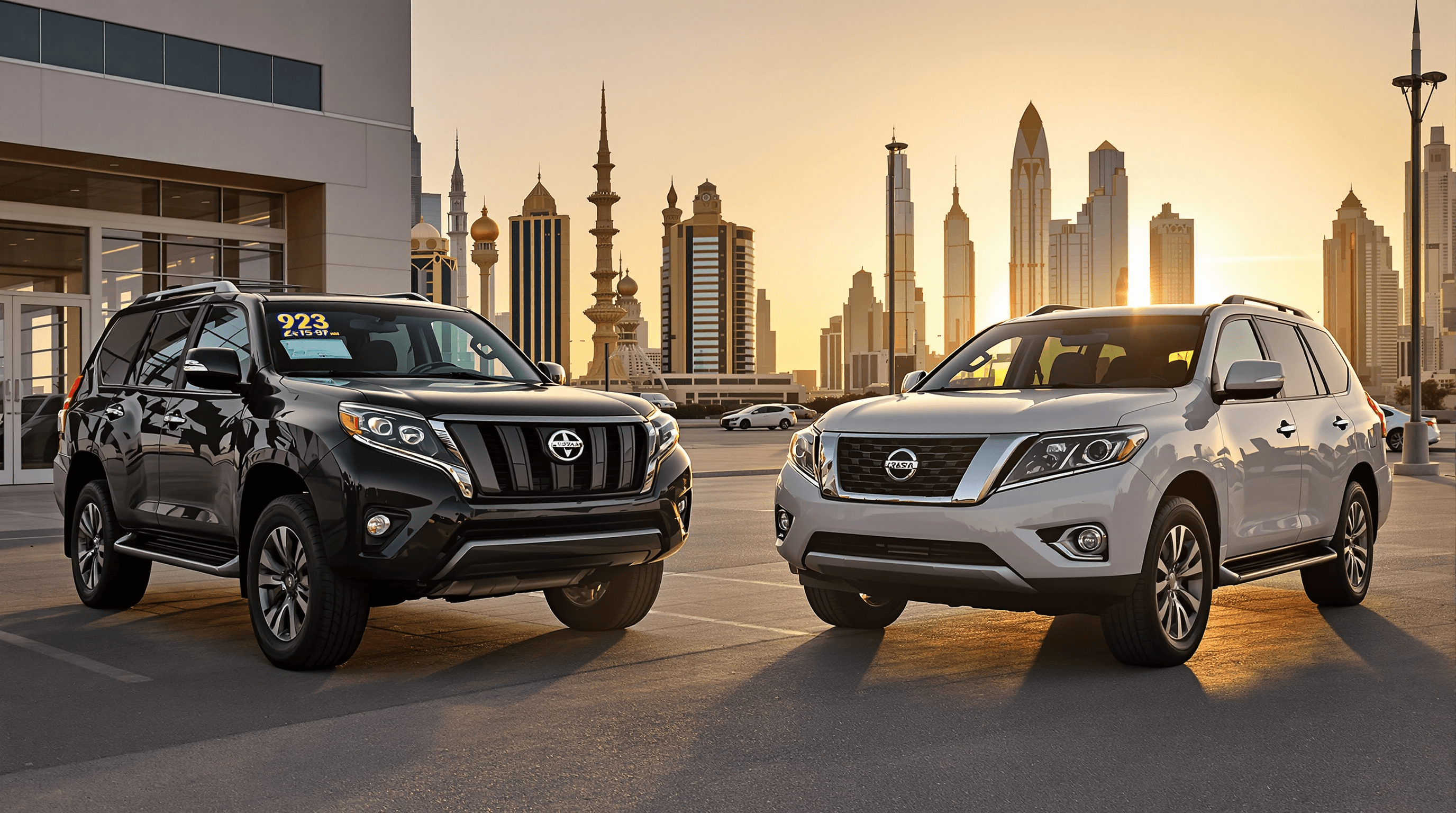
The Patrol is the default desert vehicle in the UAE, and for good reason. The Y62 with its big naturally-aspirated V8 has a smooth, predictable power delivery that's genuinely easy to drive in soft sand — you feed in the throttle and it just goes. It's roomy enough for a family plus gear, the parts and knowledge are everywhere, and almost any workshop has seen a hundred of them.
The downside is weight. It's a heavy car, and when it does get stuck, it gets properly stuck. But as a do-everything desert SUV that you can also live with day to day, it's hard to argue against. If you want to find people running Patrols and learn from them, the clubs directory is the easiest way in.
Toyota Land Cruiser
The Land Cruiser's reputation for reliability isn't marketing — it's the reason you see twenty-year-old ones still working in the dunes. The newer 300 Series brought a turbo V6 and more electronics, including a sand mode that tweaks the traction and throttle for you, but the core appeal is the same as it's always been: it keeps going, and the service network behind it is enormous.
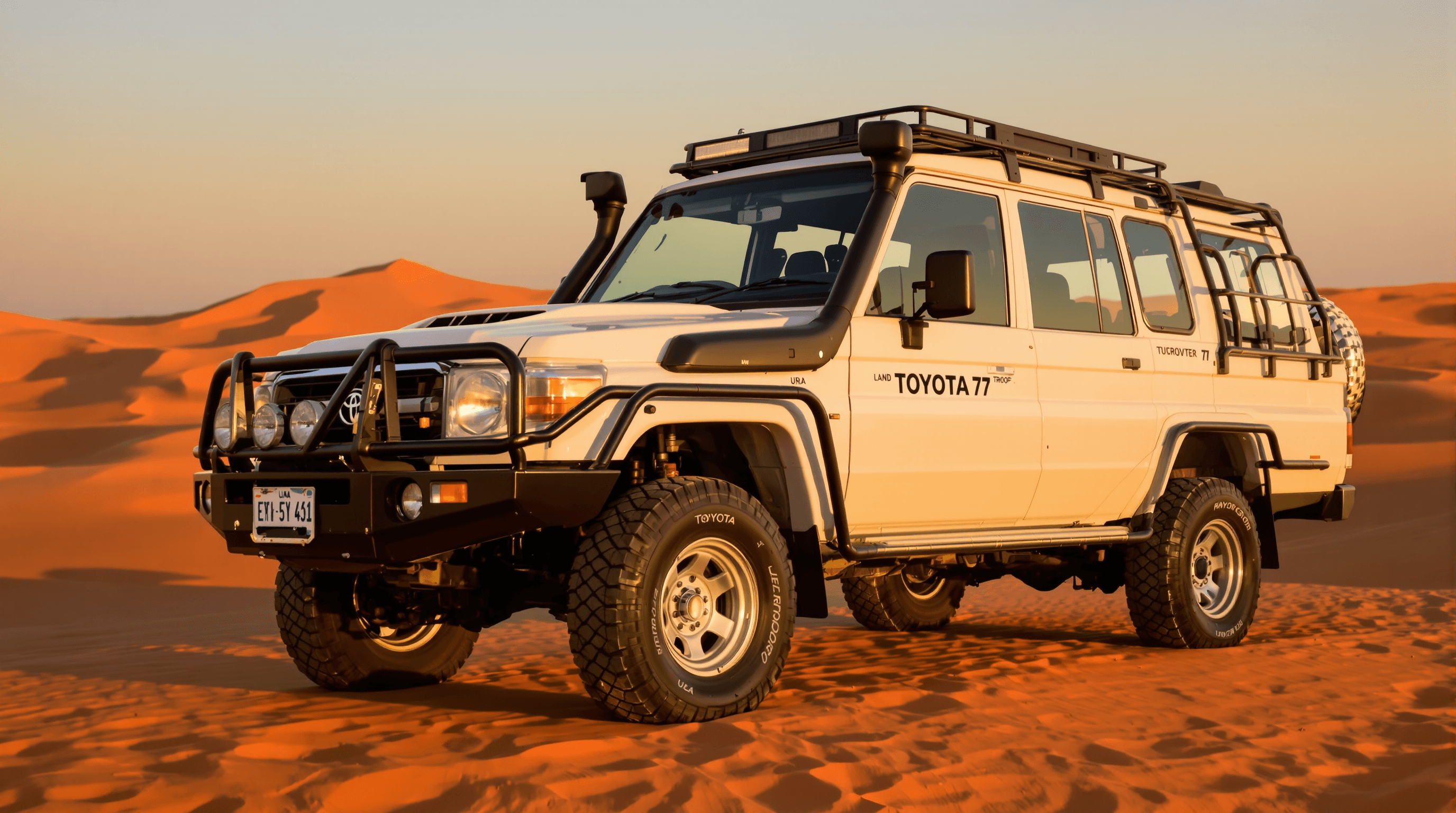
It's not cheap, new or used, and the latest tech-heavy versions divide people. But if your priority is something that won't strand you a long way from a tarmac road, it's the safe answer. Worth a look at the older 79-Series too if you want something simpler and more utilitarian — we covered that separately in our Land Cruiser 79 Troopy write-up.
Ford F-150 Raptor
The Raptor is a different animal. It's built for going fast over rough ground, and its long-travel suspension soaks up corrugations and whoops in a way no standard SUV can match. On open desert it's genuinely brilliant, and the cabin tech makes it easy to live with.
The catches: it's huge, it's wide, and that width is a real handful in tight technical terrain or between dunes where a narrower car threads through easily. High-speed desert driving is also the fastest way to hurt yourself or a passenger if you don't know what you're doing. It rewards skill and punishes overconfidence.
Jeep Wrangler Rubicon
The Wrangler isn't a fast-dune car, but it's the one that gets through technical, rocky, awkward terrain that stops bigger SUVs. The Rubicon's front and rear lockers, low-range gearing and the disconnecting sway bar give it serious articulation, and its lighter weight means it floats over sand that bogs down heavier vehicles.
It's also the most "fun" of the bunch for a lot of people — doors and roof off, short and nimble. The trade-off is space and ride comfort. It's not the car for a family of five on a long drive, and on the open road it's noisy. But for wadis, rock and tight stuff, it punches well above its size.
What matters more than the badge
A few things are worth saying flat out, because they matter more than which of the above you pick:
- Reliability beats outright performance. The best-performing vehicle is worthless if it breaks down somewhere with no phone signal. Buy something you can get parts and help for.
- Tyres and pressures do most of the work. Aggressive mud tyres are poor in sand; you want something suited to it, and you need to air down properly. This changes how a car behaves more than almost any modification.
- Recovery gear and someone to use it. Don't go alone, carry the basics (tracks, a strap, a way to re-inflate), and know how to use them.
- Skill before mods. A stock vehicle and a driver who's had proper instruction will outdo a heavily-modified one with a nervous owner behind the wheel. A desert driving course is money far better spent than a lift kit when you're starting out.
New or used?
A new car gives you warranty cover and a clean history, which is worth a lot given how hard the desert is on a vehicle. But the most popular desert 4x4s — Patrols and Land Cruisers especially — hold up well used if you buy carefully and the previous owner looked after it. Whatever you buy, look at the underbody, check for evidence of harsh use, and budget for the maintenance that desert running demands: more frequent oil and air-filter attention, and a proper wash-down after every trip to keep sand and salt out of everything.
A few common questions
Which is the most reliable for the desert? The Land Cruiser has the strongest track record and the deepest service network, which is why so many people default to it. The Patrol isn't far behind and is the value pick.
Do I need modifications for occasional desert driving? Not really. Suitable tyres aired down correctly, basic recovery gear, and not going alone will get you through maintained routes and group trips. Add things later as you learn what you actually need.
What handles fast open-desert driving best? The Raptor is purpose-built for it. Just respect that high-speed sand driving is where people get hurt — get the experience before the speed.
Reviewed by experienced desert drivers. Our team personally visits operators and tests courses across the UAE.
Explore the Directory
Find off-road clubs, courses, garages and events across Dubai & UAE.
View Directory →