How a Desert Convoy Actually Works
What running in a group out in the UAE desert really involves — how a convoy is ordered, how people talk to each other, and what happens when someone gets stuck.

How a Desert Convoy Actually Works
The first time you go out with a proper group, the "rules" can feel like a lot of fuss for a day of driving in the sand. Then you watch a car bury itself to the chassis in a soft bowl, twenty minutes from anything, and the whole point clicks: out here you don't recover yourself. The group does. Almost everything about how a convoy is run comes back to that one fact.
None of this is officially regulated. There's no rulebook the RTA hands you. What follows is just how experienced UAE groups tend to do things, and why.
The order of the cars matters
A convoy runs with a lead and a sweep, and that's the part people get wrong most often.
The lead is the most experienced driver in the group — someone who knows the route, can read the sand, and sets the pace. The key thing is that the pace is set for the weakest car, not the strongest. If the lead is hammering along having a great time while three cars at the back are panicking and getting stuck, that's a bad lead, full stop.
The sweep is the other experienced driver, and they sit at the very back so no one is ever behind them. If a car drops out, the sweep is right there. Newer drivers go in the middle, sandwiched between the two people who can actually get them out of trouble.
Keep the group small enough to manage. Once you're past eight or so cars it gets hard to keep everyone in sight, recoveries take forever, and the day turns into a lot of standing around. If you want to learn how groups are actually run rather than just join one, the courses listing has instructors who teach it.
You need a way to talk to each other
Phone signal disappears once you're properly off the blacktop, so the group needs radios. Most UAE off-road groups run handheld UHF sets, and whoever organises the drive will tell you the channel beforehand — confirm yours works before you leave the tarmac, not when you're already in the dunes.
You don't need to memorise a script. A few sensible habits cover most of it:
- The lead calls out what's coming — a drop, a soft section, a sharp turn — so the cars behind aren't surprised.
- Anyone can call a stop if they're in trouble. Nobody should ever be too proud to say they're stuck.
- The sweep checks in with anyone who's struggling and tells the lead when to slow down or hold.
The whole reason for the radio is so that no one quietly falls behind and gets left. If a car can't talk to the group, it shouldn't be on a remote drive.
Spacing and pace
The mistake beginners make is bunching up, then panicking when the car ahead suddenly slows in soft sand, then either rear-ending them or veering off and digging in. Leave a real gap on open desert so you can see what the car in front is doing and react. When visibility drops in blowing sand, you close that gap up so you can keep eyes on the car ahead — but you also slow right down.
If someone drops well off the back, the group stops and waits. The worst thing that happens otherwise is the person at the back flooring it to catch up, hitting a dune wrong, and rolling or burying the car. Catching up fast is how people get hurt. Better to lose five minutes than dig a car out — or worse.
When someone gets stuck (and someone always does)
Getting stuck isn't a failure, it's just part of the day. What matters is how the group handles it.
When a car bogs down, the rest stop in safe spots — not at the bottom of the same soft bowl — and put hazards on. The experienced drivers assess it: sometimes it's a thirty-second tug, sometimes it's airing down further and digging. Everyone who isn't actively recovering keeps well clear. A snatch strap or winch under load can kill someone if it lets go, and the broken-strap stories in this community are not hypothetical.
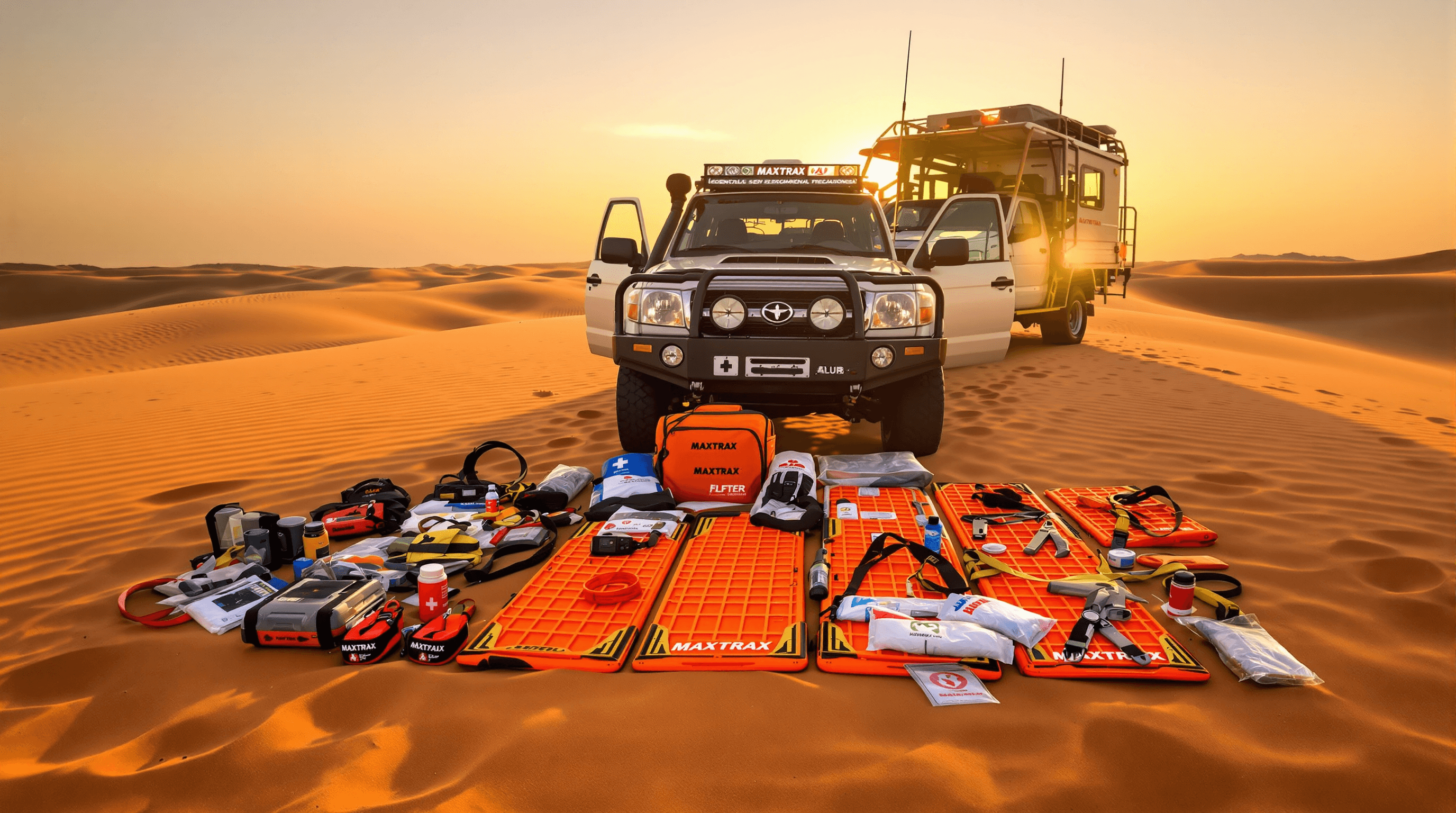
Carry your own basics: traction boards, a shovel, a decent tow point, and plenty of water. Don't assume the group carries enough for you. There's a fuller rundown of what to actually buy in the recovery gear guide.
If something turns into a real emergency, 999 reaches police and ambulance across the UAE. Drop a pin and share your live location before you lose signal — sorting out exactly where you are is half the battle when help is coming.
Heat, weather and water
This is the part that quietly catches people out. The sand will forgive a lot more than the temperature will.
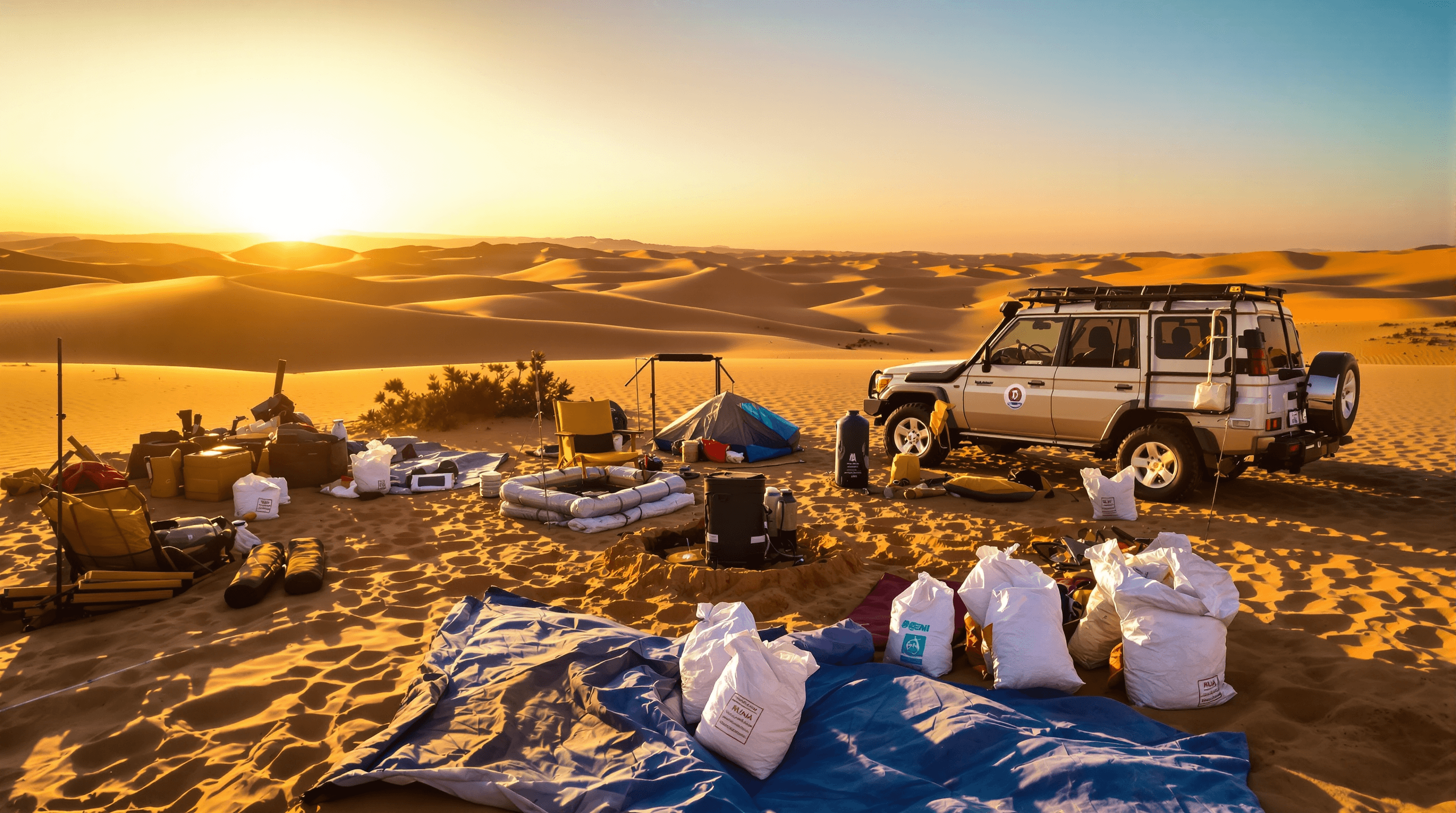
In the hot months the sensible groups start before sunrise and are packed up and heading home by mid-morning, before the heat becomes genuinely dangerous. Carry far more water than you think you need — for everyone in the car, plus extra. The desert also gets surprisingly cold after dark, so a night drive or an unplanned overnight is a different kind of problem; bring a layer.
If a sandstorm rolls in, the day is essentially over. Slow right down, close up so you can see each other, hazards on, and get out. There's no dune worth driving when you can't see the next one.
Before you roll out
A good organiser runs a quick briefing at the meeting point, and it's worth taking seriously because most desert trouble comes from poor preparation, not bad luck. It covers the rough plan and route, the radio channel, who the lead and sweep are, and a look over the cars — tyre pressures dropped for sand, enough fuel, recovery gear actually in the car. Anyone who rocks up on road pressures with a full tank and no kit gets a polite reminder, because their problem becomes everyone's problem out there.
If you've never aired down or driven soft sand before, do a session with an experienced driver or an instructor first. Turning up to a remote group drive as your very first time in the dunes isn't fair on you or the people who'll spend the day pulling you out.
A few common questions
Do I need experience to join a group drive? For an easy, beginner-friendly run, often just enthusiasm and a suitable vehicle. For anything remote or technical, groups will expect you to have driven sand before, or to have done a course. Be honest about your level when you sign up — a good organiser will point you to the right drive.
Do I legally need permits for this? For a private group on open desert, generally no — just valid licences, registration and insurance. Some areas are protected or restricted and do need permission, so check on the specific spot before you commit to it rather than assuming.
What's the single most important rule? Never recover yourself, and never let your ego push you into something the group hasn't cleared. The whole reason you're driving together is so nobody's on their own when it goes wrong.
Reviewed by experienced desert drivers. Our team personally visits operators and tests courses across the UAE.
Explore the Directory
Find off-road clubs, courses, garages and events across Dubai & UAE.
View Directory →