Jeep Wrangler Rubicon in the UAE: An Honest Desert Review
What the Rubicon is actually like in UAE sand — what its factory hardware buys you, where the short wheelbase fights you, and what to check before you buy.
Jeep Wrangler Rubicon in the UAE: An Honest Desert Review
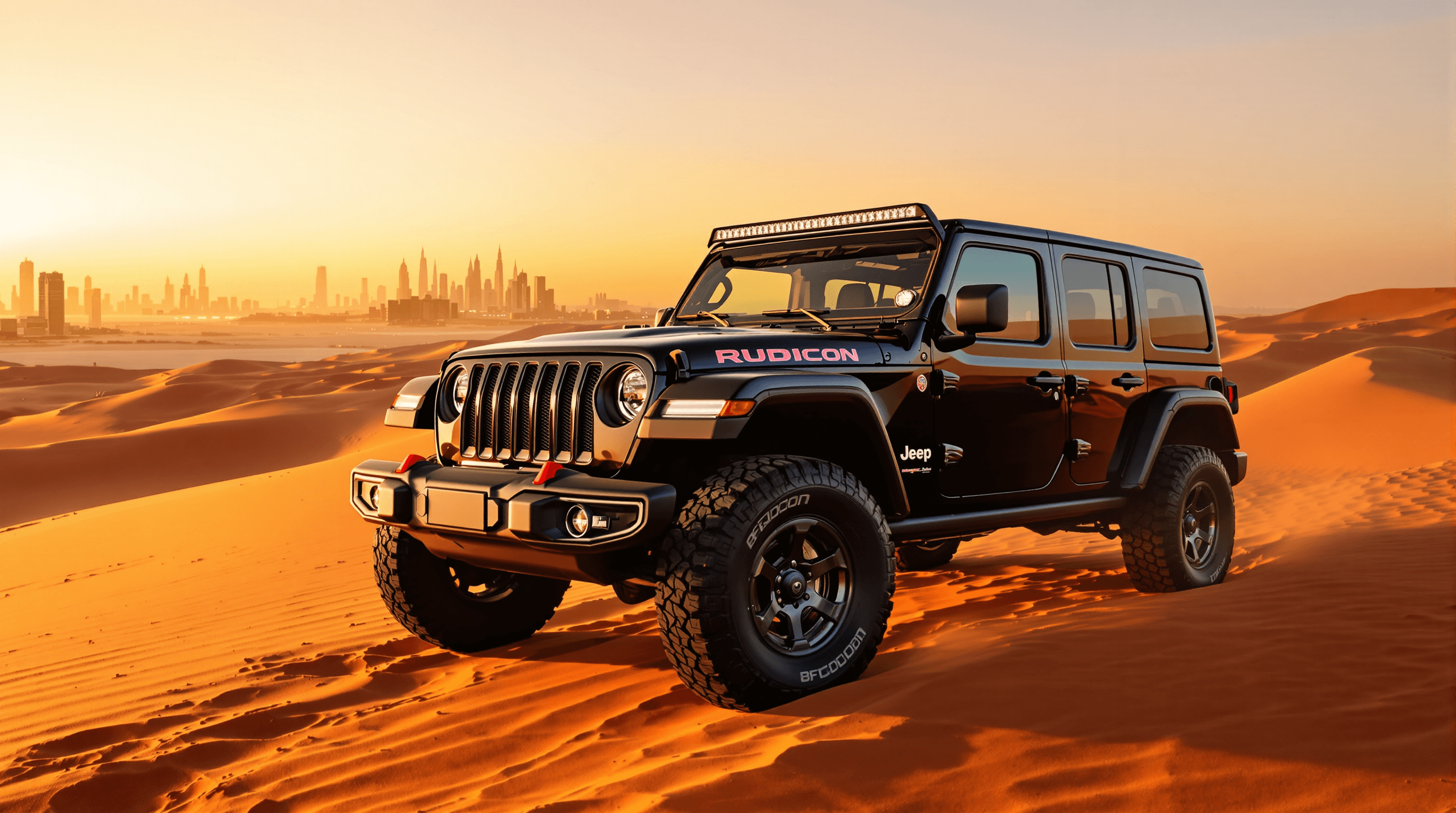
The Rubicon is the version of the Wrangler that off-roaders actually argue about. It's the trim Jeep builds for the people who use the thing, and on paper it's the most capable 4x4 you can drive off a UAE dealer floor without touching a single aftermarket part. The honest answer to "is it good in the desert?" is: yes, but it asks more of you than the Patrols and Land Cruisers everyone else is driving out there.
If you've only ever seen a Rubicon in a car park, the easy assumption is that it's a lifestyle SUV with stickers. It isn't. The factory hardware is the real thing — the catch is that a lot of that hardware is tuned for rock crawling, and UAE desert is mostly soft sand. That mismatch is the whole story of owning one here.
What you get from the factory
This is where the Rubicon earns its name, and it's genuinely the strongest case for buying one. Out of the box it comes with kit that owners of lesser 4x4s spend a fortune adding later:
- Front and rear locking differentials, switched electronically from the dash. Flick them on and both wheels on an axle turn together — no waiting for traction control to think about it.
- An electronic sway-bar disconnect, so the front end can flex over uneven ground, then lock back up for normal road manners.
- Heavier-duty Dana 44 axles front and rear, stronger than the lighter axles under the cheaper Wrangler trims and better able to cope with desert loads and any future build.
- A Rock-Trac transfer case with a deep low range, which gives you fine throttle control crawling over rock and through technical wadi sections.
The point of all this is that the capability is built in and reliable, rather than bolted on by whoever the previous owner used. For a buyer who wants to drive hard without immediately commissioning a full build, that's worth real money.
In the actual sand
Here's the part the brochures skip. The Rubicon's gear is aimed at rock and technical terrain, and most of what we drive around Dubai and Abu Dhabi is dunes. The short wheelbase is the biggest thing you'll notice: it makes the Jeep brilliant in tight wadis and easy to place precisely, but on tall, steep dune faces a short truck wants to pitch around, and it's less forgiving than a long-wheelbase Patrol or Land Cruiser when you misjudge a climb. You manage that with momentum and reading the sand, which is exactly why a desert driving course is money well spent before you take it out properly.
The petrol V6 is smooth and willing, but it doesn't have the lazy low-down torque of a turbodiesel, so you carry more revs and more speed to keep moving in soft sand. Get the technique right and it's perfectly capable; fight it and you'll dig in. As with any 4x4 here, the single biggest performance upgrade costs nothing — dropping your tyre pressures right down before you hit the sand. The stock all-terrains are fine aired down; if you end up doing serious dune work regularly, a more sand-focused tyre helps, but plenty of owners never bother.
If there's one thing worth genuinely worrying about, it's heat. Long summer sessions in the dunes put real load on the drivetrain, and keeping on top of cooling-system maintenance matters more here than almost anywhere. That's true of any vehicle, but it's worth saying out loud for a vehicle a lot of people buy on enthusiasm.
Where it shines and where it doesn't
The Rubicon is at its best on rock and broken ground — the kind of terrain you find around Fossil Rock or the harder wadi trails up north — where the lockers, articulation and short wheelbase all line up. On pure dune runs it's a capable vehicle driven well, but it's working harder than the long-wheelbase diesels that dominate UAE sand for a reason.
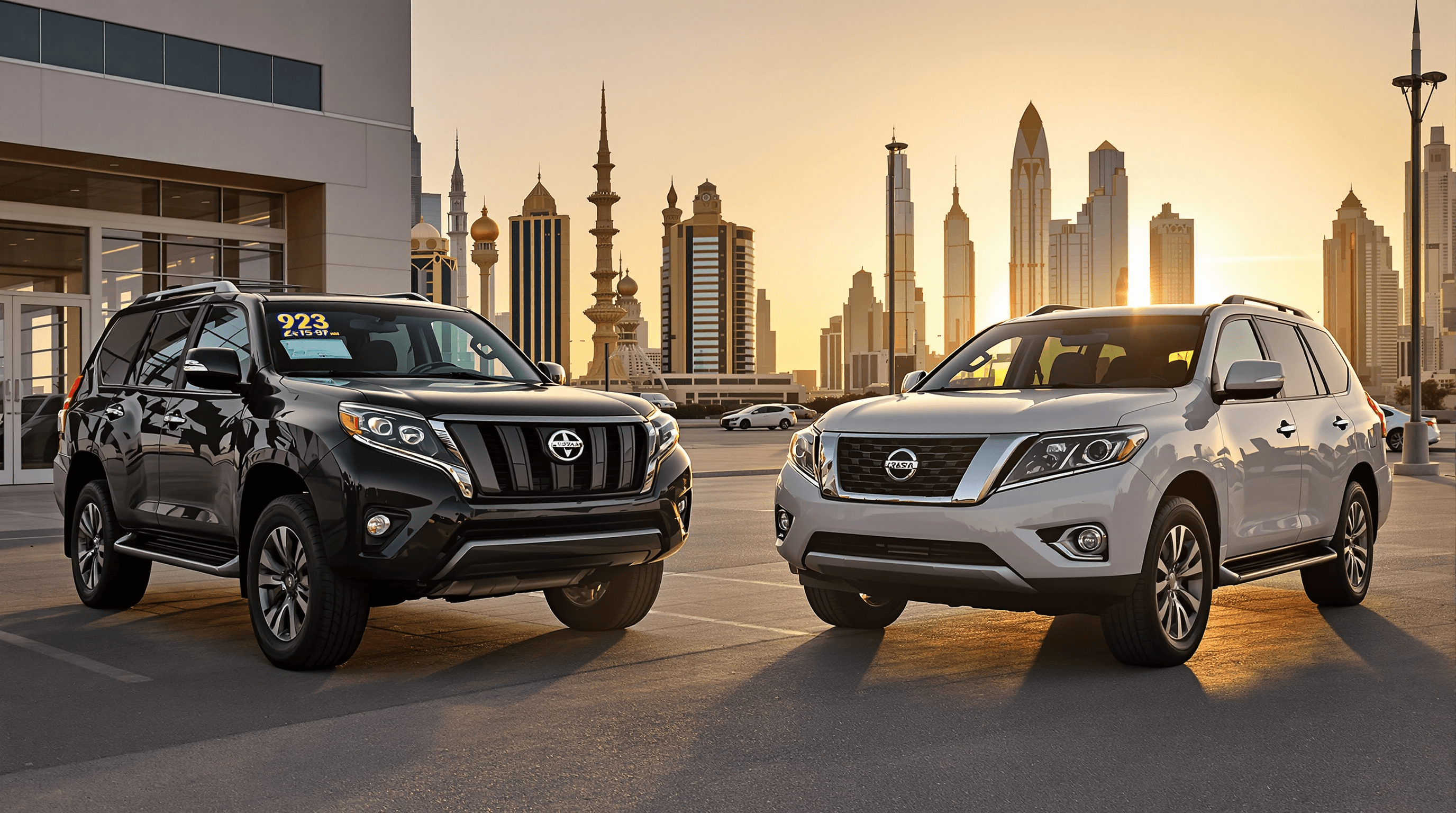
Against the obvious rivals: a Nissan Patrol or Land Cruiser will climb big dunes more easily thanks to length and diesel torque, and they're cheaper to run over the long haul with parts on every corner. The Rubicon trades some of that desert-specific ease for hardware and a kind of capability they don't have. The closest thing in spirit is the Mercedes G-Class, which offers similar triple-locker ability — at a far higher price. If you want the standard Wrangler comparison, our Jeep Wrangler desert review covers the wider range.
Living with one in the UAE
Be honest with yourself about running costs before you buy. A Rubicon is more expensive to keep on the road than the Japanese default choices, and parts for the off-road-specific bits aren't as instantly available as Toyota or Nissan components — though dealer presence here is solid and independent specialists exist. None of that is a dealbreaker; it's just the trade you make for a more interesting, more capable vehicle that fewer people own.
If you're buying used, the priorities are the usual off-road-truck checks plus a few Rubicon-specific ones:
- Confirm the diff locks and sway-bar disconnect actually work — cycle them and feel for the engagement. These are the features you're paying for.
- Check the frame and underbody for damage or crude repairs from hard off-road use.
- Look at differential and transfer-case fluid condition and ask for service history.
- Look for signs the previous owner washed the salt and sand off properly after trips, especially the underside.
A solid axle takes a suspension lift more predictably than an independent front end, so the platform is friendly to building later — but plenty of UAE terrain is fine on stock suspension with good driving. A good 4x4 workshop can tell you honestly what's worth doing and what isn't.
Is it the right buy for you?
If you want the easiest possible dune machine, buy a Patrol or a Land Cruiser and spend the saved money on fuel and trips. If you want a factory-capable, distinctive 4x4 that's outstanding on technical ground, takes a build without complaint, and you're willing to learn its quirks in the sand, the Rubicon is genuinely rewarding. Drive one before you commit, and ideally get out in the dunes with a club or instructor first so you're buying with your eyes open.
FAQ
Is the Rubicon good for UAE desert driving? It's very capable, but it suits a driver willing to learn it. The short wheelbase and petrol engine mean dunes reward good technique more than they do in a long, torquey diesel. On rock and technical terrain it's excellent.
Do I need to modify it before driving in sand? No. Air the tyres down properly and the stock vehicle is ready for most dune driving. Dedicated sand tyres and other upgrades help if you progress to harder, more frequent runs, but they're not a starting requirement.
How does it compare to a Nissan Patrol for the dunes? The Patrol climbs big dunes more easily and is cheaper to run. The Rubicon gives you stronger technical and rock-crawling ability and factory lockers front and rear. Different tools — pick for the driving you actually do.
Reviewed by experienced desert drivers. Our team personally visits operators and tests courses across the UAE.
Explore the Directory
Find off-road clubs, courses, garages and events across Dubai & UAE.
View Directory →