Maxtrax or Sand Ladders? Picking Recovery Boards for the UAE Desert
A practical comparison of Maxtrax recovery boards and traditional steel sand ladders for UAE desert driving — what each does well, what they cost, and which one belongs in your boot.
Maxtrax or Sand Ladders? Picking Recovery Boards for the UAE Desert
Sooner or later, everyone gets bogged. You drop your tyre pressures, you read the dune wrong, and the car settles into soft sand with all four wheels spinning. That's the moment a set of recovery boards earns its keep — and the two things most UAE drivers end up arguing about are Maxtrax-style traction boards and the older steel sand ladders. Both work. They just suit different drivers and different terrain, and it's worth knowing which is which before you spend the money.
How they actually perform in soft sand
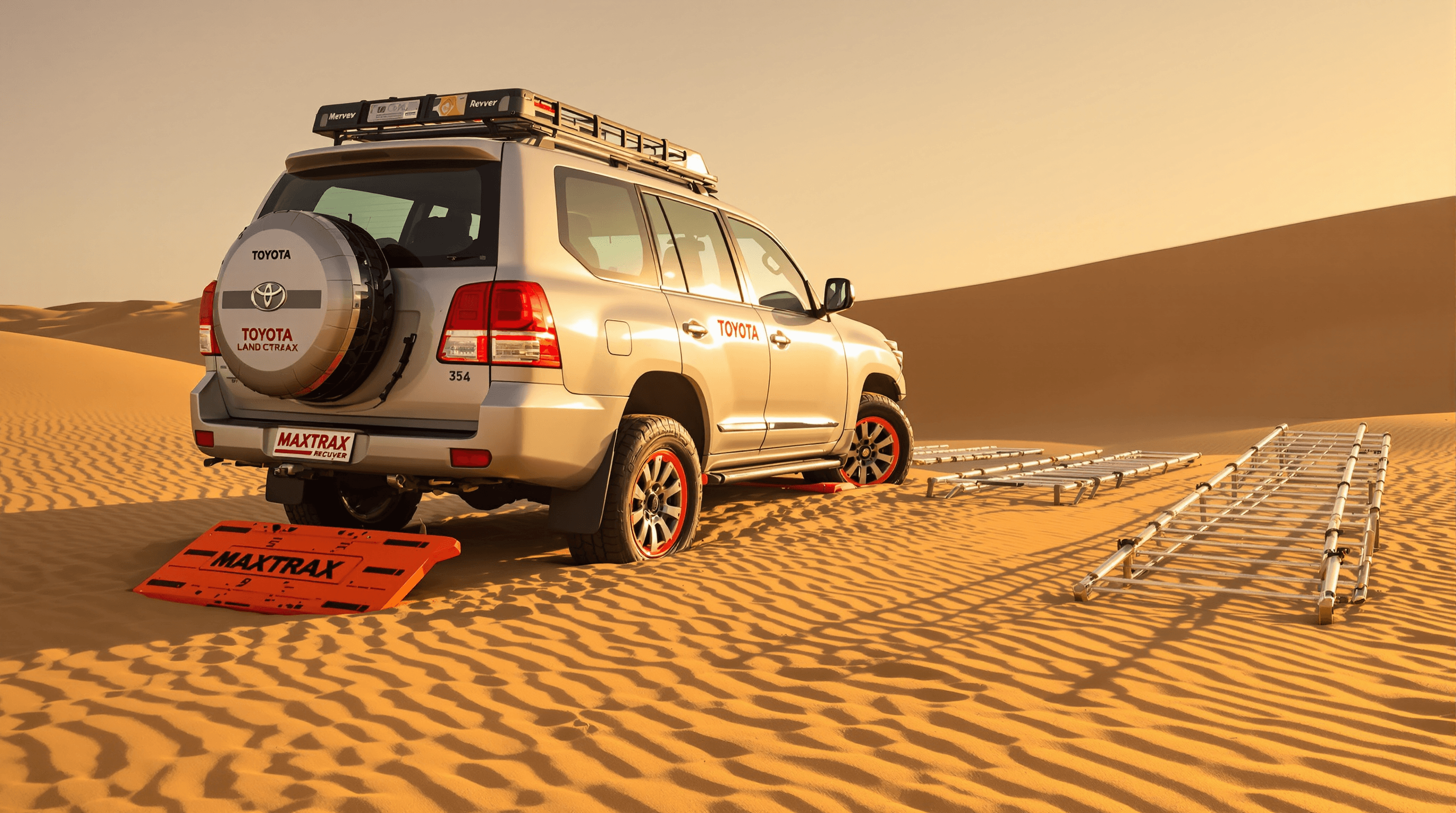
In the fine, dry sand you get around Al Qudra, Fossil Rock and most of the accessible Dubai dunes, the plastic traction boards are the easier tool to use. The moulded teeth bite into the tyre tread and give you something to climb out on, and because they're light you can dig them in under a wheel, get back in, and crawl out without much drama. Drop your pressures first, clear the sand away from in front of the tyres, and they do the job in most self-recovery situations.
Steel sand ladders also work in sand, but they shine where the ground gets harder — rocky tracks, mixed surfaces, the kind of terrain you hit on the way to Musandam or up in the mountains. Metal shrugs off sharp rock that will chew up a plastic board over time, and it'll take more abuse under a heavy vehicle. If your driving mixes sand with rock, that durability is a real point in their favour.
Weight and packing
This is where the plastic boards win clearly. A pair is light enough to carry in one hand, which matters a lot when it's 45°C and you're already worn out from digging. A comparable set of steel ladders is noticeably heavier and more awkward to wrestle into place, and if you're mounting them on a roof rack, all that weight sits high up where you least want it.
The flip side: in a stiff desert wind, the lightweight boards can blow around while you're setting up, where a heavy steel ladder just stays put. Minor, but worth knowing.
Durability over the long run
Steel ladders last more or less forever if you look after them. They'll develop surface rust, the mounting hardware can work loose, but the ladder itself keeps going for years with the occasional clean. There's not much to wear out.
The plastic boards are consumable by comparison. The teeth wear down with use, and UV exposure makes the polymer brittle over time — which in this climate is the real killer. Stored in the sun on a roof rack, they age faster than they would anywhere cooler. Keep them covered when you can and they'll last; leave them baking year-round and they won't. For a tour operator running recoveries every week, the steel works out cheaper per use. For a weekend driver, the convenience of the plastic boards usually wins.
What they cost in the UAE
Plastic traction boards are the pricier option — a genuine Maxtrax pair runs into the low thousands of dirhams, while decent steel sand ladders cost a fair bit less for an equivalent set. There are cheaper plastic copies around too, but the no-name ones tend to flex, melt or snap the teeth off, so they're a false economy.
Factor maintenance into the comparison, not just the sticker price: the plastic boards need no upkeep but get replaced when they're worn, while steel ladders want the occasional clean and a coat of paint but soldier on for years. Both are stocked by 4x4 shops across Dubai and Abu Dhabi — see the gear directory for suppliers.
Which one suits you
If most of your driving is sand — Big Red, Al Qudra, the usual Dubai runs — and you value quick, easy deployment, the plastic boards are the obvious pick. They're especially good for solo drivers and lighter vehicles, where the weight saving and easy handling count for the most.
If you range further into mixed terrain, run a heavier truck, or you're using the gear commercially, the steel ladders make more sense for their durability and lower long-term cost. The extra weight is less of an issue on a big Patrol or Land Cruiser.
Plenty of experienced drivers carry both — plastic for routine sand work, steel as backup or for the rough stuff. Whatever you choose, the boards are only as good as your technique. Knowing how to read the sand, when to air down, and how to dig out properly matters more than the brand on the board, and a proper desert driving course will teach you that faster than getting stuck ever will.
A reasonable starter recovery kit for the desert is a set of boards, a decent shovel, a tyre pressure gauge and a 12V compressor to air back up afterwards. That covers most situations you'll get yourself into close to town.
A couple of common questions
Are the plastic boards worth the extra money? For most weekend desert drivers, yes — the weight saving and how quickly you can deploy them make up for the higher price, especially if you mostly drive sand.
Will sand ladders damage my tyres? Not if you buy a reputable set and use them properly. The risk is with cheap ladders that have sharp, badly finished edges, so stick to known brands.
Do they work with stock tyres? Yes. Both work fine on the standard tyres fitted to a Land Cruiser, Patrol or Prado. Aggressive all-terrains grip the boards a little better, but stock rubber is fine for normal self-recovery.
Reviewed by experienced desert drivers. Our team personally visits operators and tests courses across the UAE.
Explore the Directory
Find off-road clubs, courses, garages and events across Dubai & UAE.
View Directory →