The Mercedes G-Class in the UAE Desert — What It's Really Like
An honest look at running a Mercedes G-Class in UAE desert conditions: where it shines, where its weight works against it, and what's worth fitting.
The Mercedes G-Class in the UAE Desert — What It's Really Like
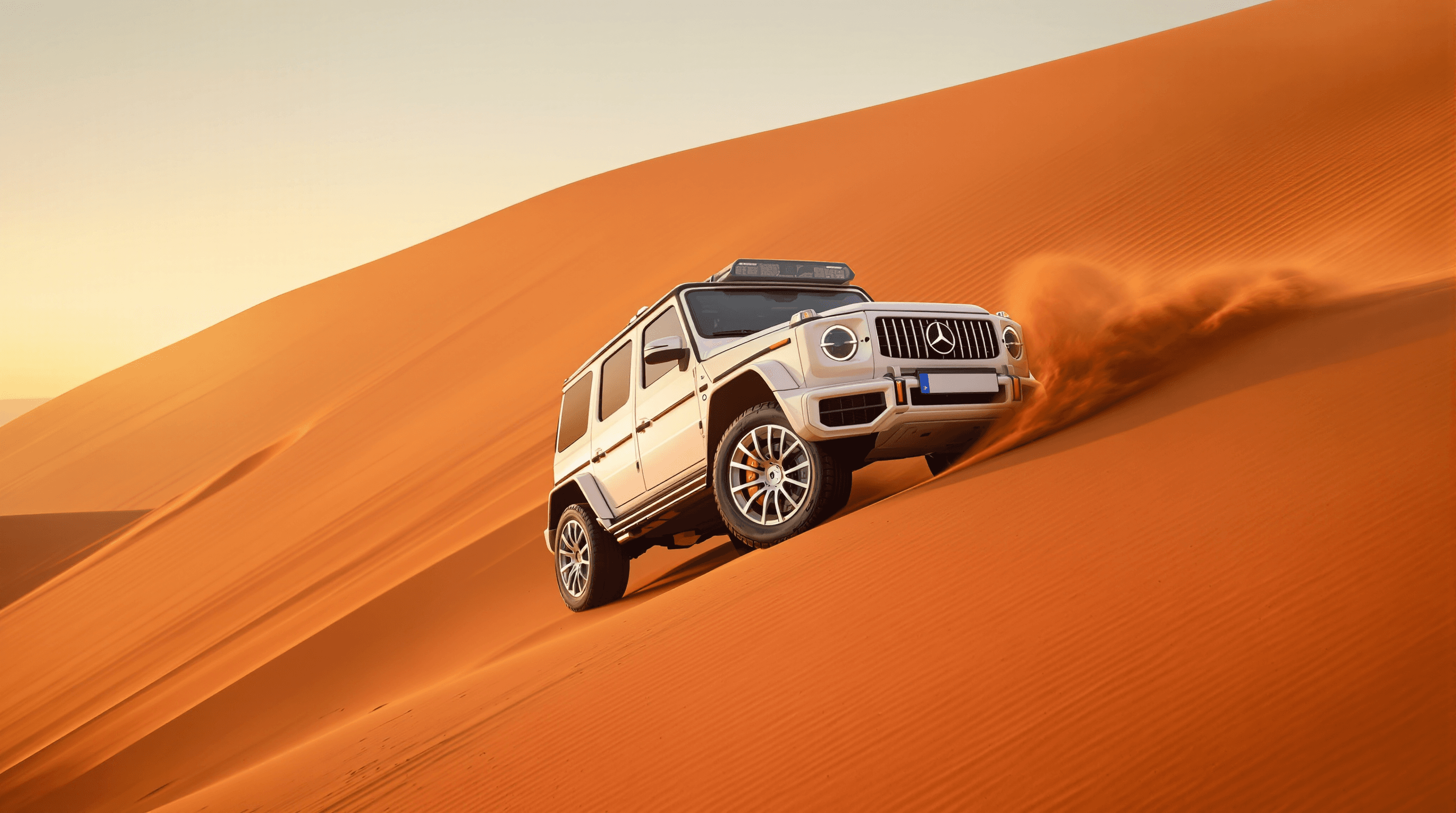
You see plenty of G-Wagons in Dubai, and most of them never leave tarmac. That's a shame, because underneath the badge and the price tag the G-Class is one of the few luxury SUVs built like a proper off-roader. It still rides on a ladder-frame chassis, it still has solid rear axle and three lockable differentials, and that hardware genuinely earns its keep once you point it at the dunes.
The catch is that it's heavy, and weight is the one thing soft sand punishes. So the honest answer to "is a G-Class any good in the desert?" is yes — with caveats worth understanding before you take one out.
The hardware that matters
Three things make the G-Class capable off-road, and none of them are the engine.
First, the three differential locks. Centre, rear and front, engaged electronically by the row of switches on the dash. Lock all three and the car splits torque evenly to every wheel — exactly what you want when you've got two wheels in the air on a rocky climb. Very few road-going SUVs offer all three.
Second, the solid rear axle. It articulates well, keeping wheels planted on uneven ground where independent setups lift and lose traction. On technical rocky terrain this is a real advantage.
Third, the basic geometry. Decent ground clearance, short overhangs front and rear, and factory underbody protection. It's genuinely built to be driven hard, not just to look the part in a mall car park.
Engine-wise the UAE gets the line-up you'd expect, from the diesel through to the AMG-badged twin-turbo V8. For desert work the power figure barely matters — low-end torque and how you manage momentum count for far more than headline horsepower. Check the current brochure for exact figures, as Mercedes revises the range regularly.
How it actually drives in the sand
On firm desert tracks and rocky ground the G-Class is excellent. It feels planted and composed, the diff locks do their job, and the build quality means you're not flinching at every rattle and scrape. For mixed terrain runs and mountain trails up around Hatta or in Musandam, it's a genuinely good tool — the articulation and locks shine on the technical rocky bits, and the cabin makes the long drive there far more pleasant than most hardcore 4x4s.
Soft sand is where the weight catches up with you. Compared with a Land Cruiser or a Patrol, the G needs more momentum to stay on top of the surface, and you have to think harder about your line up a soft dune face. It's not that it can't do it — drop your pressures properly and stay smooth and it'll climb fine — but it's less forgiving of a clumsy throttle than a lighter, simpler truck. If your weekends are all about big soft dunes at Liwa or Big Red, a Patrol or Land Cruiser will make life easier.
The usual sand rules apply, only more so: get your tyre pressures right, and don't let momentum die on a climb.
How it stacks up against the usual desert default
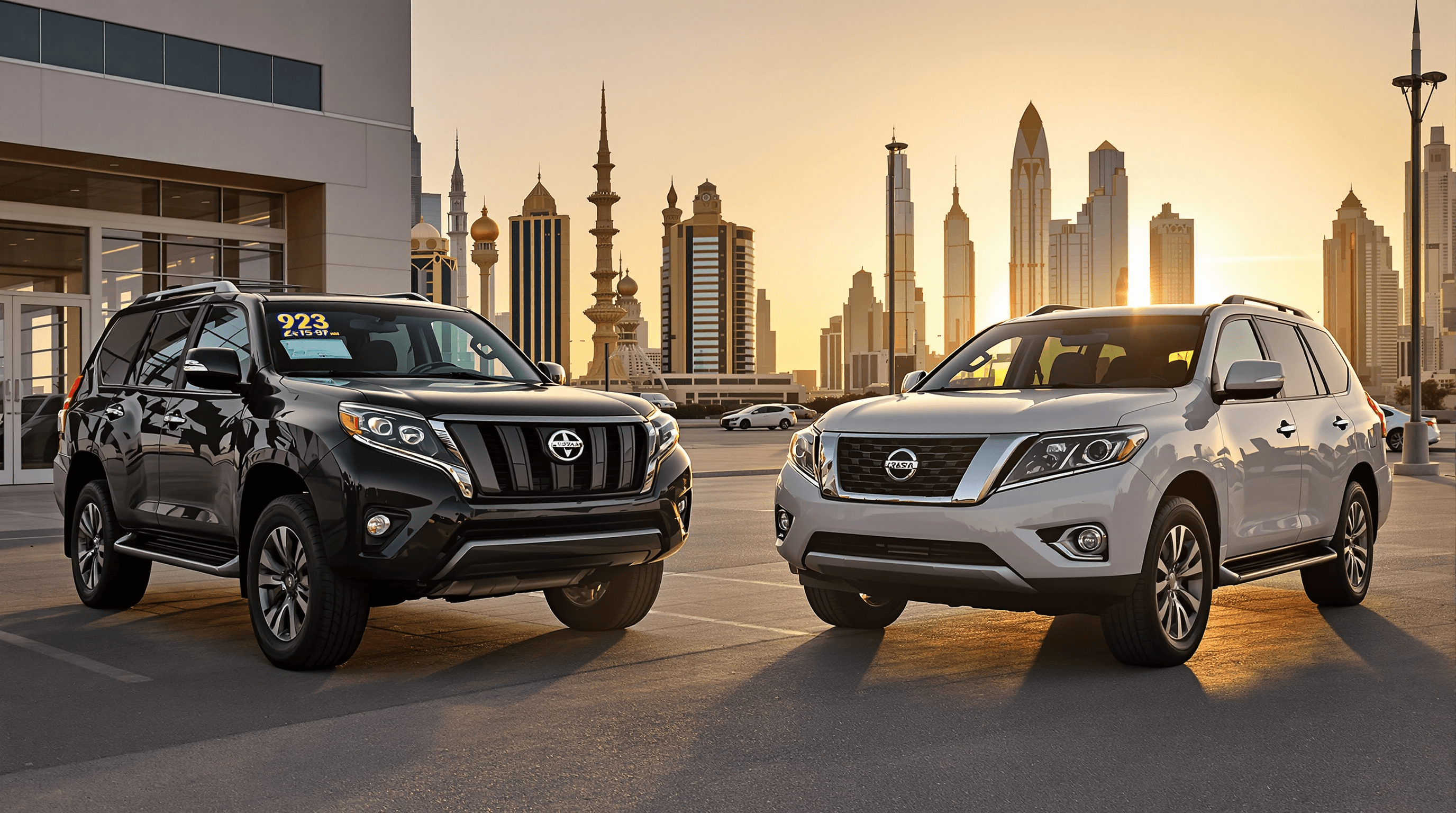
The honest comparison is against the Toyota Land Cruiser and the Nissan Patrol, because that's what you'll be driving alongside out here. Those two are lighter, cheaper to run, and have a deep, proven parts-and-knowledge network across every emirate — they're the desert default for good reason.
What the G-Class brings is the three diff locks, the build quality, and a cabin you'd happily sit in for a five-hour drive to Liwa and back. You pay for all of that, both up front and at every service. Whether that trade makes sense depends entirely on what you want from the car. As a do-everything luxury vehicle that can also handle a serious off-road weekend, it's hard to fault. As a pure desert tool measured on capability per dirham, the Japanese trucks win.
Worth fitting for regular desert use
The drivetrain is strong enough that you don't need to chase performance mods. What's worth your money is protection and recovery kit:
- Underbody protection. The factory skid plates are decent, but if you're running rocky terrain regularly, upgraded plates for the transmission and fuel tank are cheap insurance against expensive damage.
- All-terrain tyres. A good A/T tyre transforms how the car behaves on mixed ground versus the road-biased rubber many come on.
- Rated recovery points. Front and rear. The day you need to be pulled out is not the day to discover you've got nowhere safe to hook a strap. See our recovery gear guide for what to carry.
Skip the rest until you've actually found something the stock car can't do. For installers, the garages directory lists workshops that handle this kind of work.
Living with one
Running costs are higher than a traditional 4x4 — there's no way around that with a Mercedes. Service intervals are standard, but desert use means more frequent air filter changes and an eye on differential oils, because fine sand gets into everything.
Fuel use climbs sharply when you're working the car hard in soft sand, so plan your range around the demanding stuff, not the highway figure — especially on longer runs out to Liwa where stations are sparse. Parts and servicing aren't a problem; the dealer network and independent specialists in Dubai and Abu Dhabi cover the G-Class well.
A note on training
If you're new to the desert, the G-Class is not the cheapest car to learn your mistakes in. Its weight and electronics reward proper technique and punish bad habits with bills. A day with a real instructor — learning when to lock the diffs, how to read a dune, and how to recover the car — pays for itself the first time it stops you burying two-and-a-half tonnes of luxury SUV up to the axles. Have a look at the courses directory to find one.
A few common questions
Is the G-Class actually good in the UAE desert? On rocky and firm terrain, genuinely very good — the three diff locks and solid axle articulation are real advantages. In soft sand it's capable but heavy, so it demands better momentum management than a lighter truck.
Do I need to modify it before going off-road? Not for capability — the stock drivetrain is strong. Spend on protection (better skid plates), proper all-terrain tyres, and rated recovery points instead.
G-Class or a Land Cruiser/Patrol for the desert? For pure desert capability and running costs, the Toyota and Nissan are the easier choice. The G-Class wins on build quality, luxury and the diff-lock hardware — pick it if you want one car that does both jobs and the cost doesn't put you off.
Reviewed by experienced desert drivers. Our team personally visits operators and tests courses across the UAE.
Explore the Directory
Find off-road clubs, courses, garages and events across Dubai & UAE.
View Directory →