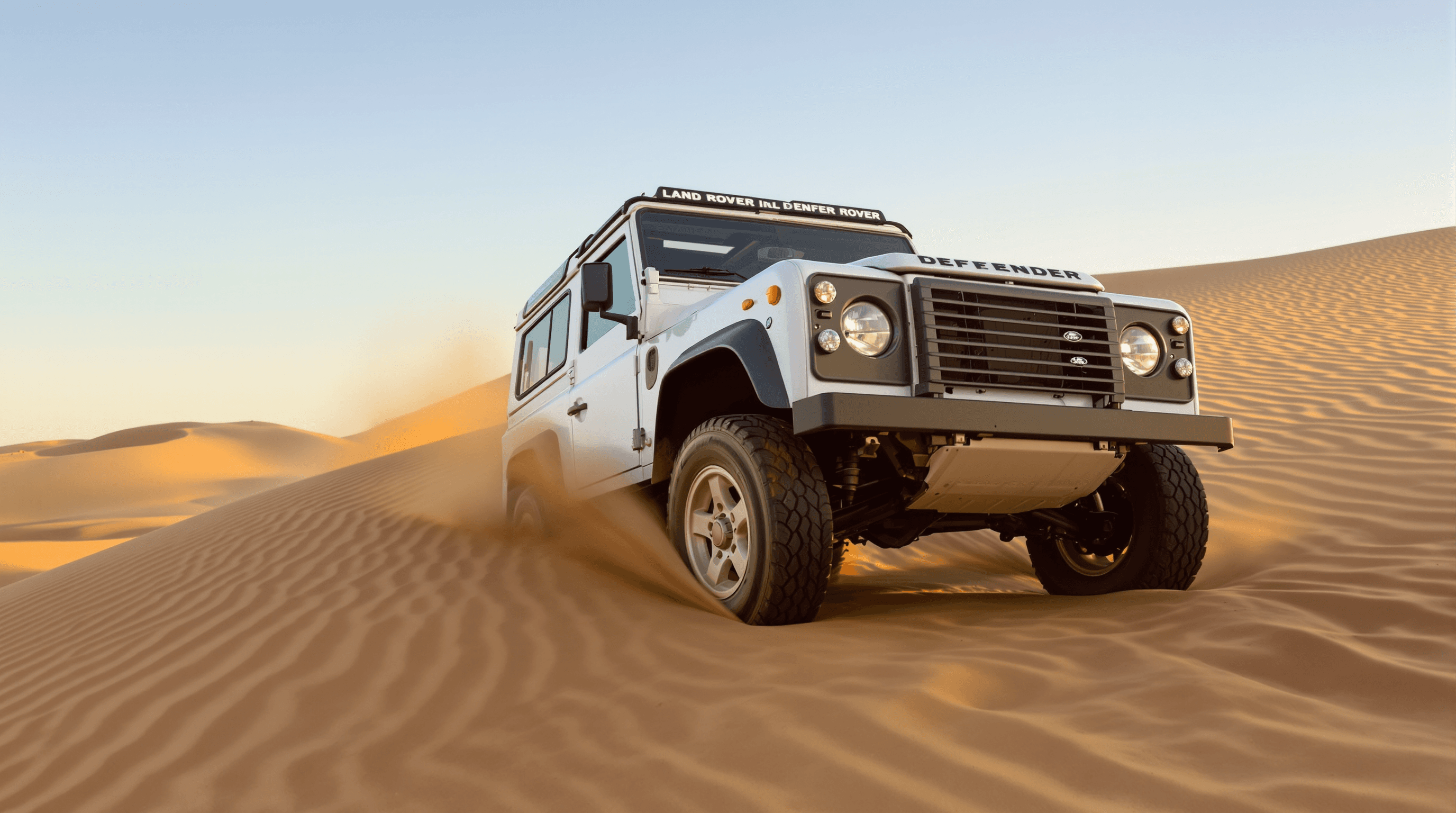
Washing Your 4x4 After a Desert Run in the UAE
How to clean a 4x4 properly after desert driving in the UAE — what matters, what to skip, and the spots that quietly cause trouble if you ignore them.
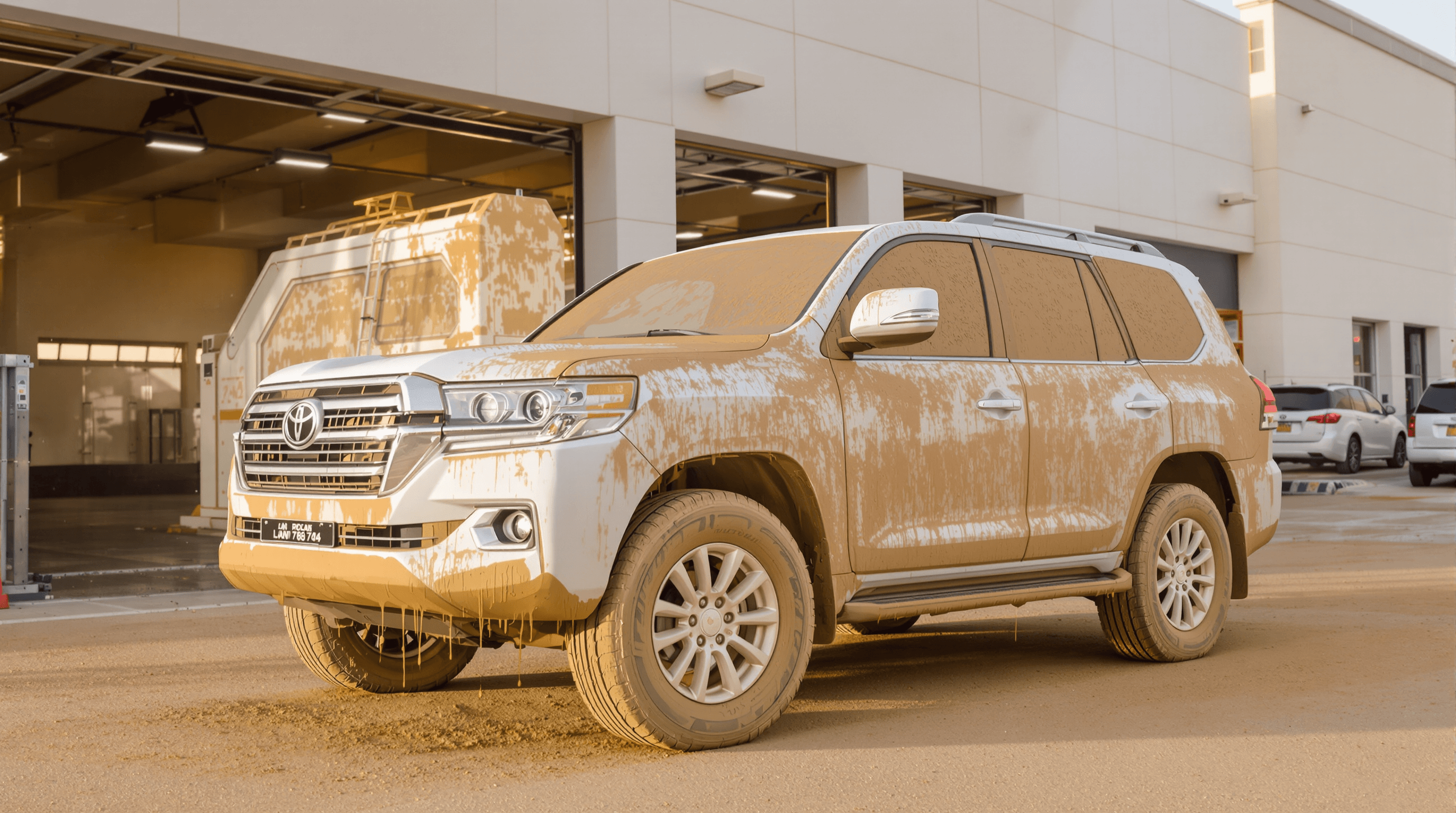
Washing Your 4x4 After a Desert Run
Nobody loves washing the car after a long day in the dunes. You're tired, it's hot, and the truck looks fine apart from a film of dust. The problem is where that dust ends up — UAE sand is fine and dry, and it works its way into door seals, breather tubes, filters and bearings. Leave it sitting for a week and it sets harder and gets harder to shift, especially once a bit of humidity gets to it. A proper clean is less about looks and more about not letting sand grind away at things you can't easily see.
Here's the routine I actually use, and the bits that matter most.
Have a quick look before you reach for the hose
Walk around the truck first. You're checking two things: where sand has piled up, and whether anything got knocked on the drive. Pop the bonnet and glance at the air filter housing. Check the door seals and tailgate gasket for gaps. If you came down hard on anything, have a look underneath at the diff covers and any exposed lines before you start blasting water around — there's no sense forcing water past a seal that's already been compromised.
The newer wagons like the Land Cruiser and Patrol seal up well from the factory, but they still benefit from a proper look-over after a hard session. Nothing is sealed well enough to ignore.
Get the loose sand off first
Before any water touches the truck, get rid of the dry stuff. Water turns loose sand into grinding paste, so dealing with it dry first saves your paint.
- Open all the doors and the tailgate and shake out the floor mats.
- Vacuum the cabin — seats, carpets, door pockets and the boot — before the dust settles deeper into the fabric.
- If you carry a compressor or have access to compressed air, a gentle blow through the engine bay clears dust off the alternator, belts and the radiator face. Keep the pressure low and stay back from electronics.
Doing this part dry makes the wash that follows far less likely to scratch.
Wash from the top down
Standard car-wash logic applies, just with more sand than usual. Work top to bottom so you're not dragging grit back over panels you've already cleaned, and use the two-bucket method if you've got the buckets — one for soap, one to rinse the mitt so you're not grinding sand back into the paint.
A rough order that works:
- Pre-rinse the whole vehicle at low pressure to float off as much sand as you can.
- Roof and upper panels first, with a pH-neutral car shampoo and a clean mitt.
- Glass next, so you can see what you're doing.
- Body panels, rinsing the mitt often.
- Wheels, wheel wells and the lower edges last — these are the dirtiest, so keep a separate mitt or brush for them.
Then dry it off with a chamois or microfibre, paying attention to the door jambs and tailgate where water hides. Leaving the doors open for a while afterwards lets the damp spots air out.
Removable-door vehicles like the Wrangler are worth a closer look around the door seals, and anything with busy suspension geometry — a Raptor, for instance — collects more underneath than you'd expect.
Don't skip underneath
The undercarriage takes the worst of it and it's the bit everyone ignores. Sand cakes around the diffs, suspension and along the chassis rails. A rinse underneath after a few trips keeps it from building into a baked-on crust that holds moisture and hides problems.
While you're under there, check:
- Diff breather tubes are clear — a blocked breather can suck water in when the diff cools.
- CV boots aren't split — once they tear, sand gets into the joint and it's downhill from there.
- Shock shafts and bushings are free of caked grit.
If you don't fancy crawling under it yourself, plenty of garages will steam-clean an undercarriage properly. A few of the off-road specialists are worth knowing for this — see the garages directory if you want somewhere that understands desert use rather than a generic car wash.
Interior and air filters
Damp sand in the cabin is abrasive and gets into everything, so finish the vacuum properly and wipe down the trim. Leather likes a pH-neutral cleaner; plastics just want a damp microfibre cloth rather than anything harsh that'll go brittle in the sun.
The cabin air filter is the one people forget. After enough dusty drives it clogs and your AC starts to struggle — pull it and have a look, and swap it if it's grey with dust. Run the AC on recirculate for a few minutes afterwards to clear the vents.
The engine air filter is the more important one. Desert driving loads it up far faster than normal road use, so check it after dusty trips rather than waiting for the service interval. If it looks heavily packed with sand, change it — a starved engine isn't worth saving the price of a filter.
How often is enough
There's no single rule, it depends on how hard and how often you drive. As a rough guide: rinse the exterior and vacuum the inside after every proper desert day, and don't let it sit more than a day or two before doing so. Get underneath every few trips. Check the air filters whenever the drive was especially dusty, and after a shamal blows through — wind-driven sand gets into everything and is worth dealing with sooner rather than later.
If you're new to all this and want to cut down how much sand you drag home in the first place, a lot of it comes down to technique and tyre pressures. A proper desert driving course teaches you to read the sand and stay off the throttle, which is easier on the whole truck — washing included.
A few common questions
How soon should I wash it? Within a day or two is plenty. The point isn't speed for its own sake — it's that dry, loose sand is easy to remove, and sand that's been sitting through a few hot-cold cycles or a bit of humidity sets harder.
Can I use normal car shampoo? A pH-neutral car shampoo is fine and is what you want — it won't strip wax or attack rubber seals. Skip household detergents and washing-up liquid; they're harsher than they need to be on seals that already cop a lot of UV and sand.
Is it safe to pressure-wash underneath myself? Yes, with sense. Keep the pressure moderate, hold the lance back a hand's width or so from seals, boots and electrical connectors, and don't sit on one spot. A close, high-pressure jet can drive sand past a CV boot or bearing seal, which is the opposite of what you're trying to do.
Reviewed by experienced desert drivers. Our team personally visits operators and tests courses across the UAE.
Explore the Directory
Find off-road clubs, courses, garages and events across Dubai & UAE.
View Directory →