What Is Dune Bashing? A Beginner's Guide to UAE Desert Driving
What dune bashing actually is, how it works, the vehicles people use, the safety basics, and how to get started driving the dunes in the UAE.

What Is Dune Bashing?
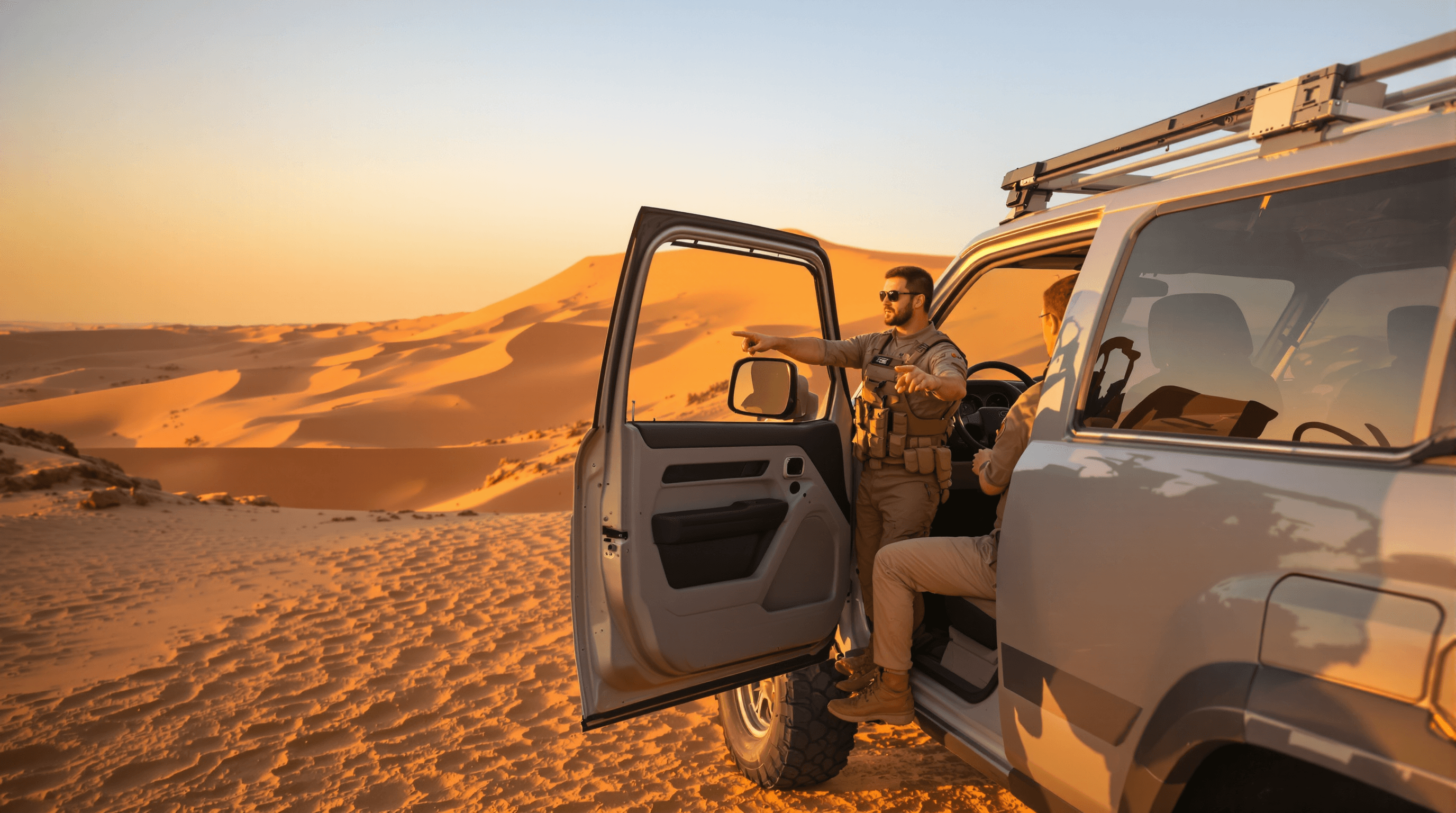
"Dune bashing" is just the everyday name people in the UAE use for driving a 4x4 over sand dunes — climbing them, coming down the far side, picking a line across soft terrain that would swallow a normal car. The "bashing" makes it sound more aggressive than it usually is. Done properly it's far more about reading the sand and managing momentum than flooring it over everything in your path.
If you've only seen it from the back seat of a tour operator's Land Cruiser on the way to a desert camp, you've seen one version of it. The other version is a group of friends with their own trucks spending a Friday morning out in the dunes, airing down, getting stuck, recovering each other, and slowly getting better at it. This guide is about that second version — what's actually going on, and what you need to know to try it.
Where it comes from
Driving the sand isn't new here. Long before it was a weekend hobby, getting across dunes was simply how you moved through the desert. Modern 4x4s — the Land Cruiser and the Patrol being the obvious examples — made it far easier and faster, and over the last few decades a whole social culture has grown up around it: convoys, clubs, weekend trips. In the UAE it sits comfortably alongside the older desert traditions rather than feeling like imported adventure tourism, and most of the people who are good at it learned from other people in a group, not from a manual.
How it actually works
The single most important thing, and the one beginners most often skip, is airing down. Before you go anywhere near soft sand you let air out of your tyres. Dropping the pressure spreads the tyre's footprint, so instead of cutting down into the sand the tyre floats more on top of it. The right pressure depends on your vehicle, tyres and how soft the sand is, but the difference between road pressure and a sensible sand pressure is night and day — it's the closest thing to a magic fix in the desert. (For the detail, see tyre pressure for sand.)
After that it comes down to a few things you learn by feel:
- Momentum, not speed. You want enough speed to keep moving up a soft face, but charging blindly over a crest you can't see the other side of is how people get hurt. Steady and smooth beats fast and jerky.
- Throttle control. Too much power on a loose face and you spin and dig in; too little on a steep climb and you bog down and stall partway up. Finding the middle is most of the skill.
- Reading the sand. Wind shapes the dunes — there's usually a firmer, gentler windward slope and a softer, steeper slip face on the other side. Learning to spot which is which, and to never crest a sharp ridge without knowing what's beyond it, keeps you out of trouble.
None of this is intuitive the first time. The fastest way to get the basics right is a session with someone who knows what they're doing — either an experienced friend or a proper off-road course — rather than teaching yourself the expensive way.
What people drive
You don't need an exotic vehicle, but you do need the right kind. The desert favours a body-on-frame 4x4 with low-range gearing, decent ground clearance and enough low-end torque to keep moving in soft sand. The two you'll see more than anything else out here are the Toyota Land Cruiser and the Nissan Patrol — both have long, well-earned reputations for handling UAE sand and, just as importantly, for being easy to get parts and service for locally.
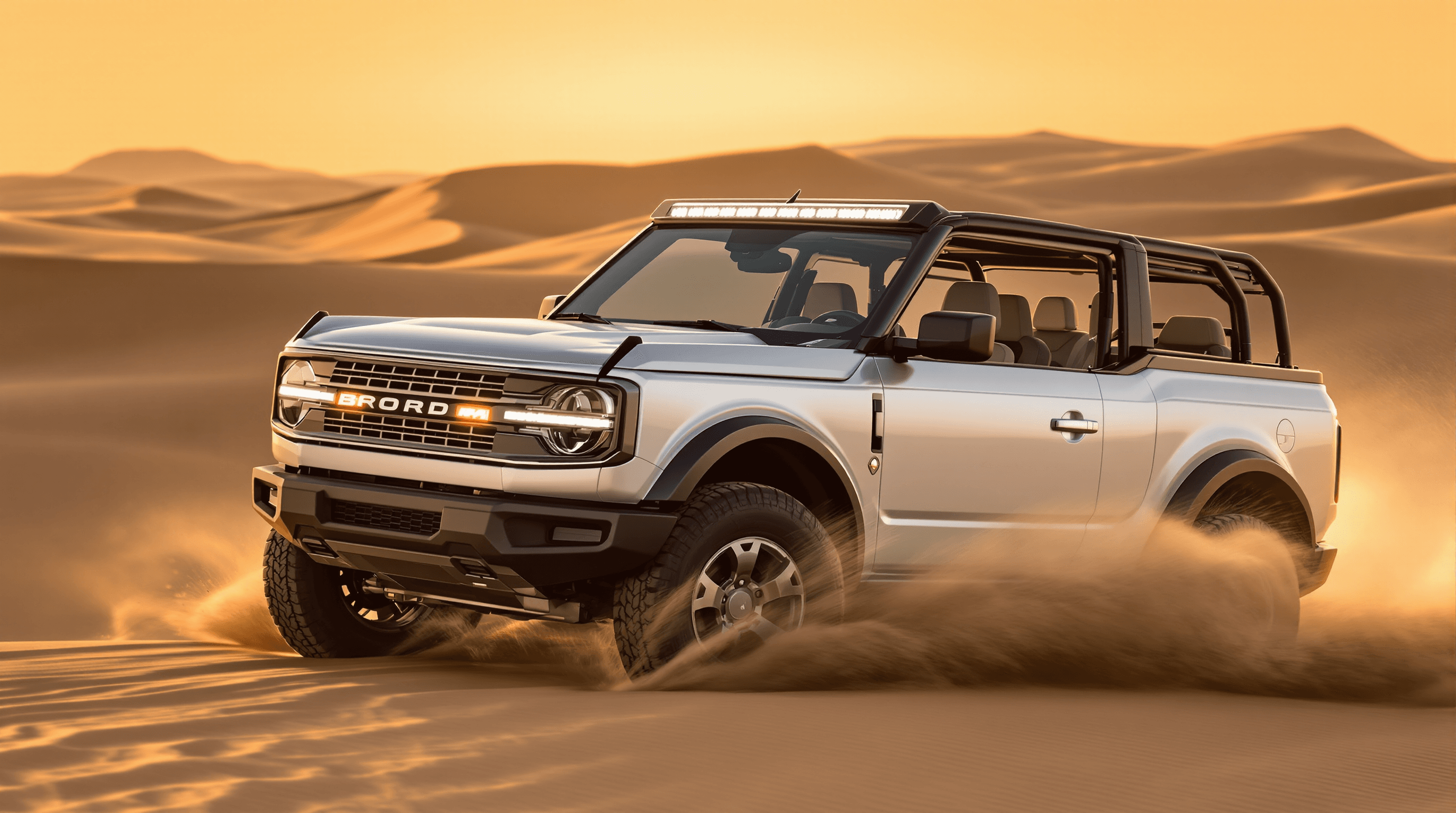
Other capable platforms turn up plenty too: the Ford Raptor for fast, open dune driving, the Jeep Wrangler for tighter technical lines, the Mercedes G-Class at the premium end. Plenty of other 4x4s will do it well. What matters more than the badge is that the vehicle is set up sensibly and that the person driving it knows the basics.
If you're shopping or want help getting a vehicle desert-ready, the garages directory is a good place to start. You don't need to modify anything to begin — a stock, capable 4x4 with the tyres aired down is enough for beginner dune fields. Modifications like better tyres and recovery points come later, as you find the limits of what you've got.
Staying safe
The desert is unforgiving of carelessness, but the safety rules are simple and they work.
The biggest one: don't go alone. The vast majority of bad situations involve a single vehicle out by itself with no way to be pulled free and no one to call. Drive in a group of at least two properly equipped vehicles so that if one gets stuck, the other can recover it. Tell someone not in the convoy where you're going and when you expect to be back.
Carry recovery gear and know how to use it — at minimum a recovery rope and shackles, a way to dig (a shovel and traction boards), and a compressor to air your tyres back up before you hit tarmac. A first-aid kit and offline maps round it out. Browse the gear directory if you're building a kit from scratch.
Water is not optional. UAE summers regularly push past 45°C, and the desert dehydrates you fast — carry far more than you think you need, for everyone in the vehicle. In the hottest months, serious off-roaders simply don't go out in the middle of the day. Check the forecast and stay home if there's a sandstorm warning.
Quick pre-trip checklist
- Air your tyres down before entering soft sand
- Go in a convoy of at least two equipped 4x4s — never alone
- Carry recovery gear: rope, shackles, traction boards, shovel, compressor
- Tell someone your route and expected return time
- Pack plenty of water, plus shade and sun protection
- Check the weather; skip it in sandstorm or extreme heat
Where to go
The UAE has terrain for every level, from gentle rolling dunes to enormous, remote ones that demand real expedition planning. As a beginner you want the forgiving end of that spectrum: soft, moderate dunes where getting stuck is a learning experience rather than a crisis.
The Al Qudra area near Dubai is a common starting point, with accessible terrain close to the city. Big Red, out toward Hatta, is the dune most UAE drivers measure themselves against at some point. The Liwa area in the far south has some of the largest dunes in the country and is firmly advanced territory. You can read up on specific spots and difficulty in the routes directory before you go.
The sensible progression is to start somewhere moderate and guided, build confidence, and work up to bigger terrain over time rather than all at once.
Guided tour or do it yourself?
These are two genuinely different things and both are worth doing. A guided tour is the easy way in: a professional drives, you experience the dunes without owning a vehicle or knowing anything yet. It's a good way to find out whether you enjoy it before spending money.
Driving it yourself is a different and, for a lot of people, more rewarding thing — your own vehicle, your own line, your own pace, and the satisfaction of getting it right (and unstuck) on your own. The best route into that side of it is to find people to go with. Joining an off-road club gets you convoy partners, local knowledge and people who'll teach you and pull you out when you bog it. Most of the experienced drivers you'll meet started on a tour, got hooked, and learned the rest from a community.
A few common questions
Is dune bashing safe for beginners?
Yes, with the right approach. Start on moderate terrain, go with experienced people or on a guided tour, air your tyres down, and don't push past what you can handle. The injuries and near-misses almost always come from going alone, going too fast, or skipping the basics.
What vehicle do I need?
A capable 4x4 with low-range gearing, good ground clearance and proper torque for soft sand. The Land Cruiser and Patrol are the local defaults for good reason, but plenty of other 4x4s work well. Far more important than the model is airing the tyres down and learning how to drive it.
How do I get started?
Either book a guided tour to see if you like it, or get out with people who already do it. From there, a proper off-road course is the fastest way to learn the fundamentals safely, and an off-road club gives you the group you need to keep going.
Find courses, clubs, gear and routes across Dubai Offroad — your guide to off-road adventure in the UAE.
Reviewed by experienced desert drivers. Our team personally visits operators and tests courses across the UAE.
Browse All Desert Driving Courses
Compare prices, locations and reviews for every course in Dubai & UAE.
View Directory →