Off-Roading in Abu Dhabi — Where to Drive and What to Know
A practical rundown of off-roading in Abu Dhabi emirate: Liwa's big dunes, the easier sand around Al Wathba, and the planning that the longer distances demand.
Off-Roading in Abu Dhabi: Where to Drive and What to Know
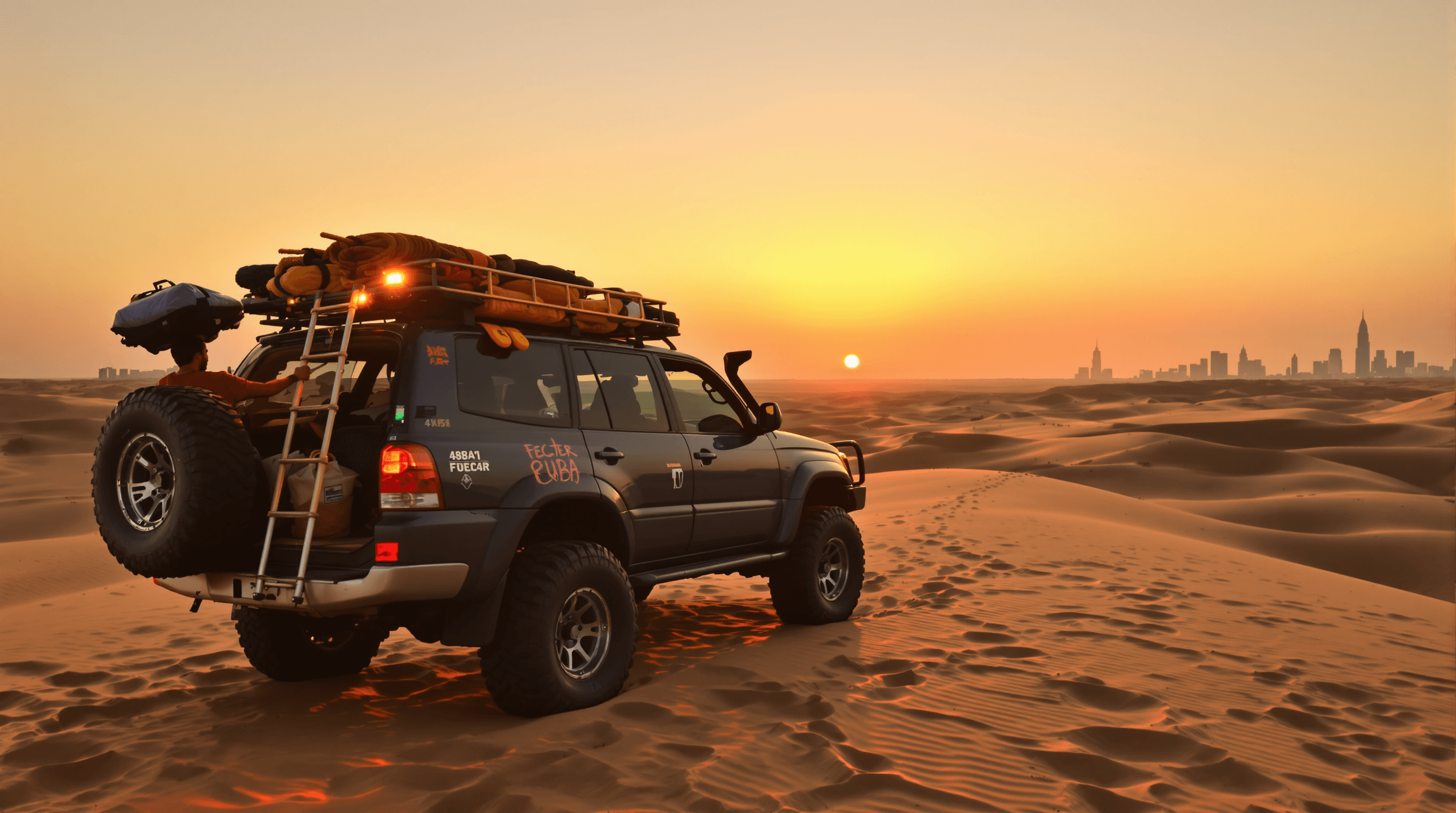
Most people in the UAE cut their teeth on the dunes close to Dubai, then start hearing about Liwa and wondering whether it's worth the drive. It is — but Abu Dhabi is a different proposition to a Saturday morning at Al Qudra. The emirate is huge, the good stuff is a long way from the city, and once you leave the highway you're properly on your own. That changes how you plan a trip, not just where you point the car.
This is a look at the areas worth knowing, and the things that catch people out when they head down there for the first time.
The terrain isn't all the same
Abu Dhabi covers a lot of ground, and the driving varies more than newcomers expect. Out west and along the coast you get sabkha — salt flats that look like firm, fast going until you hit a soft, damp patch and sink to the axles. Treat them with respect. Around Liwa you get the serious dunes, the kind that need real sand-driving experience. And as you move east toward Al Ain and the Omani border, the desert gives way to rockier, more mountainous country with wadis and harder, more technical terrain.
Pick your area to match your experience and your vehicle, not the other way round. A stock SUV that's fine on the firm tracks near Al Wathba is the wrong tool for Liwa's big faces.
Liwa: the main event
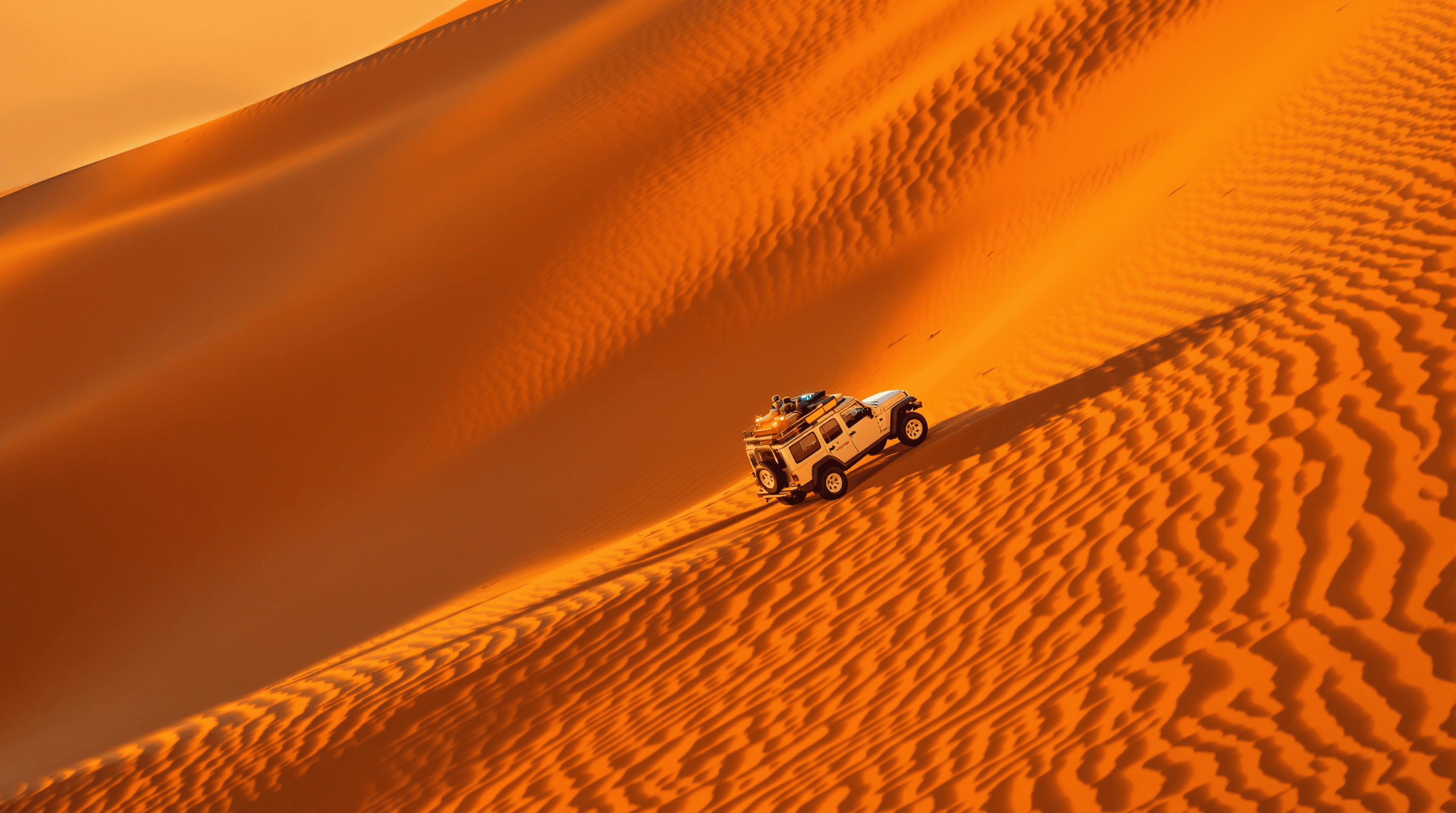
Liwa sits on the northern edge of the Rub' al Khali, the Empty Quarter — one of the largest sand deserts in the world. The dunes here are on a completely different scale to anything around Dubai, and the landscape is genuinely otherworldly once you're a few kilometres off the tar.
The headline feature is Moreeb Dune (Tal Moreeb), a steep, towering dune that draws hill-climb events and is the landmark most people point their cars at first. You don't have to climb it to enjoy the area — there's endless dune driving around the wider Liwa crescent — but it's the obvious reference point.
The catch is distance. Liwa is roughly a three-and-a-half-hour drive from Abu Dhabi city, and once you're in the dune fields you're a long way from help. Fuel stations exist along the way at the larger settlements, but they're spread out, so fill up when you can rather than when you're running low. Stick to the cooler months — roughly October through March — and don't go as a single car. Three vehicles is a sensible minimum for the deep dunes.
If you've never driven big dunes before, Liwa is not the place to learn. Build the skills on more forgiving terrain first.
Al Wathba: closer and more forgiving
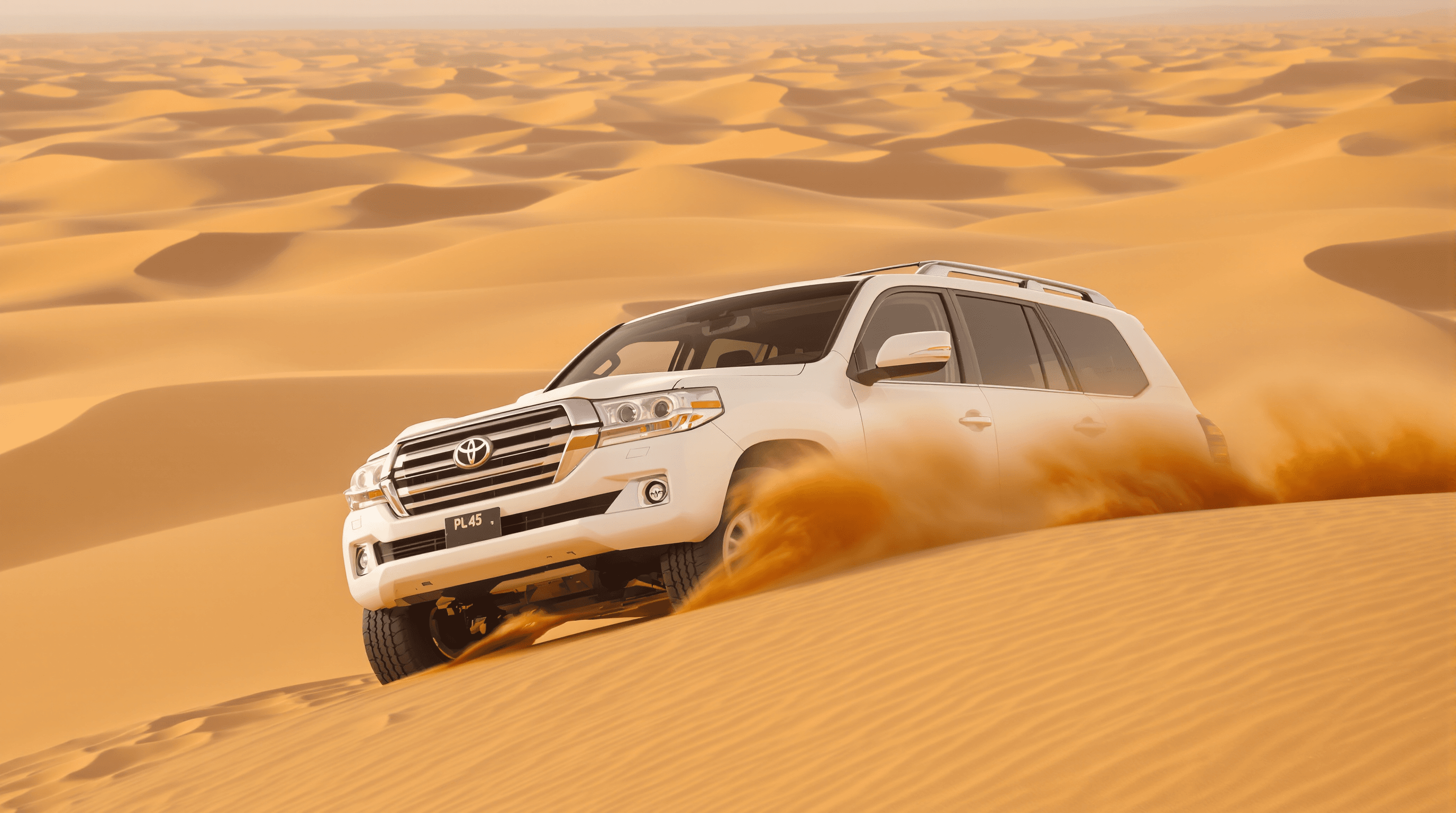
If Liwa is the expedition, Al Wathba is the day trip. It sits southeast of Abu Dhabi city, close enough that you can drive out, get a few hours of dune driving in, and be home for dinner. The dunes are smaller and the red sand is a good place to get comfortable with proper dune driving without Liwa's remoteness hanging over you.
Worth knowing: parts of this wider area sit near the Al Wathba Wetland Reserve, which is a protected zone with restrictions. Don't drive into protected or fenced-off areas — keep to the open desert that's clearly used for off-roading, and check signage on the ground.
East toward Al Ain and the mountains
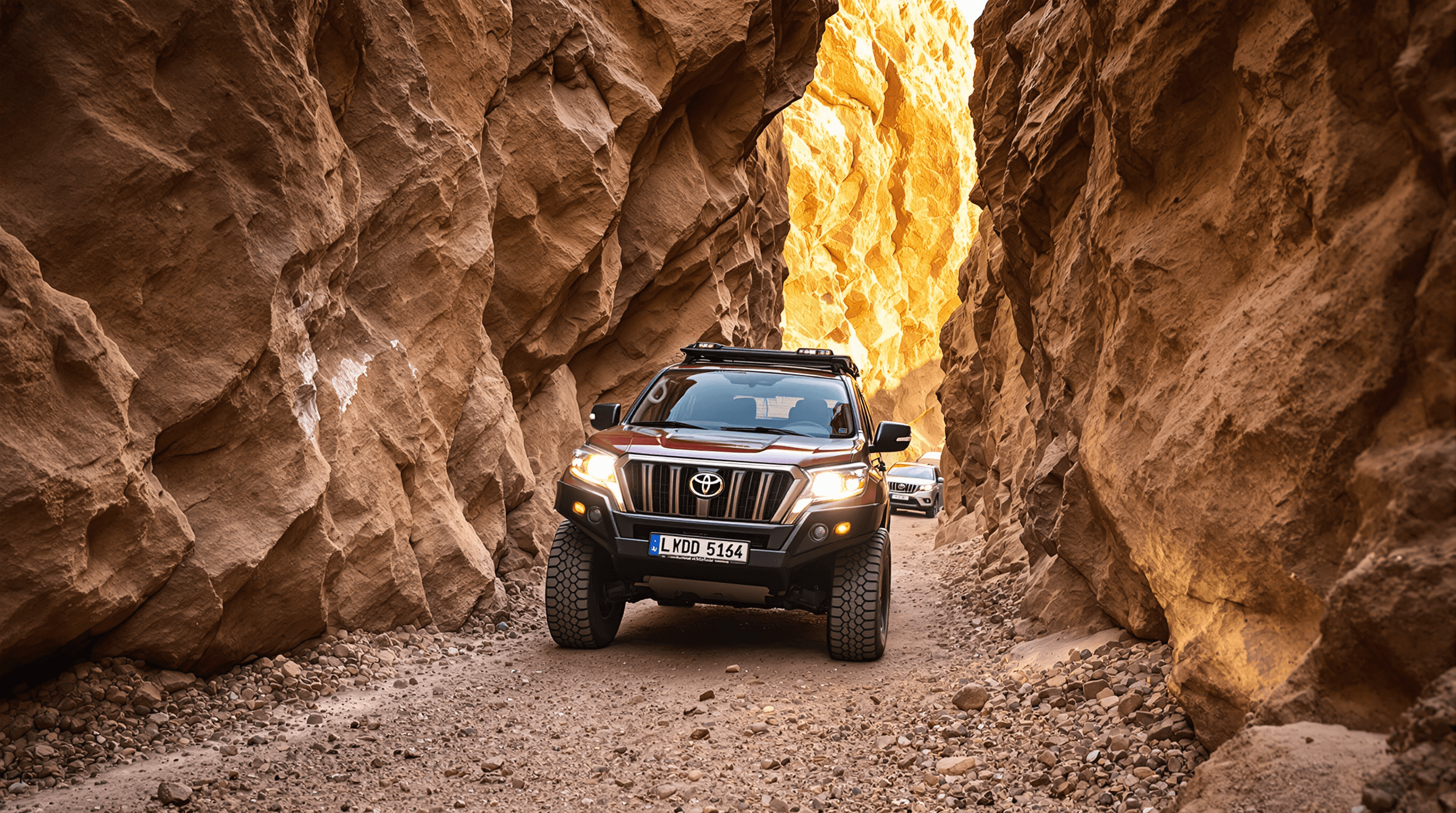
Head east and the character of the driving changes completely. The country around Al Ain and toward Jebel Hafeet is rockier, with higher ground, cooler temperatures and wadi terrain rather than open sand. This is more technical, ground-clearance-and-spotting driving than dune work, and some of it is genuinely demanding. It pairs well with a trip toward Al Ain if you want more than one kind of terrain in a weekend.
Navigation and the safety side
This is the part that matters more in Abu Dhabi than it does close to Dubai, because the distances are real. Mobile coverage drops off once you're away from the main roads, so don't rely on it. Download offline maps before you leave and carry a backup way to navigate. If you're heading well off the beaten track, a satellite communicator is worth having — when you're hours from a paved road, the standard 999 emergency line still works but help is a long way off.
Tell someone your plan: where you're going, who's with you and when you expect to be back. It's the single cheapest piece of safety kit there is.
Carry more than you think you need. Plenty of spare fuel and water for everyone, recovery boards, a decent tow strap, a tyre repair kit and a compressor for re-inflating after the sand. Sharp limestone in the eastern areas chews tyres, so don't skimp on the puncture kit. If you're still building your kit, it's worth getting the recovery gear right for UAE conditions before a long trip rather than during one.
Timing and weather
The season runs roughly November through February for comfortable conditions. Even then, sand is firmest in the early morning and gets softer as the day heats up, so tackle the harder driving early.
Summer is brutal — temperatures past 45°C, sand turned to powder, and real strain on both the cooling system and the people in the car. Most regulars simply don't do serious desert work in the deep summer.
Watch for shamal winds too. When they kick up they can flatten visibility and make navigation genuinely dangerous, so check the forecast before you commit to a long drive out.
Don't trash the place
The desert out here is largely untouched, and it stays that way only if people behave. Pack out everything you bring in, stay off vegetation, and keep your distance from livestock, Bedouin camps and anything that looks like private or grazing land. The basics aren't complicated — leave it the way you found it.
Frequently asked questions
How far do I need to go from Abu Dhabi for good off-roading? Al Wathba gives you proper dune driving within an easy drive of the city. Liwa's big dunes are a much longer haul — around three and a half hours — and should be treated as a full-day or overnight trip rather than a casual outing.
What's the minimum group size? Don't drive the remote dunes alone. Three vehicles is the sensible minimum for somewhere like Liwa. For the easier, closer terrain around Al Wathba with better coverage, two cars travelling together is workable.
Can a rental 4x4 handle it? A standard 4x4 is fine for the easier tracks near Al Wathba. Liwa's big dunes are a different story and want a capable vehicle with proper recovery points and correctly aired-down tyres. If you're renting, make sure the car is actually set up for sand — and that it has decent gear on board.
Reviewed by experienced desert drivers. Our team personally visits operators and tests courses across the UAE.
Explore the Directory
Find off-road clubs, courses, garages and events across Dubai & UAE.
View Directory →