Driving Al Marmoom — A Beginner-Friendly Desert on Dubai's Doorstep
What Al Marmoom is actually like to drive: soft-sand sections, the wildlife you might see, and how to prep your 4x4 for a day out south of Dubai.
Driving Al Marmoom: A Beginner-Friendly Desert on Dubai's Doorstep
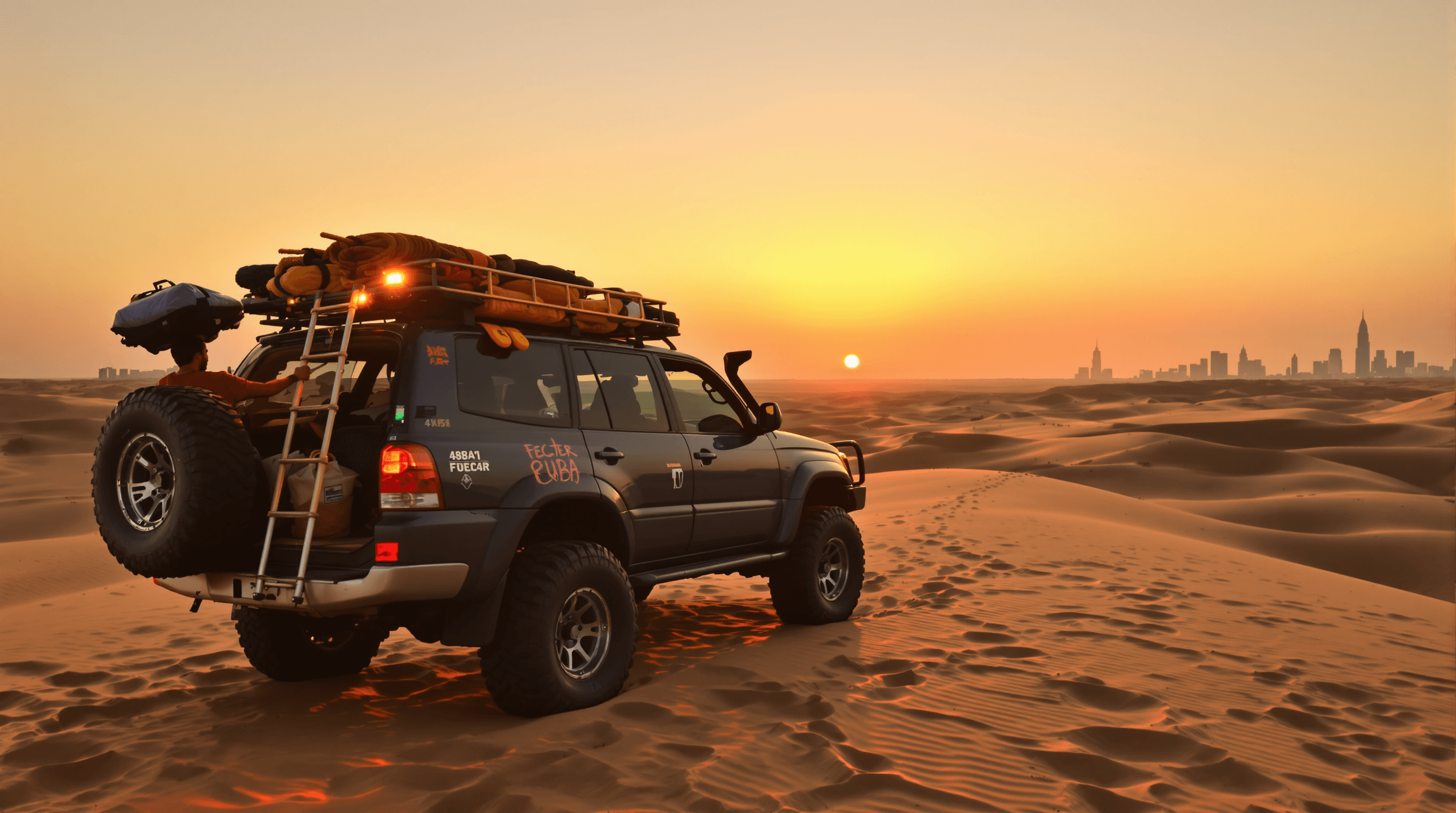
If you're new to desert driving and want somewhere close to the city to find your feet, Al Marmoom is hard to beat. It's a large conservation reserve south of Dubai, out past the Al Qudra lakes, and it's the kind of terrain where you can practice airing down, reading sand and recovering a stuck car without committing to a full day's drive into the empty quarter.
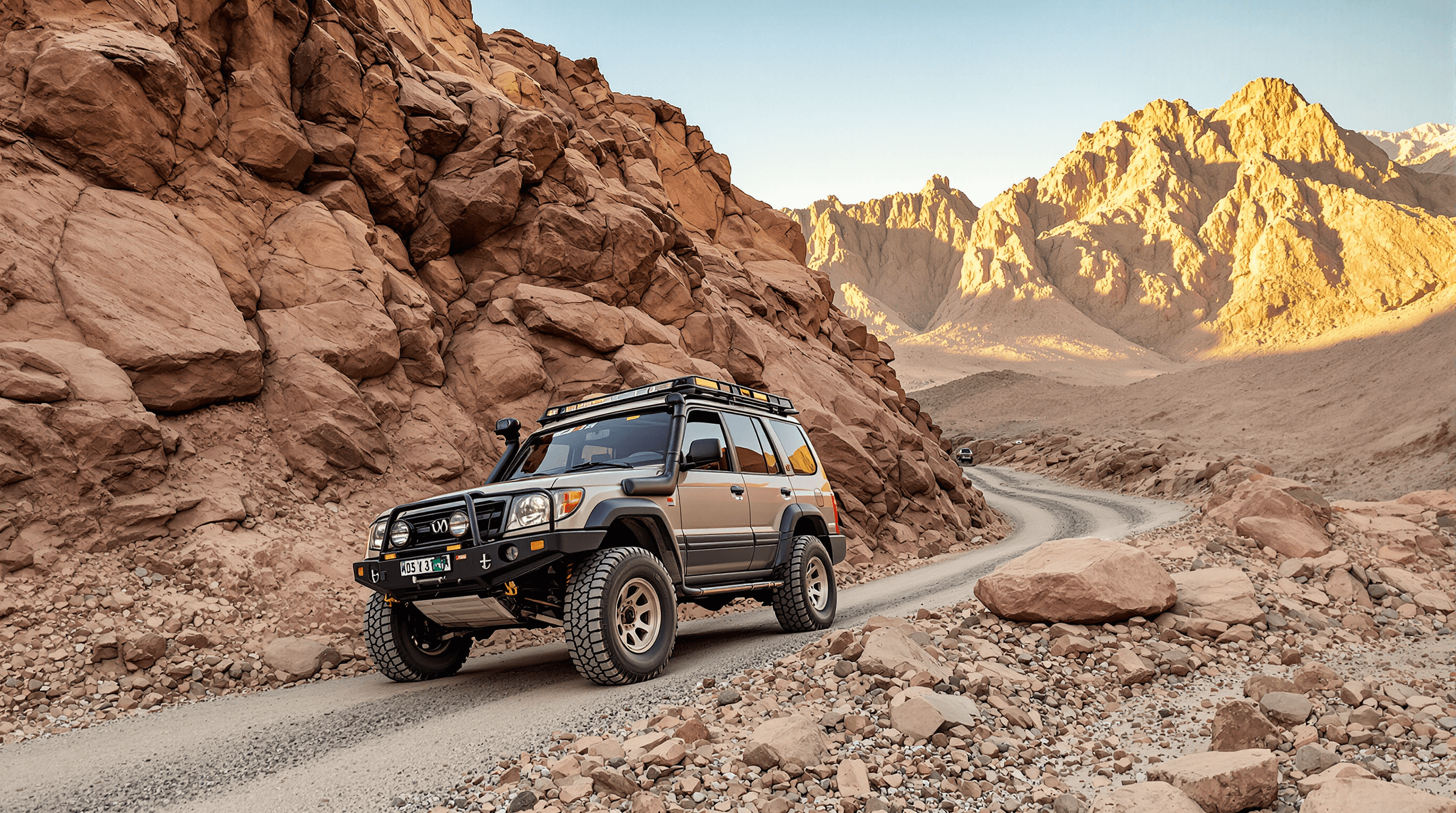
It's not all soft dunes either. The reserve is a mix — graded tracks and hard-packed flats near the edges, with proper sand the deeper in you go. That range is exactly why so many people cut their teeth here before heading somewhere more committing like Liwa or Sweihan.
What the driving is actually like
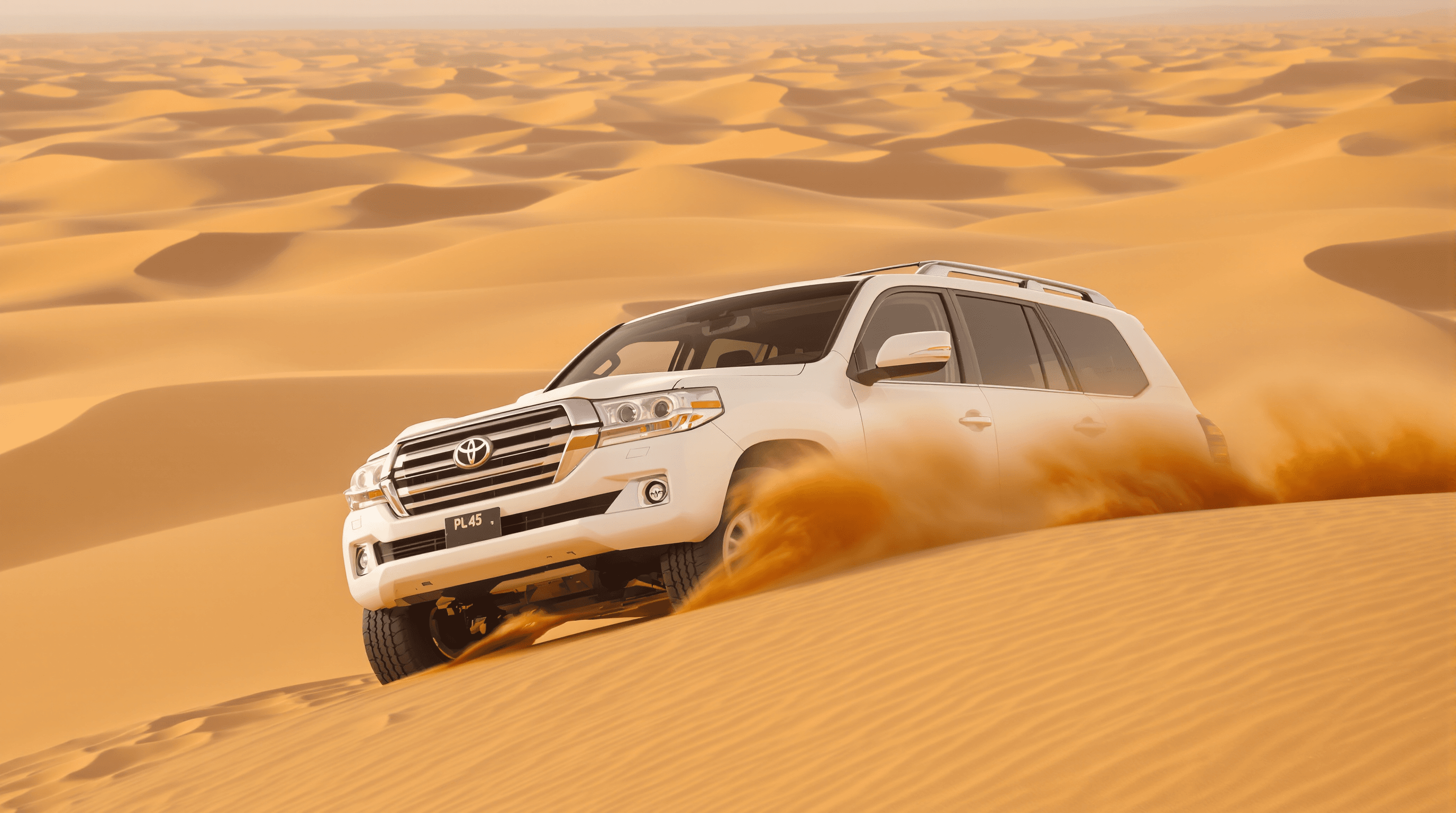
The easiest way to think about Al Marmoom is in layers. Around the lakes and on the perimeter tracks you'll find compacted gravel and flat sand that almost any 4x4 can handle at sensible pressures. Push further in and the sand softens and the dunes get bigger, which is where the real practice — and the real chance of getting bogged — starts.
For a first proper sand session this is ideal. You get gentle bowls and slopes to learn momentum and steering on, but you're never far from firmer ground or other cars if it goes wrong. Go with at least one other vehicle once you leave the easy tracks. Recovering a stuck car on your own in soft sand is miserable, and a second vehicle turns a two-hour ordeal into a five-minute tug.
Wildlife you might see
The big draw alongside the driving is the wildlife. Al Marmoom is a protected reserve and is well known for its Arabian oryx, plus gazelles and the birdlife around the Al Qudra lakes. Mornings and late afternoons are your best bet for seeing animals — through the middle of the day in the heat, most sensible creatures (including you) should be in the shade.
Keep your distance and don't chase anything for a photo. It stresses the animals and it's the fastest way to get yourself a problem with the rangers. Stick to existing tracks where you can; tearing up virgin ground in a conservation area is exactly the behaviour that gets places closed to drivers.
Getting your car ready
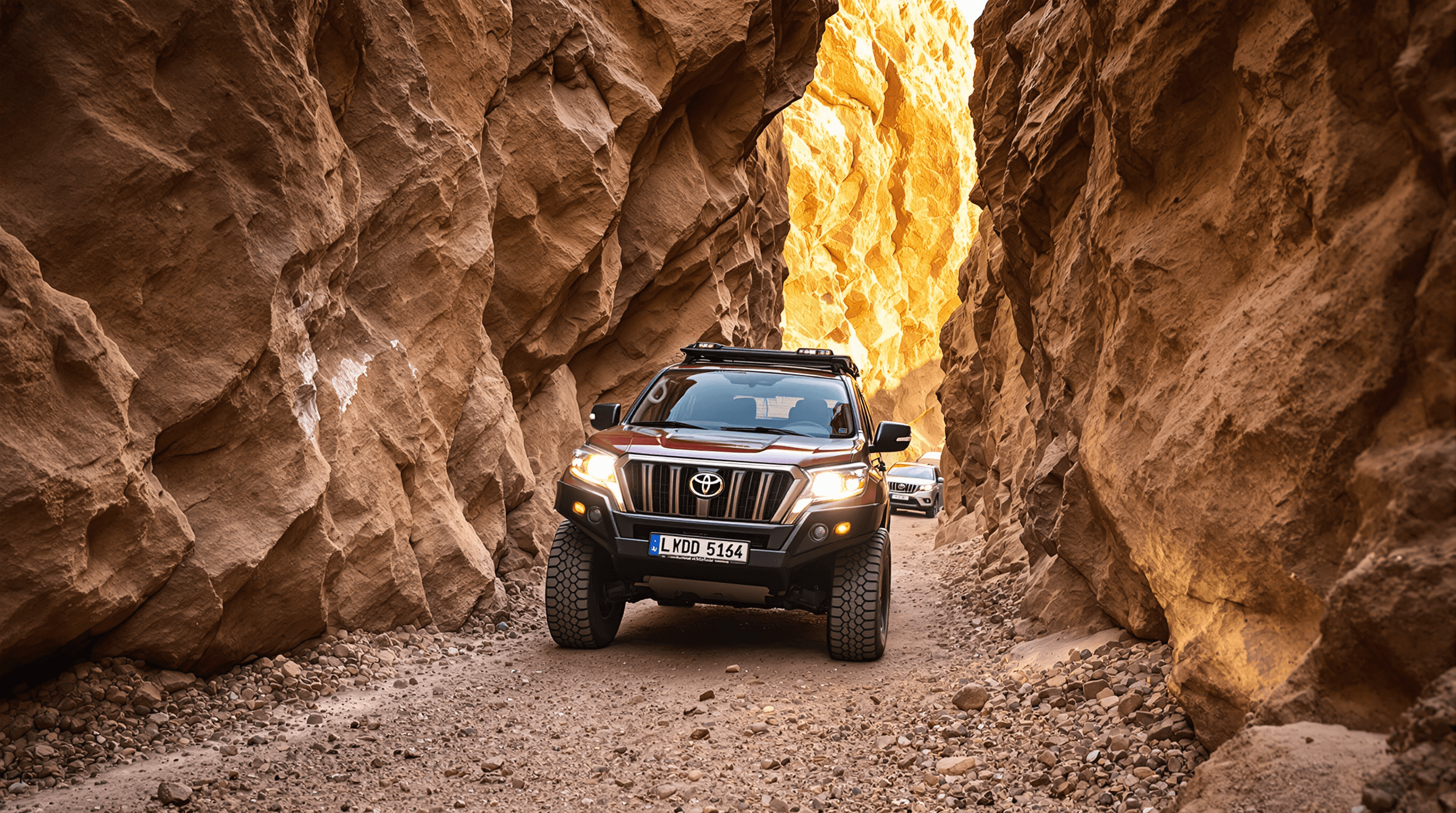
You don't need a heavily modified truck for Al Marmoom — a stock 4x4 with low range is plenty for the easier areas, and a Prado, Patrol, Wrangler or similar will do everything most people want here. What matters far more than mods is preparation:
- Air down before you hit the soft stuff. Dropping your tyre pressures dramatically increases your footprint and grip in sand. Exactly how low depends on your tyres and load — see tyre pressure for sand — but you'll be well below road pressures.
- Carry a compressor. You have to pump the tyres back up before you return to tarmac, and there's no air pump in the middle of the desert.
- Bring recovery gear and know how to use it. A decent tow strap or recovery rope, recovery boards and a way to attach them to your car. Gear you can't use is just ballast.
- Take plenty of water. More than you think you'll need, for you and your passengers. Heat sneaks up on people out here.
- Fill the tank first. Sand driving burns noticeably more fuel than the highway, and you don't want to be doing range maths halfway through the afternoon.
If any of that is new to you, it's genuinely worth doing a proper lesson before going out solo. A few hours with an instructor will teach you more than a dozen nervous YouTube videos. There's a rundown of what a first off-road lesson actually involves if you want to know what to expect.
Timing and seasons
The cooler months, roughly November through March, are the best time to be out here — comfortable temperatures, more wildlife about during the day, and clear light for photos. In the hot half of the year, treat the desert with respect: go early, be off the sand before the worst of the midday heat, and don't push it.
Always check the forecast before you set off. Strong wind and blowing sand kill visibility and make navigation genuinely dangerous, so if it's blowing hard, save it for another day.
Why it's a good first desert
What makes Al Marmoom worth recommending isn't any single dramatic dune — it's that it lets you build skills in stages, close to home, with an easy bailout if things don't go to plan. Start on the firm perimeter tracks, work your way into the softer sand as your confidence grows, and you'll come away a better driver each visit.
When you're ready for something bigger, the same skills carry straight over to the more demanding desert further out. For a sense of where to go next, the routes directory is a good place to start.
A few common questions
Can I do it in a stock Prado or Patrol? Yes. Both are completely at home on the easier tracks and softer sand here without any modifications. Make sure 4x4 and low range actually engage, drop your tyre pressures, and practise the basics first.
When's the best time to go? The cooler months, around December to February, are ideal — better temperatures, more active wildlife and nicer light. In summer, go at first light and get off the sand before the heat builds.
Is it suitable for a family day out? The easier tracks are fine for families, and the wildlife makes it a good outing with kids. Save the deeper, softer dunes for when the adults are confident, and bring shade and far more water than you think you'll need.
Reviewed by experienced desert drivers. Our team personally visits operators and tests courses across the UAE.
Explore the Directory
Find off-road clubs, courses, garages and events across Dubai & UAE.
View Directory →