Choosing an Air Compressor for Desert Driving in the UAE
What to actually look for in a 4x4 air compressor for UAE sand driving: portable vs onboard, the specs that matter in the heat, and how to keep one alive in the desert.
Choosing an Air Compressor for Desert Driving in the UAE
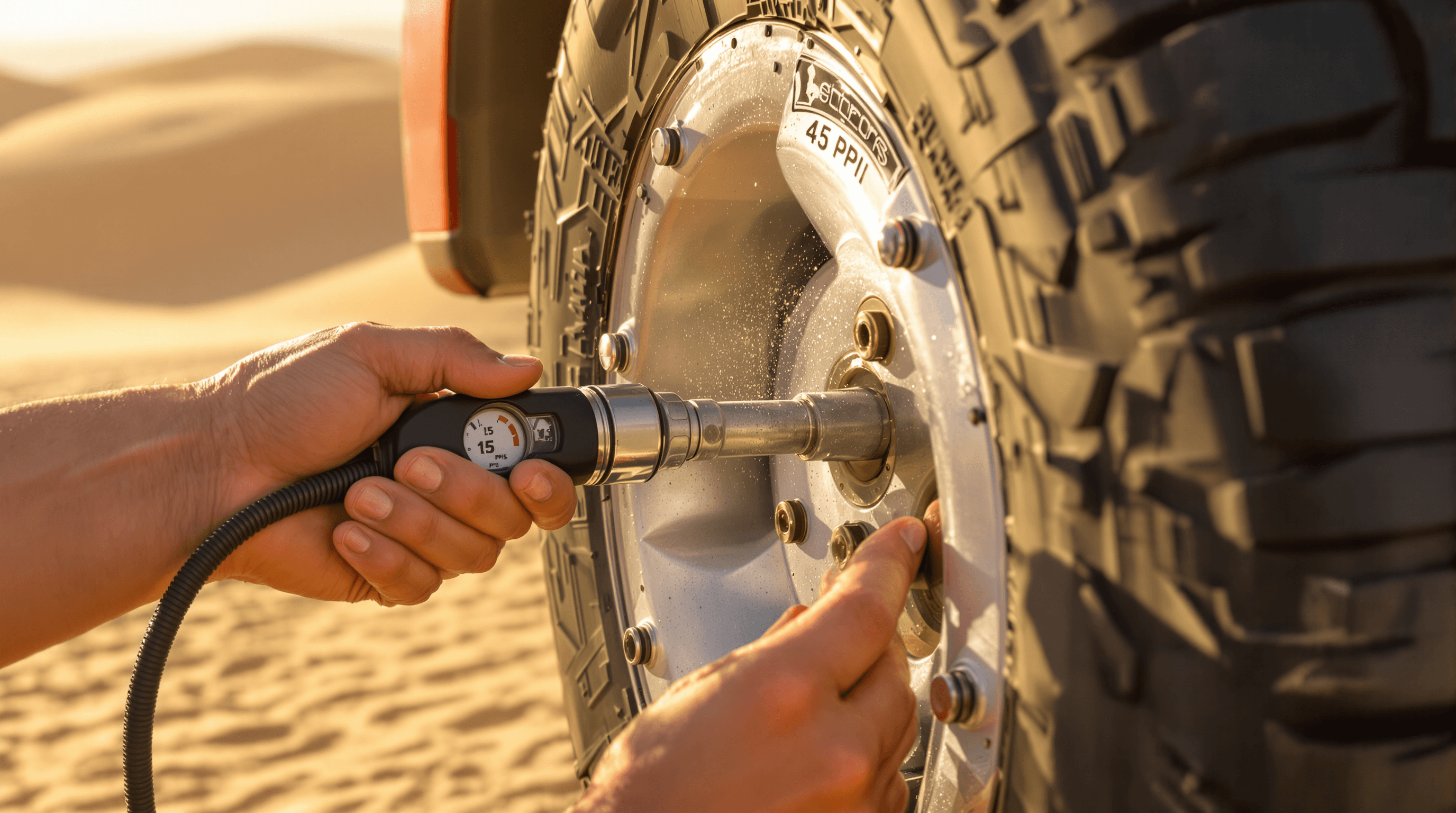
Once you start airing down for sand, a compressor stops being optional. You drop your tyres to single digits or low teens to get flotation in soft sand, and then you need to put that air back before you touch tarmac again — driving any distance on dropped pressures will overheat and wreck a tyre. A foot pump won't cut it across four big 4x4 tyres in the heat, so the real question is which compressor, not whether you need one.
The catch in the UAE is that a lot of cheap compressors aren't built for what we ask of them. Reinflating four large tyres back up from low pressures is a long, continuous run, and you're doing it when the air and the ground are both baking. That combination — long duty cycle plus heat plus fine sand — is what separates a unit that lasts years from one that cooks itself in a season.
What actually matters in the heat
Forget peak figures on the box. The numbers that decide whether a compressor survives UAE use are these:
- Duty cycle. This is how long it can run before it has to stop and cool down. A high flow rate is useless if the motor shuts off halfway through your second tyre. Look for something rated to run continuously, or close to it, at high ambient temperatures — that's the spec that gets abused here.
- Thermal protection. A good unit will shut itself off before it burns out rather than failing. Cheap ones often don't, and they die in the worst possible place.
- Heat tolerance overall. Summer ground and engine-bay temperatures are brutal. Anything specced only for mild climates will struggle.
Flow rate matters too — more airflow means less time standing in the sun watching a gauge — but treat it as the tie-breaker, not the headline. A modest-flow compressor that runs all day beats a high-flow one that needs a rest after every tyre.
Portable vs onboard
Most people start with a portable compressor: it lives in a box in the back, clamps to the battery, and you set it up each trip. It's cheaper, you can move it between vehicles, and for monthly desert trips it's plenty. The downside is the setup-and-pack ritual every time, and the leads and hose getting hot and dusty.
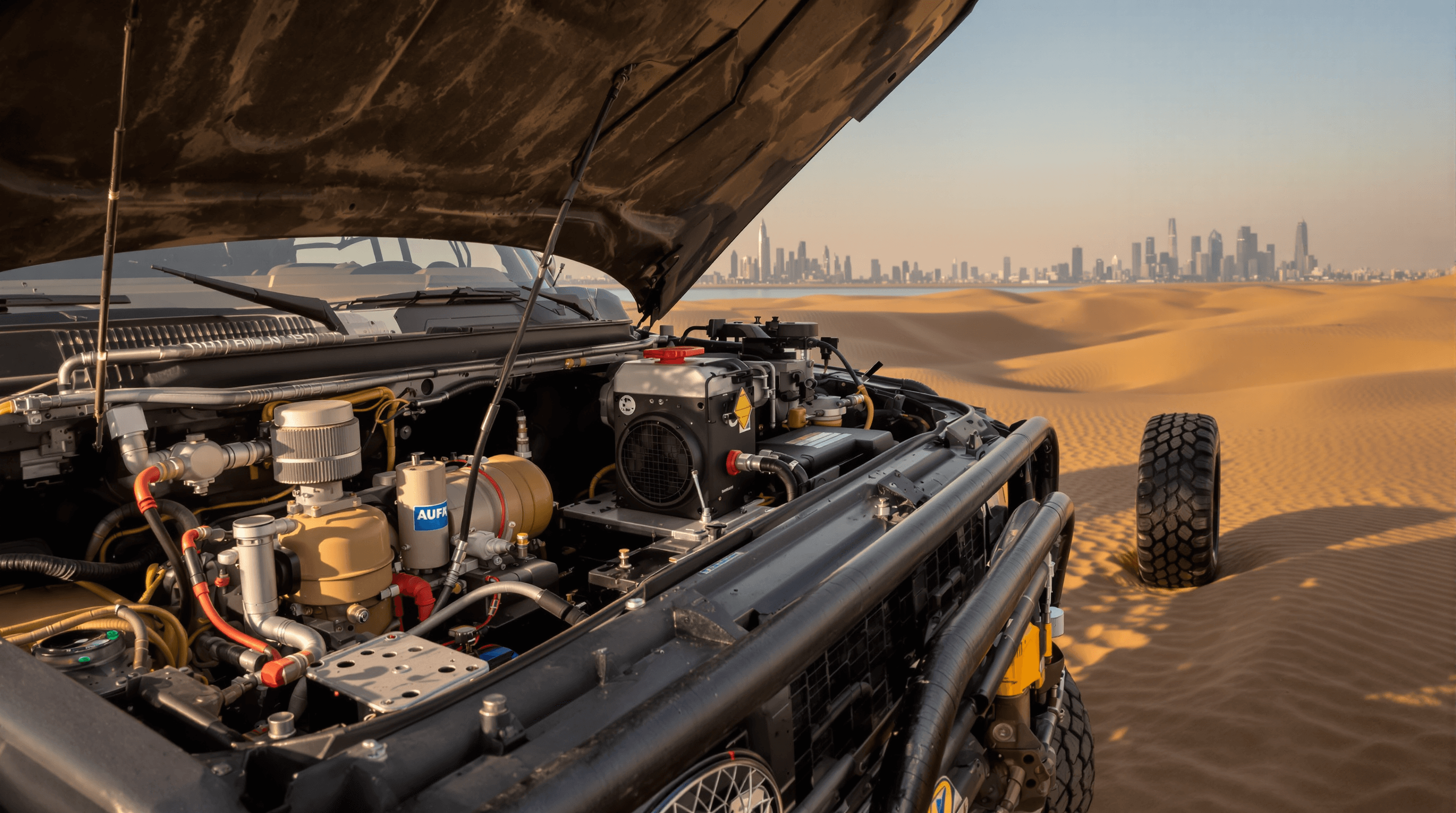
An onboard (permanently mounted) system wires into the vehicle and runs off a switch. No setup, no storage hassle, and the better twin-motor units reinflate quickly. The trade-off is cost and a proper installation — electrical integration, fusing, a sensible mounting spot. If you're out most weekends or you're tired of the unpack-repack routine, it's worth it; otherwise a quality portable does the same job for less.
ARB and VIAIR are the two brand names you'll hear most around here, simply because they're widely sold and serviced locally and people have run them for years. Whatever you buy, buying something with local support beats chasing the absolute cheapest grey import — when a compressor fails, it usually fails far from anywhere.
Power and wiring
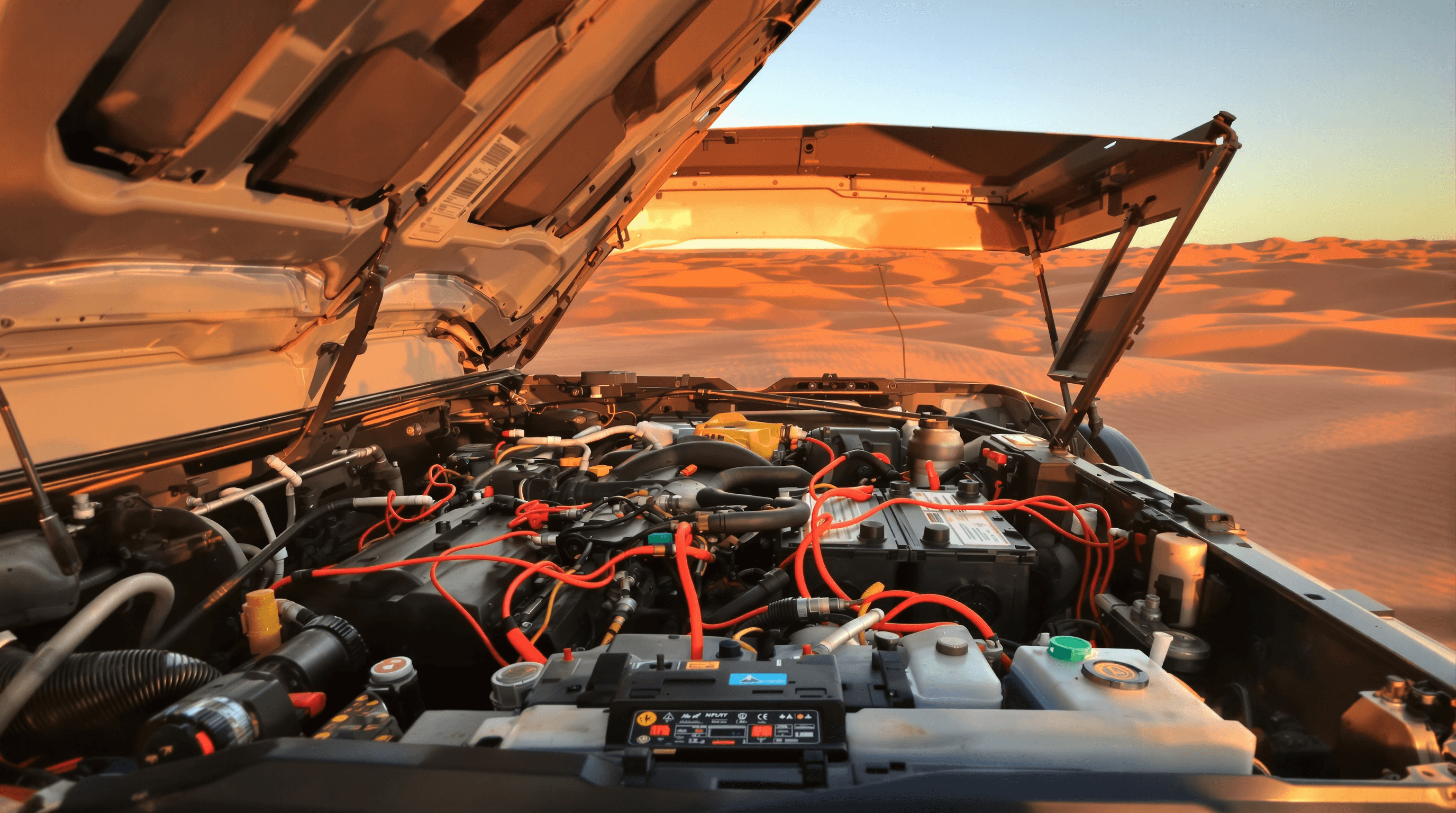
A real 4x4 compressor pulls serious current, so the supply matters as much as the unit. Run it off a healthy battery with the engine running, use cable heavy enough for the draw and the distance, and fuse it to the manufacturer's rating — don't guess. Undersized wiring is the classic mistake: it drops voltage, the compressor underperforms and runs hot, and you've created your own failure.
If you've already got a dual-battery setup for a fridge, lights or a winch, that's the ideal place to hang a compressor — you can run it without touching your starting battery, which is exactly what you want when you're parked out in the dunes.
Keeping it alive in the desert
Sand is the thing that kills compressors here. Fine dust gets through air filters and into the works, so the single most useful habit is keeping the intake clean and out of loose sand when it's running. Beyond that:
- Mount or place it where it can breathe — out of direct sun, with airflow around it. Heat is its enemy and you don't want to make that worse.
- Keep the electrical connections clean and tight, especially if you're anywhere near the coast where corrosion sets in faster.
- Give it a look-over now and then: clear any sand off the cooling surfaces, check the mounting, make sure nothing's worked loose from vibration.
None of this is complicated, but it's the difference between a compressor that lasts and one that doesn't. Treat the dust seriously and a decent unit will run for years.
So what should you buy?
If you off-road occasionally, a quality portable from a brand with local backup is the sensible choice — enough flow and duty cycle to do the job, cheap enough to justify, easy to move on if you change vehicles. If you're out most weekends or you run a vehicle full of accessories already, an onboard system fitted properly is worth the extra outlay for the convenience alone.
The one thing worth saying plainly: avoid the bargain-bin units. The ultra-cheap compressors are built for topping up a road tyre, not for inflating four off-road tyres in 45-degree heat, and they tend to fail exactly when you need them. A breakdown in the middle of the desert costs far more — in recovery and in your day — than the money you saved.
If you want to see what's available locally and compare options, browse the gear directory, and a good 4x4 workshop can sort an onboard install properly if you go that route.
A few common questions
How much flow do I need? Enough that you're not standing there forever, but care more about duty cycle than peak flow. A compressor that runs continuously through all four tyres in the heat is worth more than a high-flow unit that keeps shutting off to cool down.
Can I just use a cheap car tyre inflator? For topping up a road tyre, fine. For reinflating four big 4x4 tyres after a sand session, no — they don't have the duty cycle or the heat tolerance, and they tend to burn out under that load.
Portable or onboard? Portable if you off-road monthly or want to move it between vehicles. Onboard if you're out most weekends and want it ready at the flick of a switch. Both do the same job; it's about convenience versus cost.
Reviewed by experienced desert drivers. Our team personally visits operators and tests courses across the UAE.
Shop 4x4 Gear & Accessories
Recovery gear, winches, tyres and accessories from top UAE shops.
View Directory →