How to Deflate Tyres for Sand Driving in UAE 2025
Complete guide to deflating tyres for sand driving in UAE. Learn proper PSI levels, techniques, and safety tips for desert off-roading in Dubai.
How to Deflate Tyres for Sand Driving in UAE 2025
Deflating tyres for sand driving is the single most important technique for successful desert off-roading in the UAE. Reducing tyre pressure from standard road levels (32-35 PSI) to sand-appropriate levels (12-18 PSI) increases your tyre's contact patch with sand by up to 40%, dramatically improving traction and preventing your vehicle from sinking.
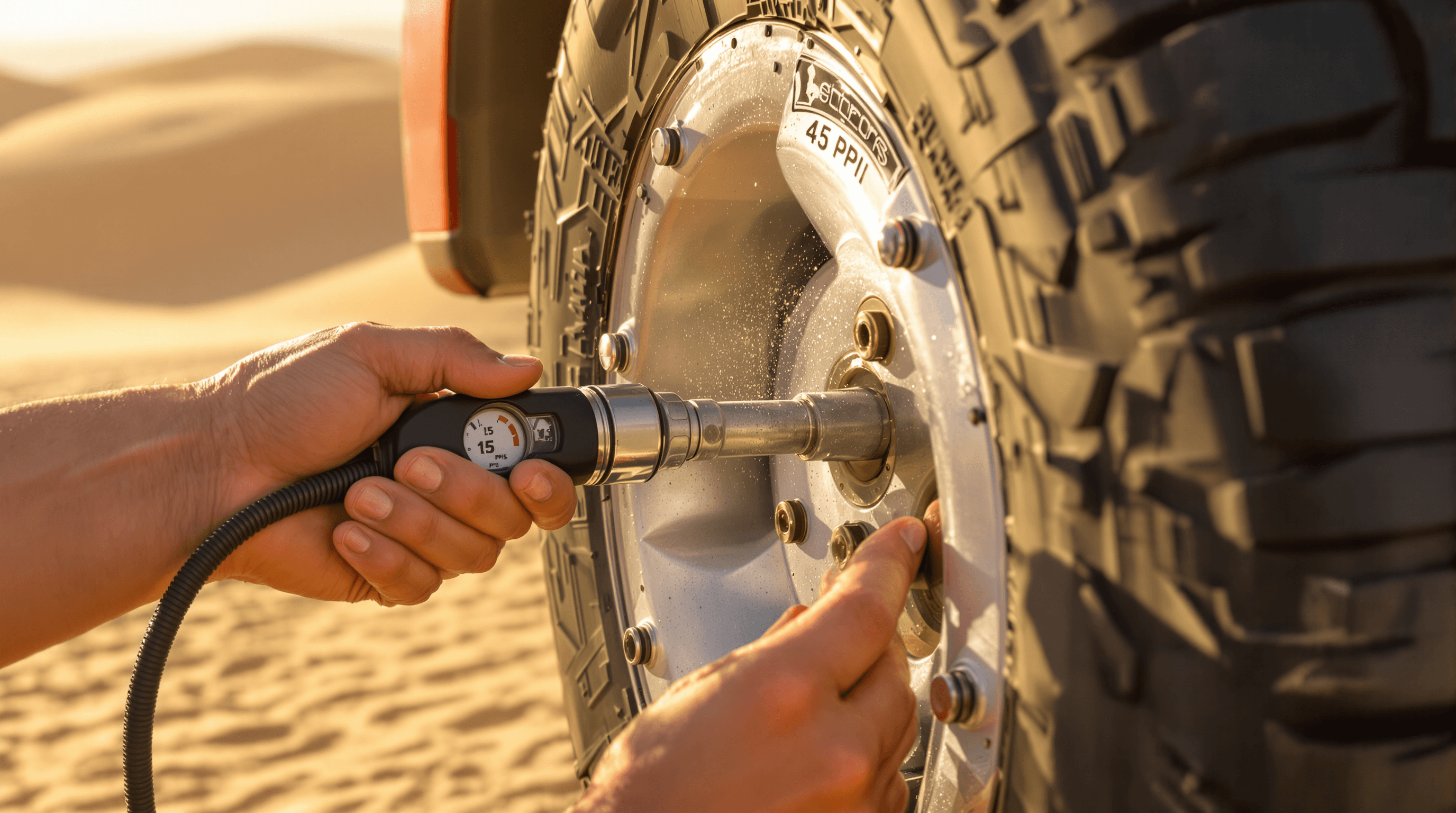
Most Dubai off-roaders deflate to 15 PSI for general sand driving, though this varies based on vehicle weight, tyre size, and sand conditions. The process takes 5-10 minutes per vehicle and requires either a manual deflation tool or careful use of your tyre valve. Getting tyre pressure right transforms struggling through sand into smooth, controlled driving across the UAE's diverse desert terrain.
Why Deflate Tyres for Sand Driving
Deflating tyres for sand creates a larger contact patch between your tyre and the sand surface, distributing your vehicle's weight over a wider area. Standard road pressure (32-35 PSI) creates a narrow contact patch that cuts into sand like a knife, causing your wheels to dig down and lose traction.
At 15 PSI, your tyre footprint increases by approximately 35-40% compared to road pressure. This wider, flatter contact area allows your vehicle to "float" on sand rather than sink into it. The increased surface area also improves lateral stability when driving across slopes or negotiating sharp turns in dunes.
Lower pressure also allows the tyre sidewall to flex more, which helps the tyre conform to uneven sand surfaces. This flexibility provides better grip on both soft sand and harder packed areas you'll encounter throughout UAE desert routes.
Here's how different pressures affect tyre performance in UAE sand conditions:
| Tyre Pressure | Contact Patch Size | Best Used For | Traction Level |
|---|---|---|---|
| 32-35 PSI | Standard (road) | Tarmac only | Poor in sand |
| 20-25 PSI | +20% larger | Hard-packed sand | Moderate |
| 15-18 PSI | +35% larger | General sand driving | Excellent |
| 10-12 PSI | +45% larger | Soft sand/recovery | Maximum |
Optimal Tyre Pressure Levels for UAE Sand
The ideal tyre pressure for sand driving in the UAE ranges from 12-18 PSI, with 15 PSI serving as the standard starting point for most vehicles. Your optimal pressure depends on vehicle weight, tyre size, and specific sand conditions you'll encounter.
Light SUVs and crossovers (Nissan X-Trail, Honda CR-V) perform best at 16-18 PSI. These vehicles have less ground clearance and lighter weight, requiring slightly higher pressure to prevent tyre sidewall damage on obstacles.
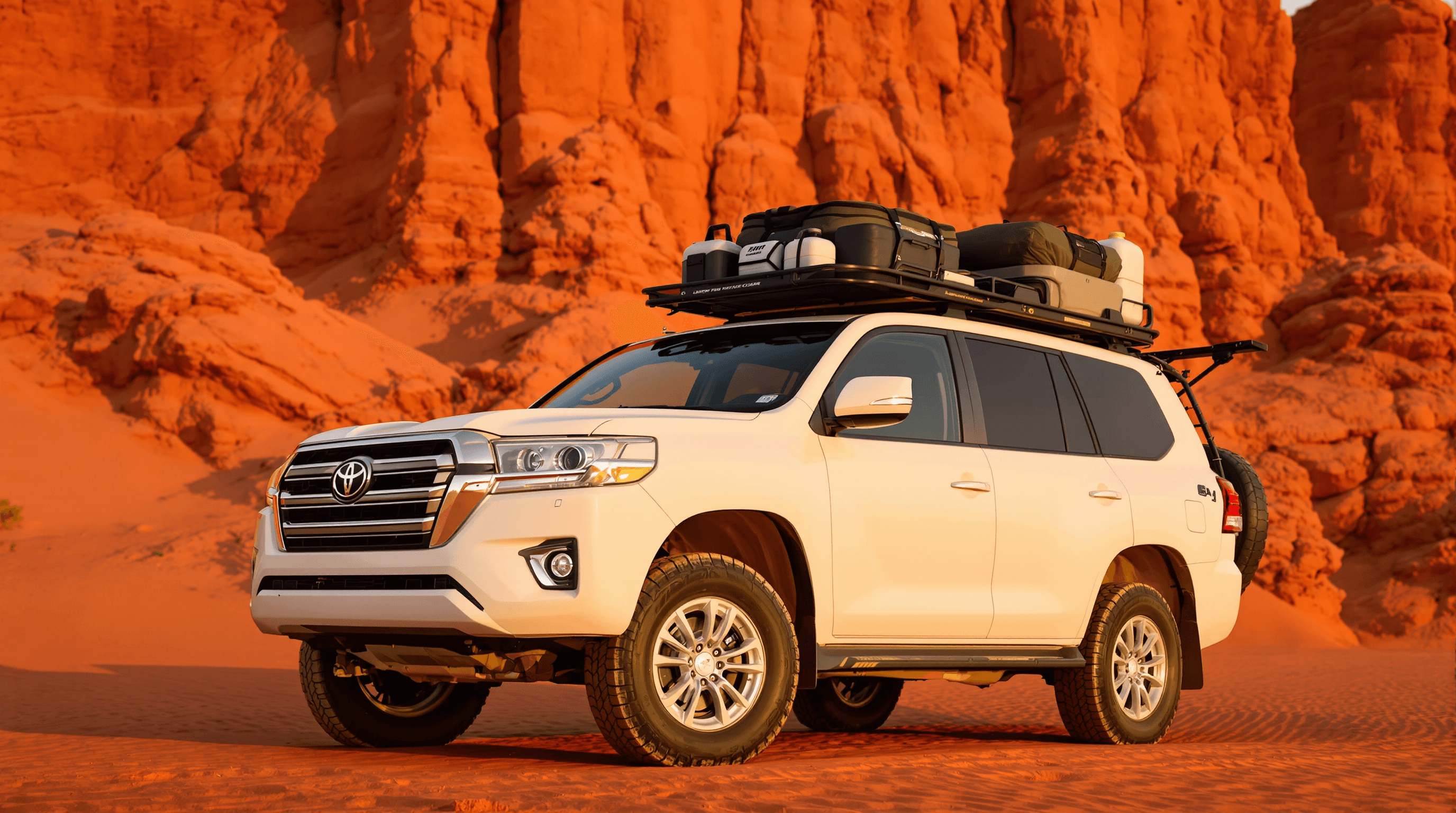
Full-size SUVs (Toyota Prado, Nissan Patrol, Ford Explorer) work optimally at 14-16 PSI. This pressure range provides excellent flotation while maintaining sidewall integrity for heavier vehicles.
Heavy 4x4s and trucks (Land Cruiser 79 Series, Ford Raptor, Chevrolet Tahoe) typically deflate to 12-15 PSI. Their greater weight requires more flotation, and stronger sidewalls can handle lower pressures safely.
Sand conditions also dictate pressure adjustments. Soft, fine sand around Al Qudra or Big Red Dune may require dropping to 12-14 PSI for adequate flotation. Firmer sand at locations like Fossil Rock allows running 16-18 PSI comfortably.
For detailed guidance on reading sand conditions and choosing routes, check our comprehensive guide to desert driving in UAE.
Step-by-Step Deflation Process
Start deflation while your tyres are cool, ideally before driving to your off-road location or immediately upon arrival. Hot tyres from highway driving will show artificially high pressure readings and can lead to over-deflation.
Step 1: Check current pressure using a reliable digital gauge. Note the reading for each tyre, as pressures often vary slightly between tyres. Quality gauges like the ARB Digital Tyre Gauge provide accurate readings essential for proper deflation.
Step 2: Calculate target pressure based on your vehicle type and planned route difficulty. Start conservative (16-17 PSI) for your first sand driving session, then adjust based on performance.
Step 3: Begin deflation using your preferred method. Manual deflation tools offer the most control and speed. Popular options include the ARB E-Z Deflator or Staun Tyre Deflators for simultaneous 4-wheel deflation.
Step 4: Monitor pressure frequently during deflation. Check every 2-3 PSI drop to avoid over-deflation. Going too low risks tyre damage or dangerous handling characteristics.
Step 5: Drive test your setup on moderate sand before tackling challenging terrain. Well-deflated tyres should provide noticeably improved traction and smoother ride over sand surfaces.
For comprehensive sand driving techniques beyond tyre pressure, explore our detailed sand driving safety guide.
Essential Deflation Tools and Equipment
Manual deflation tools provide the fastest, most controlled method for reducing tyre pressure. The ARB E-Z Deflator (AED 145-165) screws onto your valve stem and releases air at a controlled rate, allowing precise pressure management without guesswork.
Automatic deflators like Staun Automatic Tyre Deflators (AED 280-320 for set of 4) screw onto all four valves simultaneously and automatically stop at your preset pressure. This hands-free approach saves time but costs more initially.
Digital pressure gauges are essential for accurate readings. Basic gauges can be off by 2-3 PSI, which significantly affects sand performance. Quality options include the ARB Digital Tyre Gauge (AED 85-95) or Longacre Digital Gauge (AED 120-140).
Portable air compressors become critical for re-inflation before returning to tarmac. Popular UAE-proven models include the ARB Twin Compressor (AED 1,200-1,400) for heavy use or Bushman Fridges Portable Compressor (AED 450-550) for occasional use.
Store deflation tools in an easily accessible location. Many Dubai off-roaders keep a complete kit in their glovebox or center console for quick deployment at desert entry points.
For expert advice on tools and where to purchase in Dubai, visit our off-road garages directory featuring specialists who stock professional-grade equipment.
Common Deflation Mistakes to Avoid
Over-deflation ranks as the most dangerous mistake new sand drivers make. Dropping below 10 PSI increases risk of tyre bead separation, rim damage, or complete tyre failure. Always err on the conservative side until you gain experience.
Inconsistent pressure between tyres creates unpredictable handling and increased wear. A 3-4 PSI difference between front and rear, or left and right, causes the vehicle to pull and affects braking performance in sand.
Deflating hot tyres leads to inaccurate pressure readings. Tyres heat up 5-8 PSI during highway driving to desert locations. Let tyres cool 20-30 minutes before checking pressure, or account for temperature increase in your calculations.
Forgetting to re-inflate before returning to tarmac poses serious safety risks. Driving on highways with sand pressures (12-15 PSI) causes excessive heat buildup, potential blowouts, and severely compromised handling.
Using cheap pressure gauges results in inconsistent readings and poor deflation decisions. Invest in a quality digital gauge rather than relying on pencil-style gauges or garage forecourt equipment.
Deflating too quickly without monitoring can easily lead to over-deflation. Check pressure every few PSI rather than deflating to what you think is correct, then measuring.
Learn from experienced drivers by joining organized trips through our off-road clubs directory, where veteran members share practical deflation techniques.
Re-inflation After Sand Driving
Re-inflate tyres immediately after completing your sand driving session and before returning to sealed roads. Driving on tarmac with sand pressures (12-18 PSI) causes dangerous heat buildup, poor handling, and potential tyre failure.
Most portable compressors require 8-12 minutes per tyre to inflate from 15 PSI to 32 PSI, depending on tyre size and compressor capacity. Plan accordingly, especially if traveling in a convoy where multiple vehicles need re-inflation.
Check final pressures accurately using your digital gauge rather than relying on compressor gauges, which often read 2-3 PSI high. Proper road pressure ensures safe highway driving and prevents premature tyre wear.
Inspect tyres after each sand session for cuts, embedded objects, or sidewall damage that may have occurred during off-road driving. Sand can hide sharp objects that puncture tyres, and lower pressures increase sidewall flex that may reveal damage.
Consider upgrading to a dual-battery system if you frequently deflate/inflate tyres. Running compressors for extended periods can drain your main battery, leaving you stranded. Our dual battery setup guide covers popular UAE-specific installations.
Quality workshops throughout Dubai offer professional tyre inspection and repair services. Browse our garage directory for shops experienced with off-road tyre damage and repairs.
Advanced Pressure Adjustment Techniques
Progressive deflation involves starting at moderate pressures (18-20 PSI) and reducing further if conditions demand it. This conservative approach prevents over-deflation while allowing fine-tuning based on actual sand performance.
Differential pressure setups use slightly different pressures front to rear for improved handling. Many experienced UAE desert drivers run rear tyres 1-2 PSI lower than front tyres to improve traction during climbs and reduce understeer in turns.
Load-based adjustments account for cargo weight, fuel load, and passenger count. A fully loaded vehicle requires lower pressures than the same vehicle with just a driver. Reduce target pressure by 1-2 PSI for every 200kg of additional load.
Seasonal adjustments compensate for temperature differences between UAE's winter and summer months. Hot summer sand may require 1-2 PSI lower than winter conditions due to increased air temperature causing pressure rise during driving.
Terrain-specific tuning optimizes pressure for different UAE desert locations. Soft sand at Al Marmoom Desert requires lower pressures than harder-packed areas around Hatta or Fossil Rock.
Advanced techniques require experience and understanding of your vehicle's behavior. Consider professional instruction through our desert driving courses directory to learn pressure optimization safely.
Frequently Asked Questions
What tyre pressure should I use for sand driving in Dubai? Start with 15 PSI for most SUVs and 4x4 vehicles in UAE sand conditions. Light crossovers may need 16-17 PSI, while heavy trucks can go as low as 13-14 PSI. Always start conservative and adjust based on your vehicle's performance.
How long does it take to deflate tyres for desert driving? Manual deflation takes 2-3 minutes per tyre using proper tools like an ARB E-Z Deflator. Automatic deflators can do all four tyres simultaneously in 5-8 minutes. Budget 10-15 minutes total including pressure checks and final adjustments.
Can I deflate tyres using just the valve stem? Yes, but it's slow and imprecise. Pressing the valve core with a small tool releases air, but controlling exact pressure is difficult. Invest in proper deflation tools for consistent results and time savings during desert trips.
What happens if I deflate tyres too much for sand? Over-deflation (below 10 PSI) risks tyre bead separation, rim damage, or complete tyre failure. You'll also experience poor handling, excessive sidewall flex, and potential damage from rocks or hard sand surfaces. Always err on the conservative side.
Do I need to deflate tyres for hard-packed desert roads? Yes, even hard-packed sand benefits from reduced tyre pressure, though you can run higher pressures (18-20 PSI) than in soft sand. The increased contact patch still improves traction and comfort compared to full road pressure.
How often should I check tyre pressure during a long desert drive? Check pressures every 2-3 hours of continuous sand driving or if you notice changes in traction or handling. Heat buildup from extended driving can increase pressure 2-4 PSI, affecting performance in challenging sections.
Reviewed by experienced desert drivers. Our team personally visits operators and tests courses across the UAE.
Shop 4x4 Gear & Accessories
Recovery gear, winches, tyres and accessories from top UAE shops.
View Directory →