Staying Safe in the UAE Desert — What Actually Matters
Honest, practical desert driving safety for the UAE: how to prep the car, manage the heat, drive sand without getting stuck, and what to do when it goes wrong.
Staying Safe in the UAE Desert — What Actually Matters
The desert here is forgiving right up until it isn't. You can spend a hundred easy weekends in the dunes and then have one afternoon where the car overheats, a storm rolls in, or someone gets badly stuck a long way from a phone signal. None of that is dramatic if you've prepared for it, and all of it is dangerous if you haven't. This is the stuff I wish someone had told me plainly before my first proper desert trip.
Getting the car ready
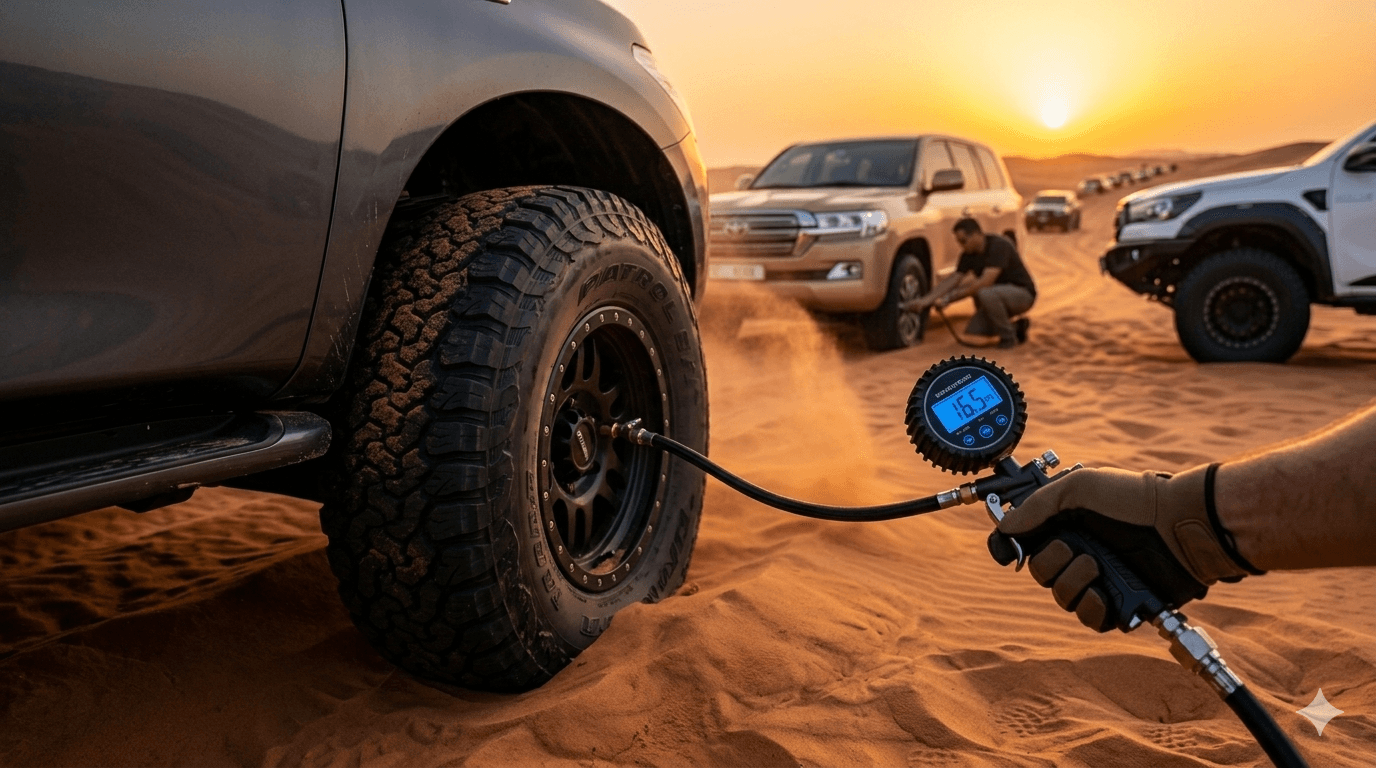
Sand and heat are hard on a vehicle, so a quick check before you head out saves a lot of grief later. Drop your tyre pressures for the sand — most people run somewhere in the low-to-mid teens (PSI) depending on the car and the softness, and you'll feel the traction come good once you do. Carry a compressor so you can pump back up before you hit tarmac, because driving the highway home on soft tyres is how you ruin them.
Beyond pressures, the basics:
- Top up oil and coolant, and have a proper look at the cooling system. Heat is what kills cars out here, so check the radiator's clear of debris and the fan's working.
- Check the air filter. Fine sand clogs it fast, and a choked filter robs you of power right when you need momentum.
- Fill the tank, and bring extra fuel if you're going far. Sand driving in low range burns through it much faster than you'd expect.
- Carry recovery gear you actually know how to use — at minimum a rated recovery strap, shackles, and traction boards. A shovel is worth its weight.
- Have a spare tyre in good shape.
Extreme heat also knocks batteries around and makes a weak one fail without warning, so if yours is getting old, replace it before the summer rather than discovering the problem in the middle of nowhere. If you want a breakdown of recovery kit, the recovery gear guide covers what's worth carrying.
Heat is the real hazard
People worry about getting stuck. The thing that actually hurts you is the heat. UAE summer temperatures sit well above 40°C and a parked car turns into an oven, so plan around it rather than fighting it.
In the warmer months, leave early — a dawn start gets you the good light and the cooler sand, and you're heading home before the worst of the afternoon. Carry far more water than you think you need, several litres per person, and keep a reserve in the car that you don't touch unless things go wrong. Long sleeves, a hat and decent sunglasses do more than they look like they should.
If you break down, don't sit in a hot cabin. Get shade going — open the doors, rig an awning or tarp, park so the sun's off you. Learn what heat exhaustion looks like (heavy sweating, nausea, dizziness, a thumping headache) because it creeps up before you notice. If someone stops sweating, goes confused or their skin goes hot and dry, that's heat stroke and it's a genuine emergency — call 999 and get them cooled and evacuated fast.
Reading the sand
Most of staying un-stuck is momentum and reading the terrain, not bravery. Keep moving at a steady, sensible pace rather than charging — too fast and you're a passenger, too slow and you bog down. Smooth inputs win; sharp steering on a slope is how cars roll.
A few habits that keep you out of trouble:
- Commit to your line up a dune and hold a steady throttle. Stopping halfway usually means sliding back or burying the wheels.
- If a climb doesn't work out, reverse straight back down your own tracks. Don't try to turn across a steep face.
- Come off dunes down the fall line, not across it.
- When in doubt, stop and walk it first. Two minutes on foot beats an hour of digging.
Side slopes are where the real risk lives — a car will roll sideways long before it'll tip end over end, so treat any traverse on a steep face with respect and avoid it where you can. The crests and steeper faces are softer and steeper than they look from the bottom, so scout the unfamiliar ones.
When you do get stuck — and everyone does — sort your pressures and dig out around the tyres before you reach for anything heavier. Traction boards solve most situations. If you're using a strap or winch, only ever attach to rated recovery points, keep everyone well clear of the line, and never stand over a loaded strap, because if something lets go it can kill. If you're not confident with recovery, the single best thing you can do is take a course where you practise it with someone who knows what they're doing.
Don't get cut off
Phone coverage is patchy once you're off the main tracks, and it disappears entirely in the deeper desert. Before you go, tell someone where you're headed and when you expect to be back — that one habit does more for your safety than any gadget.
Download offline maps before you leave so you're not relying on signal. What3Words is genuinely useful for handing emergency services a precise location, so have it installed. For remote or solo trips, a satellite messenger or beacon is worth the money; cellular alone isn't something to bet your day on out there. If you do need help, 999 handles desert rescue — give them coordinates or a What3Words square, the number of people, anyone hurt, and what supplies and shade you've got.
Travel with other cars
The simplest safety upgrade is not going alone. A second or third vehicle means someone to pull you out, share water and tools, and go for help if it comes to that. The desert overwhelms a lone car quickly.
Keep it loose and sensible: an experienced driver up front and another at the back, radios if you've got them, and enough gap between cars in the soft stuff that one person bogging down doesn't trap the car behind. Pace the group to the least experienced driver, not the keenest one — nobody minds going a bit slower, everybody minds a long recovery in the heat. If you're new, your easiest route in is tagging along with one of the local clubs, who run trips with people who've done it a thousand times.
Watch the weather
UAE desert weather turns fast. A shamal can drop visibility to almost nothing within minutes and hang around for hours, and it'll reshape the dunes you thought you knew. If there's a sandstorm warning, just don't go — there's another weekend coming. Check the National Center of Meteorology forecast before you commit.
The other one people forget is the cold. Winter nights in the desert drop a lot further than the daytime suggests, and if you end up stuck overnight without warm gear it's genuinely miserable and can be dangerous. If you're camping or going remote in winter, pack like it'll get cold, because it will.
A few common questions
When's the best time to go? Roughly October through March. The temperatures are sane, the sand's pleasant, and you're not gambling against extreme heat. Mid-summer is for early mornings only, if at all.
Do I need a course first? You don't legally, but you'll have a much better — and safer — time if you've done one. A good course teaches you sand technique and, more importantly, recovery, so the first time you get stuck or have to pull someone out isn't also the first time you've tried it.
What if I break down somewhere remote? Stay with the car. It's shade, it's shelter, and it's far easier for rescuers to spot than a person on foot. Trigger a beacon if you have one, get out of the heat, ration your water, and wait. Walking off in the heat is how a recoverable situation becomes a serious one.
Reviewed by experienced desert drivers. Our team personally visits operators and tests courses across the UAE.
Explore the Directory
Find off-road clubs, courses, garages and events across Dubai & UAE.
View Directory →