Fossil Rock Off Road Guide Dubai 2025 - Complete UAE Route
Complete fossil rock off road guide for Dubai adventurers. Best routes, vehicle requirements, safety tips and GPS coordinates for UAE's iconic destination.
Fossil Rock Off Road Guide Dubai 2025 - Complete UAE Route
Fossil Rock stands as one of UAE's most accessible yet challenging off-road destinations, located approximately 50km southeast of Dubai in the Sharjah desert. This dramatic limestone formation rises 40 meters above the surrounding sand dunes, offering both novice and experienced drivers a perfect testing ground for their 4x4 skills.
The route to Fossil Rock combines moderate sand driving with rocky terrain, making it an ideal training ground before tackling more demanding desert expeditions. Unlike other UAE off-road destinations, Fossil Rock provides clear visual navigation markers and multiple route options suitable for different skill levels.
Best Routes to Fossil Rock from Dubai
The primary route to Fossil Rock starts from Al Madam Road (E102) near the Sharjah-Dubai border. From Dubai Marina, the total journey covers 65km and takes approximately 1.5 hours including off-road sections.
Main Access Route:
- Exit E311 (Emirates Road) at Junction 4 toward Al Madam
- Follow E102 for 15km until you see the Camel Racing Track
- Turn right onto the graded track after the track entrance
- Continue 8km on hard-packed sand until you reach the rocky outcrops
Alternative Northern Route:
- More challenging sand dunes but shorter distance
- Requires intermediate sand driving experience
- Best accessed with convoy support from our off-road clubs directory
The GPS coordinates for the main Fossil Rock formation are 25.0847°N, 55.5219°E. Always download offline maps before departure as mobile coverage becomes spotty beyond the 5km mark from the main road.
Vehicle Requirements and Specifications
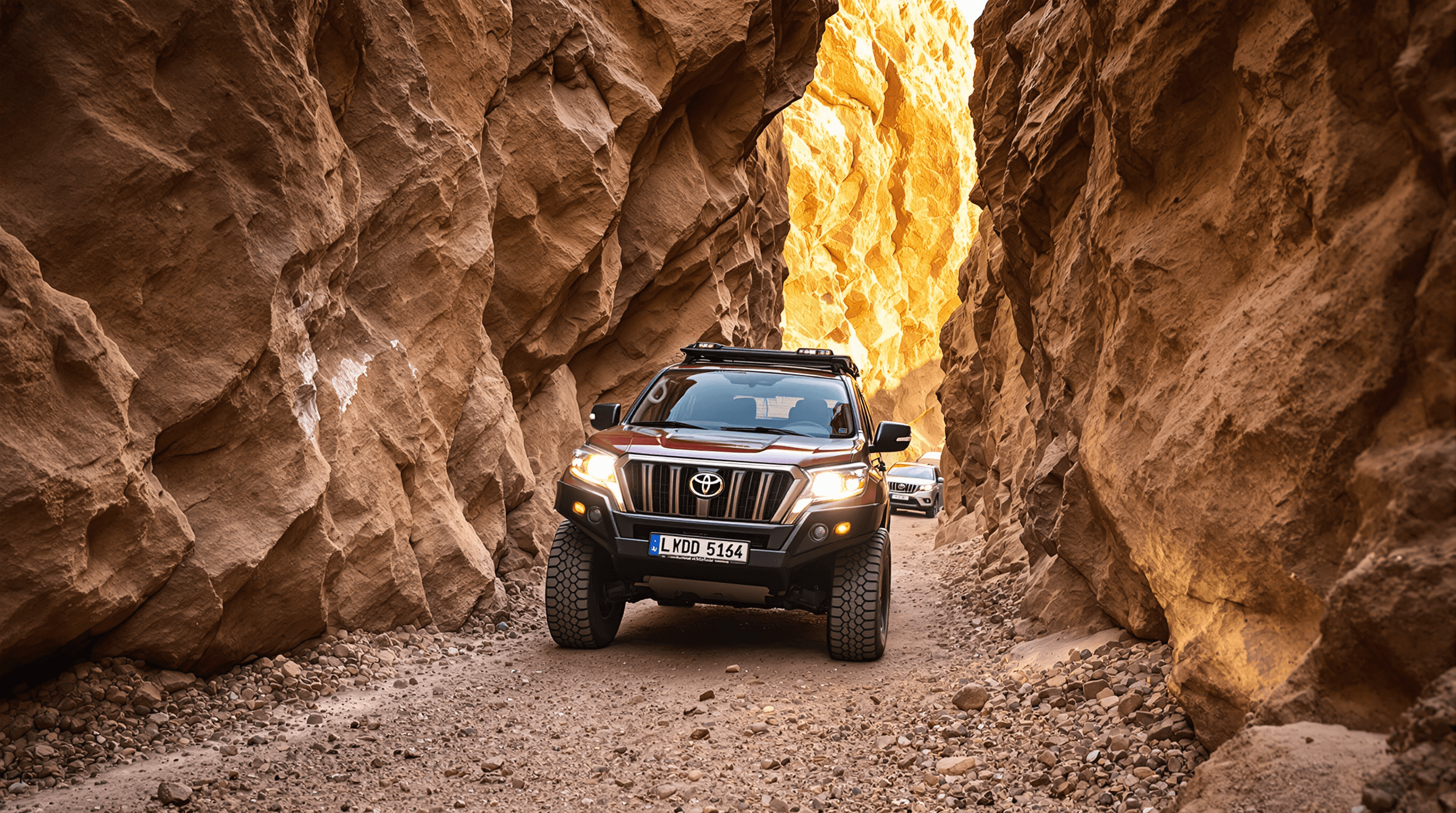
Fossil Rock demands proper 4x4 preparation due to its mixed terrain of soft sand, hard-packed surfaces, and loose rock sections. Standard road vehicles cannot safely complete this route.
Minimum Vehicle Requirements:
- True 4WD system with low-range gearing
- Ground clearance minimum 220mm
- All-terrain or sand tires (pressure reduction capability essential)
- Recovery points front and rear
- Basic recovery gear (shovel, tow strap, air compressor)
Recommended Tire Pressures:
- Sand sections: 12-15 PSI
- Rocky areas: 18-22 PSI
- Hard track: 25-30 PSI
Popular vehicles for this route include the Toyota Land Cruiser and Nissan Patrol, both offering excellent reliability and parts availability in UAE. Our detailed Land Cruiser vs Nissan Patrol comparison covers the specific advantages of each platform for desert driving.
| Vehicle Model | Ground Clearance | Approach Angle | Departure Angle | Recommended |
|---|---|---|---|---|
| Toyota Land Cruiser 200 | 230mm | 32° | 24° | Excellent |
| Nissan Patrol Y62 | 273mm | 36° | 26° | Excellent |
| Toyota Prado | 220mm | 31° | 22° | Good |
| Jeep Wrangler | 251mm | 44° | 37° | Good |
Essential Safety Preparations
Desert safety protocols are non-negotiable at Fossil Rock due to its remote location and challenging terrain. Mobile coverage drops to zero beyond the 3km point, making self-reliance critical.
Mandatory Safety Equipment:
- Minimum 4 liters water per person
- First aid kit with snake bite protocol
- GPS device with downloaded waypoints
- Emergency shelter (space blanket minimum)
- Recovery gear appropriate for your vehicle weight
Communication Requirements:
- Satellite communicator recommended for solo trips
- UHF radio (Channel 8 is standard for UAE off-road groups)
- Emergency contact list with Dubai Police and Sharjah Police numbers
The best visiting months are October through March when temperatures range from 15-28°C. Summer expeditions (April-September) require pre-dawn departure and significantly increased water supplies due to temperatures exceeding 45°C.
Professional instruction significantly improves both safety and enjoyment. Consider booking sessions through our desert driving courses directory before attempting Fossil Rock independently.
Navigation and Route Waypoints
Fossil Rock offers multiple trail options ranging from beginner-friendly perimeter routes to advanced technical sections requiring experienced spotting and recovery skills.
Beginner Circuit (Green Route):
- Total distance: 12km loop
- Estimated time: 2-3 hours
- Maximum difficulty: moderate sand climbs
- Suitable for stock 4WD vehicles with experienced drivers
Intermediate Challenge (Blue Route):
- Incorporates steeper sand faces and loose rock sections
- Requires deflated tires and momentum techniques
- Previous sand driving experience essential
- Recovery gear mandatory
Advanced Technical (Black Route):
- Includes the famous "Rock Garden" section
- Requires precise wheel placement and spotting
- Winch points available but challenging to access
- Recommended only with experienced convoy support
Key navigation waypoints include the "Camel Skull Marker" at 25.0823°N, 55.5201°E and the "Twin Rocks" formation at 25.0891°N, 55.5267°E. These landmarks provide reliable reference points for route planning and emergency location reporting.
Best Times and Conditions
Weather conditions dramatically impact both safety and driving difficulty at Fossil Rock. Recent rainfall transforms sand consistency, while wind patterns affect visibility and navigation.
Optimal Conditions:
- Clear skies with minimal wind (under 15 km/h)
- Dry sand conditions (48+ hours after rainfall)
- Morning departures between 6:00-8:00 AM
- Weekend periods for convoy support availability
Seasonal Considerations:
- Winter (Dec-Feb): Excellent conditions but crowded weekends
- Spring (Mar-Apr): Perfect temperatures, increasing difficulty as sand softens
- Summer (May-Sep): Extreme heat requires pre-dawn starts and increased safety margins
- Autumn (Oct-Nov): Ideal weather returns, equipment preparation season
Weekend Traffic Patterns: Friday mornings see the highest concentration of organized groups, providing natural convoy support for less experienced drivers. Thursday evenings and Saturday mornings offer quieter conditions for photography and skill development.
Our off-road clubs directory lists groups with regular Fossil Rock expeditions, providing structured introductions to this challenging terrain.
Recovery Techniques and Emergency Procedures
Self-recovery capability becomes essential at Fossil Rock due to its remote location and limited rescue access. Standard recovery techniques must be adapted for the mixed sand-rock environment.
Sand Recovery Methods:
- Dig out technique: remove sand from all four wheels before attempting movement
- Momentum recovery: requires precise throttle control and proper tire pressure
- Sand ladder placement: critical for steep face climbs
- Winching: anchor points limited to large rocks or other vehicles
Rock Section Recovery:
- High-lift jack usage for wheel placement adjustment
- Tire pressure adjustment between sections
- Careful spotting for underbody clearance
- Recovery strap attachment points inspection
Emergency Protocol:
- Signal for help: three horn blasts repeated every 5 minutes
- Mark location: GPS coordinates and visual landmarks
- Conserve resources: shelter, water, and fuel management
- Communication attempts: move to highest elevation for mobile signal
Professional recovery services operate from Al Madam township but response times exceed 2-3 hours during peak periods. Self-sufficiency remains the primary safety strategy.
Photography and Scenic Highlights
Fossil Rock provides exceptional photographic opportunities combining dramatic geology with expansive desert vistas. The limestone formation's unique texture and color create striking contrasts against the surrounding dunes.
Prime Photography Locations:
- Summit viewpoint: accessible via moderate scramble, 360° desert views
- North face: dramatic shadows during morning and evening light
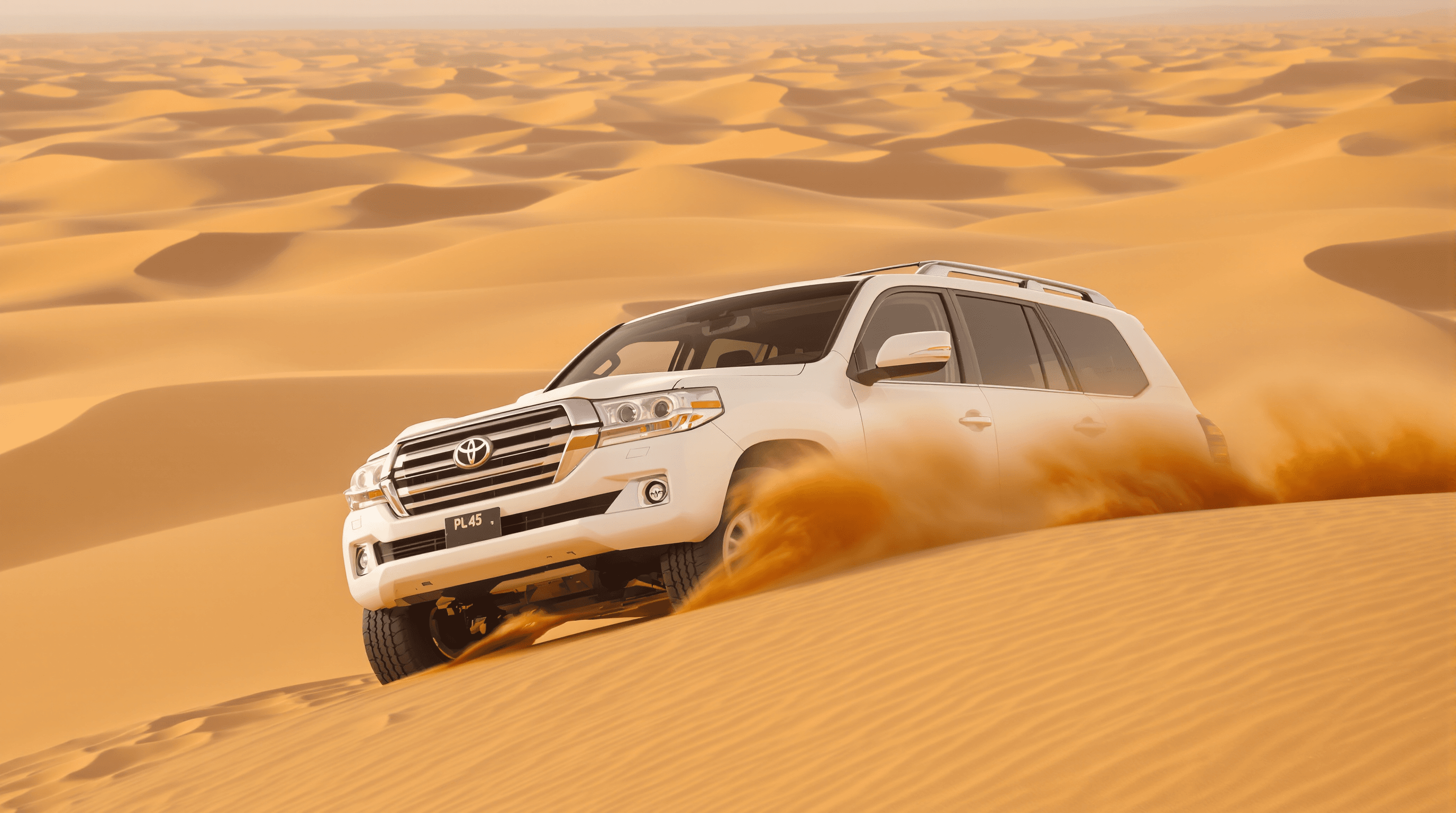
- Dune interaction zones: vehicle action shots with geological backdrop
- Fossil deposits: close-up geological features within the rock face
Best Lighting Conditions:
- Golden hour: 30 minutes after sunrise and before sunset
- Blue hour: civil twilight provides balanced sky-ground exposure
- Avoid midday harsh shadows and extreme contrast ratios
The formation's geological significance includes marine fossils dating back 25 million years, visible in exposed limestone layers. These features provide educational value alongside recreational off-roading opportunities.
Advanced photographers should consider our recommended 4x4 vehicle specifications for stable camera platforms and equipment transport in challenging terrain.
Frequently Asked Questions
How difficult is the drive to Fossil Rock for beginners? The main route to Fossil Rock is moderately challenging, requiring basic 4WD skills and proper vehicle preparation. Beginners should complete a desert driving course before attempting this route independently, as sand driving techniques and recovery knowledge are essential for safety.
What's the best time of day to visit Fossil Rock? Early morning departures between 6:00-8:00 AM provide optimal conditions with cooler temperatures, better sand consistency, and natural convoy support from other groups. Avoid midday visits during summer months when temperatures exceed 45°C.
Can I drive to Fossil Rock alone or should I go with a group? While experienced drivers can attempt Fossil Rock solo, convoy travel is strongly recommended due to remote location and limited mobile coverage. Groups provide essential recovery support and emergency backup in case of vehicle breakdown or medical issues.
What recovery equipment do I need for Fossil Rock? Minimum recovery gear includes a shovel, tow strap, air compressor, and basic tools. Sand ladders are highly recommended for steep dune sections. Ensure your vehicle has proper recovery points front and rear before attempting the route.
How long does a typical Fossil Rock trip take? Plan for 4-6 hours total including travel time from Dubai, off-road driving, and exploration. The beginner circuit takes 2-3 hours, while technical routes may require 4-5 hours depending on group size and skill level.
Is Fossil Rock suitable for stock 4WD vehicles? Stock 4WD vehicles can complete the basic route with proper preparation including tire pressure adjustment and experienced driving. However, aftermarket modifications like all-terrain tires and additional ground clearance significantly improve capability and safety margins.