Jebel Jais Off Road Guide 2026 - UAE Mountain Adventures
Complete guide to Jebel Jais off road trails in RAK. Routes, difficulty levels, vehicle requirements, and safety tips for UAE's highest peak adventures.
Jebel Jais Off Road Guide 2026 - UAE Mountain Adventures
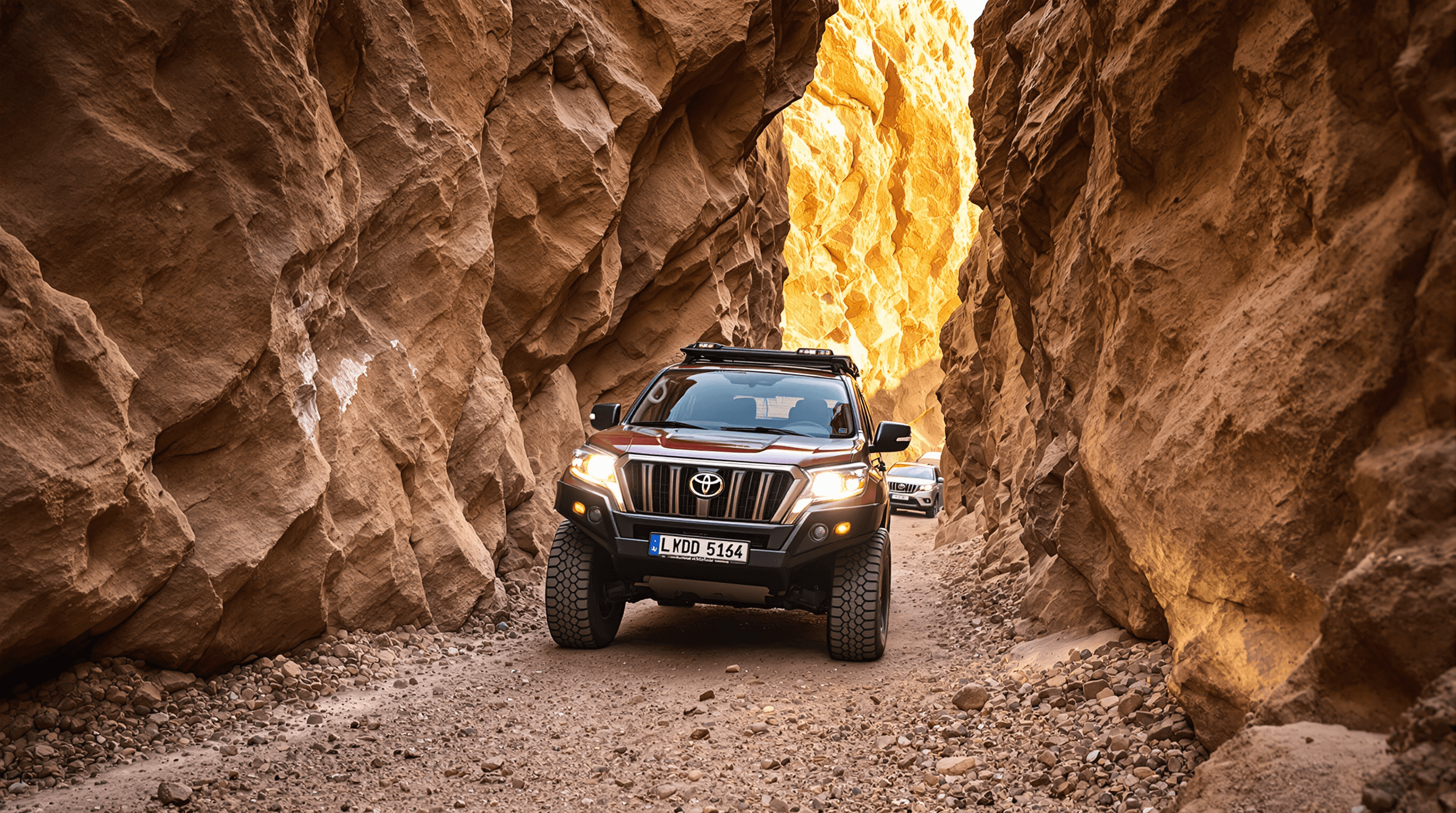
Jebel Jais off road trails offer some of the UAE's most spectacular mountain driving experiences, taking you through rugged terrain to the country's highest peak at 1,934 meters above sea level. Located in Ras Al Khaimah, these challenging routes provide a refreshing alternative to desert driving, with rocky ascents, breathtaking views, and technical sections that test both driver skill and vehicle capability.
The mountain's network of trails ranges from moderate gravel roads suitable for stock 4WDs to extreme rocky climbs requiring heavily modified vehicles and advanced driving techniques. Unlike the forgiving sand dunes of Al Qudra or Big Red, Jebel Jais demands precise throttle control, careful line selection, and respect for steep drop-offs.
Trail Classifications and Difficulty Levels
Jebel Jais off road trails are classified into four distinct difficulty categories, each requiring different vehicle specifications and driver experience levels. The Jebel Jais Road (E311 extension) provides the easiest access, while unmarked rocky ascents challenge even experienced drivers.
Beginner Routes (Green):
- Jebel Jais Road to various viewpoints
- Wide gravel sections with minimal gradients
- Suitable for stock SUVs with basic 4WD capability
- Distance: 20-30 km roundtrip from base
Intermediate Routes (Blue):
- Secondary trails branching from main road
- Loose rock sections and moderate inclines
- Requires low-range 4WD and all-terrain tyres
- Ground clearance minimum 200mm recommended
Advanced Routes (Red):
- Steep rocky climbs with technical obstacles
- Requires modified suspension and aggressive tread tyres
- Experience with recovery techniques essential
- Recommended after completing desert driving courses
Expert Routes (Black):
- Unmarked climbs to remote peaks
- Extreme gradients exceeding 45 degrees
- Professional-grade modifications necessary
- GPS navigation and satellite communication required
Vehicle Requirements and Modifications
The rocky terrain of Jebel Jais off road trails demands specific vehicle capabilities that differ significantly from desert driving requirements. Ground clearance, approach angles, and cooling system performance become critical factors for safe navigation.
Minimum Stock Requirements:
- True 4WD system with low-range transfer case
- Ground clearance exceeding 200mm
- Approach angle minimum 25 degrees
- All-terrain tyres with aggressive sidewalls
- Adequate engine cooling for sustained climbs
Recommended Modifications:
- Suspension lift kit (50-75mm)
- Rock sliders and underbody protection
- Upgraded brake pads for steep descents
- Heavy-duty radiator and transmission cooler
- Recovery points front and rear
The Toyota Land Cruiser and Nissan Patrol remain popular choices, though their wheelbase considerations become more critical on tight mountain switchbacks. Many drivers discover that vehicles perfectly suited for Liwa's sand dunes struggle with Jebel Jais's unforgiving rock faces.
| Vehicle Type | Stock Capability | Recommended Mods | Max Difficulty |
|---|---|---|---|
| Toyota Prado | Green/Blue trails | Lift + tyres | Red trails |
| Land Cruiser 300 | Blue/Red trails | Protection + cooling | Black trails |
| Nissan Patrol | Blue/Red trails | Suspension + armour | Black trails |
| Jeep Wrangler | Red trails stock | Minimal additional | Black trails |
Navigation and Route Planning
Jebel Jais off road navigation requires more precision than desert driving, where GPS coordinates and satellite imagery become essential tools for route planning. The mountain's complex terrain creates GPS shadows and communication dead zones that catch unprepared drivers off-guard.
Primary Access Points:
- Jebel Jais Road (E311 extension) - main sealed access
- Wadi Shawka Road - eastern approach with moderate grades
- Khatt Springs area - challenging northern routes
- Wadi Bih - advanced technical sections
Navigation Essentials:
- Offline GPS maps with topographic overlays
- Physical compass and paper maps as backup
- Waypoint marking for successful route recording
- Emergency satellite communication device
- Weather monitoring apps for sudden changes
The established Ras Al Khaimah off road community maintains informal route databases, though many technical sections remain unmarked and require local knowledge. Unlike the well-documented trails around Fossil Rock, Jebel Jais rewards exploratory driving while demanding heightened safety awareness.
Safety Protocols and Risk Management
Mountain off-roading presents unique hazards that require adapted safety protocols compared to desert environments. Jebel Jais off road conditions can change rapidly with weather, creating scenarios where standard recovery procedures prove inadequate.
Pre-Trip Safety Checklist:
- Weather forecast verification (avoid during rain/fog)
- Vehicle inspection focusing on brakes and cooling
- Emergency supplies including warm clothing
- Communication plan with expected return time
- Route sharing with reliable contact person
Mountain-Specific Hazards:
- Sudden weather changes and reduced visibility
- Loose rock and potential rockfall areas
- Steep grades with limited turnaround space
- Flash flood risk in wadi crossings
- Wildlife including venomous snakes and wild goats
Emergency Procedures:
- Engine overheating on sustained climbs
- Brake fade on extended descents
- Vehicle rollover recovery techniques
- Cold weather exposure protocols
- Evacuation procedures for medical emergencies
The isolation factor exceeds even remote desert locations like Sweihan, making self-reliance and proper preparation non-negotiable for responsible mountain exploration.
Best Times and Seasonal Considerations
Jebel Jais off road conditions vary dramatically with seasons, creating optimal windows for different skill levels and route difficulties. The mountain's elevation creates a microclimate that differs significantly from coastal Dubai conditions.
Optimal Seasons:
- October to March: Ideal conditions with moderate temperatures
- April to May: Acceptable morning sessions, avoid midday heat
- June to September: Extreme caution due to heat and reduced visibility
- December to February: Possible frost at elevation, gear accordingly
Daily Timing Recommendations:
- Dawn starts (5:30-6:00 AM): Best visibility and cool temperatures
- Morning sessions (6:00-10:00 AM): Optimal for technical routes
- Late afternoon (4:00-6:00 PM): Good for photography but shorter daylight
- Avoid midday (11:00 AM-3:00 PM): Extreme heat and glare conditions
Weather patterns differ from Dubai's predictable climate, with sudden fog rolling in from the Arabian Gulf creating zero-visibility conditions within minutes. Temperature drops of 10-15°C from base to peak require layered clothing strategies rarely needed for desert camping adventures.
Equipment and Gear Recommendations
The rocky environment and elevation changes of Jebel Jais off road trails demand specialized equipment beyond standard desert recovery gear. Sharp rocks destroy standard equipment quickly, while temperature variations require adapted clothing systems.
Rock-Specific Recovery Gear:
- Heavy-duty recovery tracks with metal cleats
- High-strength synthetic winch rope (steel cable damages on rocks)
- Multiple anchor points and redirect blocks
- Rock-resistant gloves and knee protection
- Emergency tyre plug kit for sidewall punctures
Mountain Environment Gear:
- Layered clothing system for temperature variations
- High-quality hiking boots for reconnaissance walks
- Headlamps with extra batteries for early/late sessions
- Emergency shelter and warm blankets
- Enhanced first aid kit with altitude sickness medications
Navigation and Communication:
- Satellite communicator (Garmin inReach or similar)
- Power banks for extended GPS usage
- Physical maps in waterproof case
- Emergency whistle and signaling mirror
- Multi-tool with rock removal capabilities
Many drivers underestimate gear requirements, assuming their standard recovery equipment suffices for mountain conditions. The reality proves more demanding, with sharp rocks destroying sand-oriented gear within single sessions.
Local Regulations and Permissions
Jebel Jais off road activities operate under specific regulations that differ from general UAE desert access rules. Ras Al Khaimah authorities maintain stricter controls on mountain access, particularly around developed tourism areas and protected zones.
Current Access Regulations:
- No permits required for established trails during daylight hours
- Prohibited areas clearly marked around Jebel Jais Adventure Park
- Camping restrictions in designated environmental protection zones
- Group size limitations during peak tourist seasons
- Vehicle modification compliance with UAE standards
Restricted Zones:
- Jebel Jais Flight zipline operational areas
- Archaeological sites and ancient settlement ruins
- Water catchment areas and dam infrastructure
- Military communication installations
- Wildlife protection corridors
Environmental Responsibilities:
- Leave No Trace principles strictly enforced
- No driving off established tracks
- Proper waste disposal (no burning permitted)
- Respect for local wildlife and vegetation
- Cultural sensitivity around traditional settlements
The off-road community maintains informal agreements with local authorities, making responsible driving practices essential for continued access to these spectacular mountain trails.
Frequently Asked Questions
What vehicle modifications are essential for Jebel Jais off road driving? Ground clearance increase through suspension lift, rock protection for undercarriage, and aggressive all-terrain tyres represent the minimum modifications. Enhanced cooling systems prevent overheating on sustained climbs, while reinforced recovery points enable safe extraction from technical sections.
How does Jebel Jais difficulty compare to desert off-roading? Jebel Jais presents fundamentally different challenges with unforgiving rocky surfaces, steep grades, and limited recovery space. Desert driving skills translate partially, but mountain techniques require additional training focusing on precise throttle control and momentum management on technical climbs.
What's the best time of day for Jebel Jais off road adventures? Early morning starts between 5:30-6:00 AM provide optimal conditions with cool temperatures, excellent visibility, and full daylight for technical sections. Afternoon sessions work for experienced drivers but reduce available daylight for unexpected challenges or recovery situations.
Can beginners attempt Jebel Jais trails safely? Beginners should restrict themselves to the main Jebel Jais Road and established viewpoint routes while accompanied by experienced mountain drivers. Technical trail progression requires solid desert driving foundation and preferably formal off-road training before attempting challenging sections.
What emergency equipment is most critical for mountain off-roading? Satellite communication devices top the list due to cellular dead zones, followed by comprehensive recovery gear rated for rocky conditions. Emergency shelter, warm clothing, and extended first aid supplies address mountain-specific risks that don't exist in desert environments.
How do weather conditions affect Jebel Jais off road accessibility? Rain creates extremely hazardous conditions with slippery rock surfaces and flash flood potential in wadis. Fog can reduce visibility to zero within minutes, while winter months may bring frost at elevation. Weather monitoring and flexible scheduling prove essential for safe mountain adventures.
Reviewed by experienced desert drivers. Our team personally visits operators and tests courses across the UAE.
Explore the Directory
Find off-road clubs, courses, garages and events across Dubai & UAE.
View Directory →