Driving Into Musandam: A 4x4 Trip From the UAE
What it's actually like to take your 4x4 from the UAE into Oman's Musandam peninsula — the border crossing, the mountain driving, and how to plan it.
Driving Into Musandam: A 4x4 Trip From the UAE
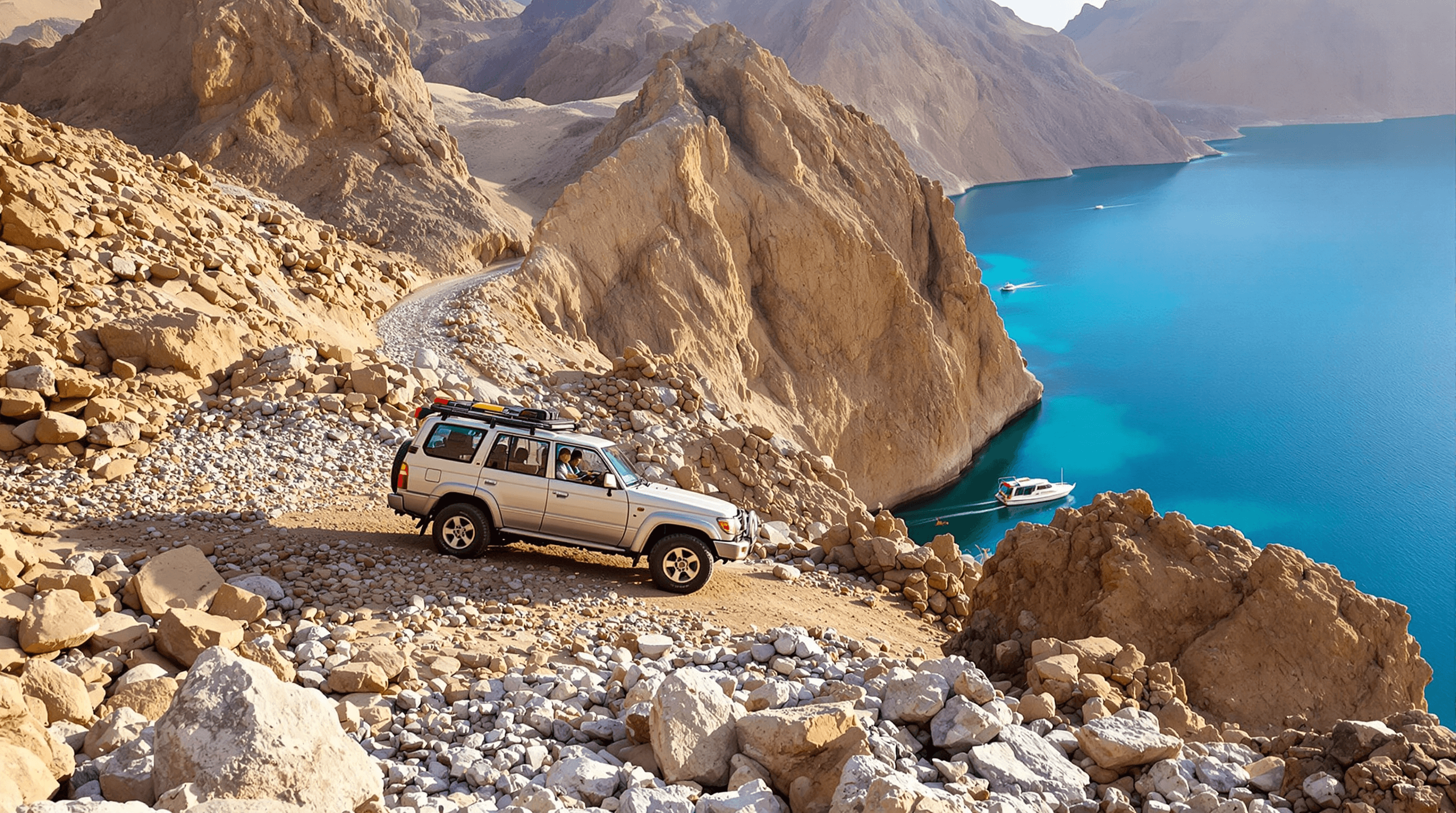
Musandam is the closest you'll get to a proper international off-road trip from Dubai. It's the Omani exclave that pokes up into the Strait of Hormuz, and it's a complete change of scenery from our dunes — no sand at all, really, just steep rocky mountains dropping straight into fjord-like inlets. If you've spent your weekends airing down on the dunes, the first thing that hits you is how different the driving is. This is rock and gradient, not flotation.
It's a doable weekend if you leave early, but treat it as a real trip across a border, not a casual day out. Here's what's worth knowing before you go.
The vehicle matters more than the modifications
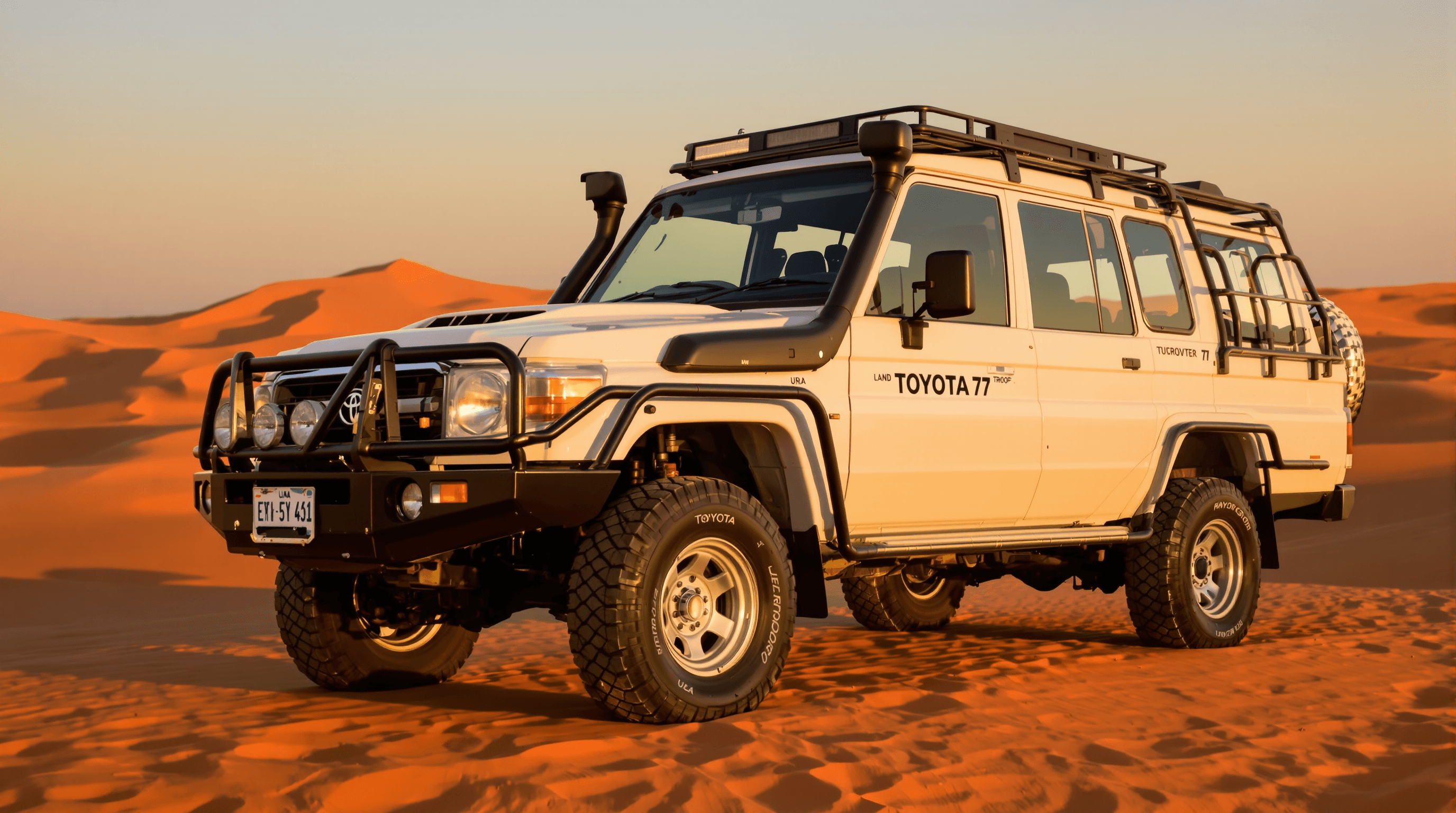
Musandam punishes ground clearance and undercarriage protection far more than the desert does. Sharp rock, loose gravel, and steep climbs are the norm, and a stock dune-bashing rig with low-profile road tyres will have a rough time. The usual UAE suspects — Land Cruiser, Patrol, Wrangler, Prado — all do fine if they're set up sensibly.
What actually counts up there:
- Low range. You'll want it for controlled descents on steep mountain sections, not just climbs.
- Decent all-terrain or mud-terrain tyres. Road tyres cut easily on the rock.
- A real spare and a puncture repair kit. Punctures are the single most common thing that goes wrong, and you don't want to be relying on a space-saver.
- Recovery points front and rear, plus straps and shackles you actually know how to use.
If you're still working out what to buy or set up for this kind of terrain, it's worth browsing the garages directory for shops that handle proper off-road builds.
One thing people forget: your UAE car insurance often won't cover you in Oman. Check with your insurer before you go, and if it doesn't, you can buy short-term Omani cover at the border. Don't skip this.
Crossing the border
You're leaving the UAE and entering Oman, so it's a genuine border crossing with paperwork. Bring:
- Your passport
- Your UAE residence visa
- The original vehicle registration (mulkiya) — it needs to be in your name, or you'll need a no-objection letter if it's financed or borrowed
- A valid driving licence
The process is the standard exit-the-UAE, enter-Oman sequence, and the officers will sometimes glance at what you're carrying. Bring some cash in both AED and Omani rial for the visa and insurance, because not every counter takes cards. Timing varies a lot — weekends and Friday mornings are the slow times, so go early if you can.
A couple of practical notes: fees and rules at the GCC borders change, so check the current situation before you commit, and make sure your visa has enough validity left on it. It's worth confirming the latest entry requirements close to your travel date rather than trusting an old write-up.
What the driving is actually like
The big-name route is the climb up towards Jebel Harim, the high point of the range. The views over the inlets and out towards the Strait are the reason most people make the trip, and the road up has improved a lot over the years — graded sections mixed with rougher bits. It's the kind of drive that rewards patience and good line choice rather than speed.
There's also Wadi Bih, the route that traditionally linked the coast through the mountains. Parts of it are straightforward, parts get more technical, and the wadi sections can hold water after rain — never cross a wadi if it's flowing or if rain is forecast. That's the single most dangerous thing up there.
The coastal tracks out to the more remote fishing villages are a different level again: narrow, cut into cliff faces, with serious drop-offs and no room for error. Some of these are 4x4-or-boat-only. If you're not confident on exposed, off-camber terrain, give them a miss — there's plenty to enjoy without them.
If steep-gradient control and recovery are new to you, get some structured time on them before you go. A proper off-road course will teach you descent control and recovery technique that transfers directly to this kind of terrain.
When to go and how to plan it
Stick to the cooler months, roughly autumn through early spring. Summer up there is brutal — extreme heat, real overheating risk on the climbs, and just not enjoyable. The cooler season also gives you better odds of clear weather for the views.
Fuel planning is worth thinking about. Stations are sparse once you're away from the main town, and mountain driving in low range burns through more than you'd expect. Fill up before you head into the hills, and don't push your range on the remote routes.
Go with at least one other vehicle. Mobile coverage is patchy to non-existent on the technical routes, and if you put a wheel wrong on your own out there, you're a long way from help. Travelling in a small group is the normal, sensible way to do Musandam. The same convoy basics we use here apply, just with more emphasis on communication because you're somewhere remote and foreign.
For overnight stays, plenty of people base themselves in Khasab and do day runs into the mountains, or camp up high for a night. If you camp, follow leave-no-trace properly — pack everything out, stick to existing tracks, and don't cut new lines into the hillside.
A few things worth respecting
The villages up there are small, traditional communities going about their lives. Ask before photographing people, keep clear of anything that looks like military or border infrastructure, and slow right down through inhabited areas. Most locals are genuinely welcoming if you're respectful.
If you hit a police checkpoint, just be polite and have your documents ready — it's routine. And remember that emergency response in remote Musandam is nothing like the UAE. Self-reliance, a second vehicle, and a way to call for help if your phone has no signal are what keep a Musandam trip safe. Our desert driving safety guide covers the general principles; in the mountains you just need to be that bit more cautious.
A few common questions
Do I need a guide? Not necessarily. Experienced drivers travelling in a group, with navigation and a way to communicate, manage the marked routes fine. If it's your first time or you want to reach the trickier coastal tracks, a local guide is worth it for both the route knowledge and the cultural side.
Does my UAE insurance cover Oman? Often not. Check with your provider, and if you're not covered, buy short-term Omani insurance at the border before you cross.
When's the best time to go? The cooler months. Avoid the peak of summer entirely — the heat is dangerous on the climbs and miserable the rest of the time.
Reviewed by experienced desert drivers. Our team personally visits operators and tests courses across the UAE.
Explore the Directory
Find off-road clubs, courses, garages and events across Dubai & UAE.
View Directory →