Overlanding in the UAE: A Beginner's Guide to Multi-Day Desert Trips
How to make the jump from day trips to overnight overlanding in the UAE - vehicles, gear, water, navigation and the seasons that actually work.
Overlanding in the UAE: A Beginner's Guide to Multi-Day Desert Trips
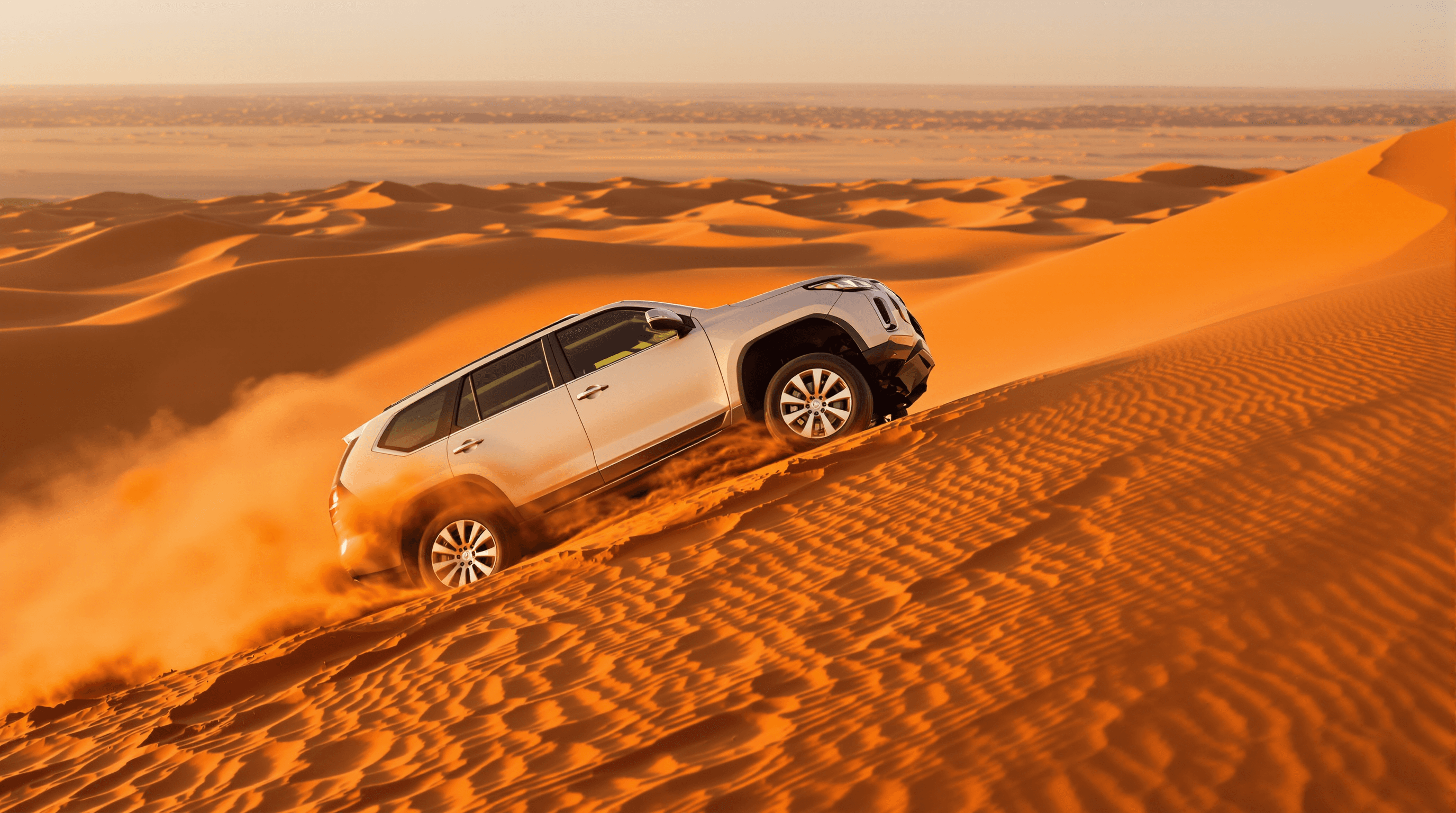
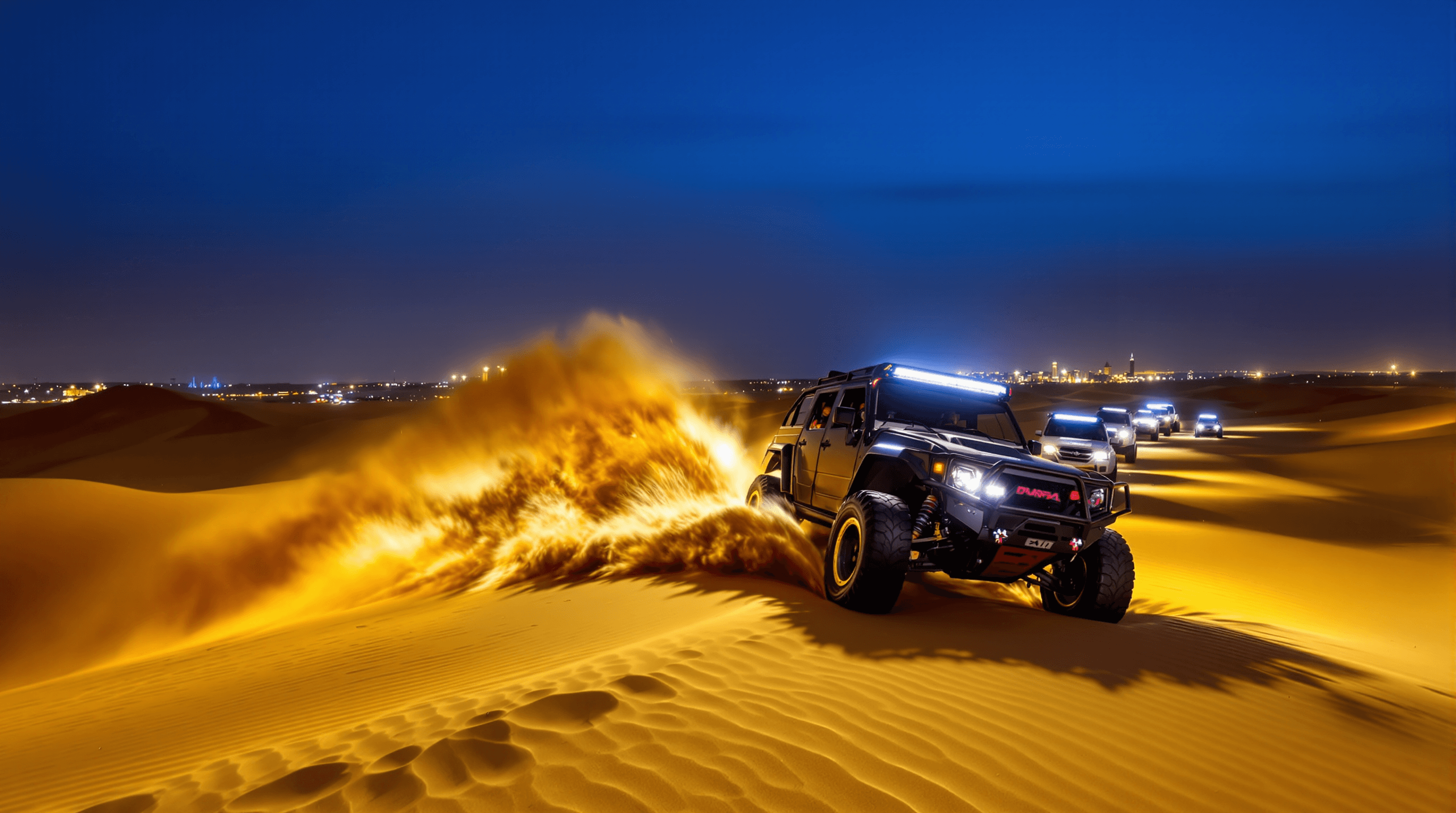
There's a point most UAE off-roaders reach where the day trips stop being enough. You finish a Friday run, watch the sun drop behind the dunes, and you don't want to drive home — you want to stay out there. That's overlanding: stringing the driving and the camping together so the trip is the destination.
The good thing about doing it here is that the UAE is small and forgiving. You're rarely more than a couple of hours from a fuel station and tarmac, but the terrain still goes from soft dune fields to rocky wadis and mountain tracks. It's a genuinely good place to learn this without being truly remote. Here's what I'd tell someone making the jump from day runs to overnight trips.
The vehicle matters less than you'd think
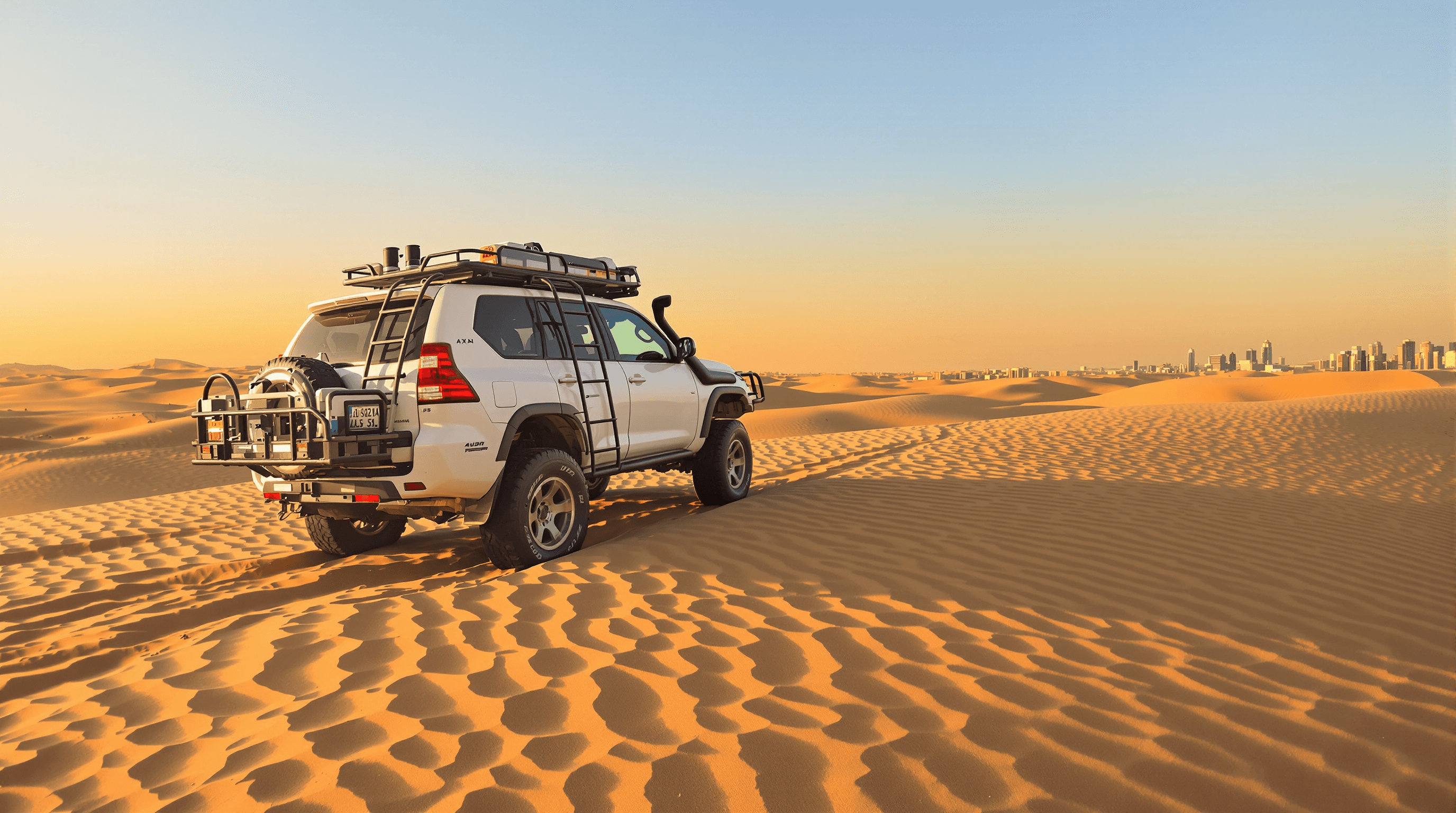
You don't need a purpose-built expedition rig to camp in the desert. Plenty of people do their first overnighters in a stock Land Cruiser or Patrol with the back seats folded down. What you do need is something you trust mechanically, because a breakdown takes on a different weight when you're out for two days instead of two hours.
Toyota Land Cruisers and Nissan Patrols are the default for a reason — parts are everywhere, every garage knows them, and they hold up. A Prado will handle most of what a beginner overlands. The pickup-based stuff (Ranger, Hilux, the various Raptors) works too and gives you a bed to load.
The modifications worth doing early, roughly in order of usefulness:
- A dual-battery setup so you can run a fridge and lights overnight without killing your starter battery.
- Recovery points front and rear that are actually rated, not just tow eyes.
- A way to carry extra fuel and water safely.
- Storage that stops everything sliding around — even a couple of plastic boxes strapped down beats loose gear.
Skip the big-budget stuff (winches, long-range tanks, lift kits) until you've done enough trips to know what you're actually missing.
Where to start
Start close. Your first overnight should be somewhere you already know from day trips, with easy road access if something goes wrong. The Al Qudra area and the dunes around Big Red both work for this — there's open desert to camp in and tarmac is never far.
Once you've got a couple of comfortable overnighters behind you, Liwa is the obvious next step — big dunes, proper isolation, and the kind of scenery that's worth the drive down. It's more committing, so don't make it your first. The routes directory is a good place to scope out where to go.
The Hajar Mountains and Musandam are a different game entirely: rocky tracks, wadis, mountain passes. Musandam also means crossing into Oman, so you'll need the visa and vehicle paperwork sorted at the border before you go. Treat those as trips to build up to, ideally with people who've done them.
Water and camping kit
Water is the thing beginners underestimate. The desert pulls it out of you fast, and there's nothing to refill from out there. Carry more than you think you need, and carry it in more than one container so a single failure doesn't leave you short — summer roughly doubles what you'll get through.
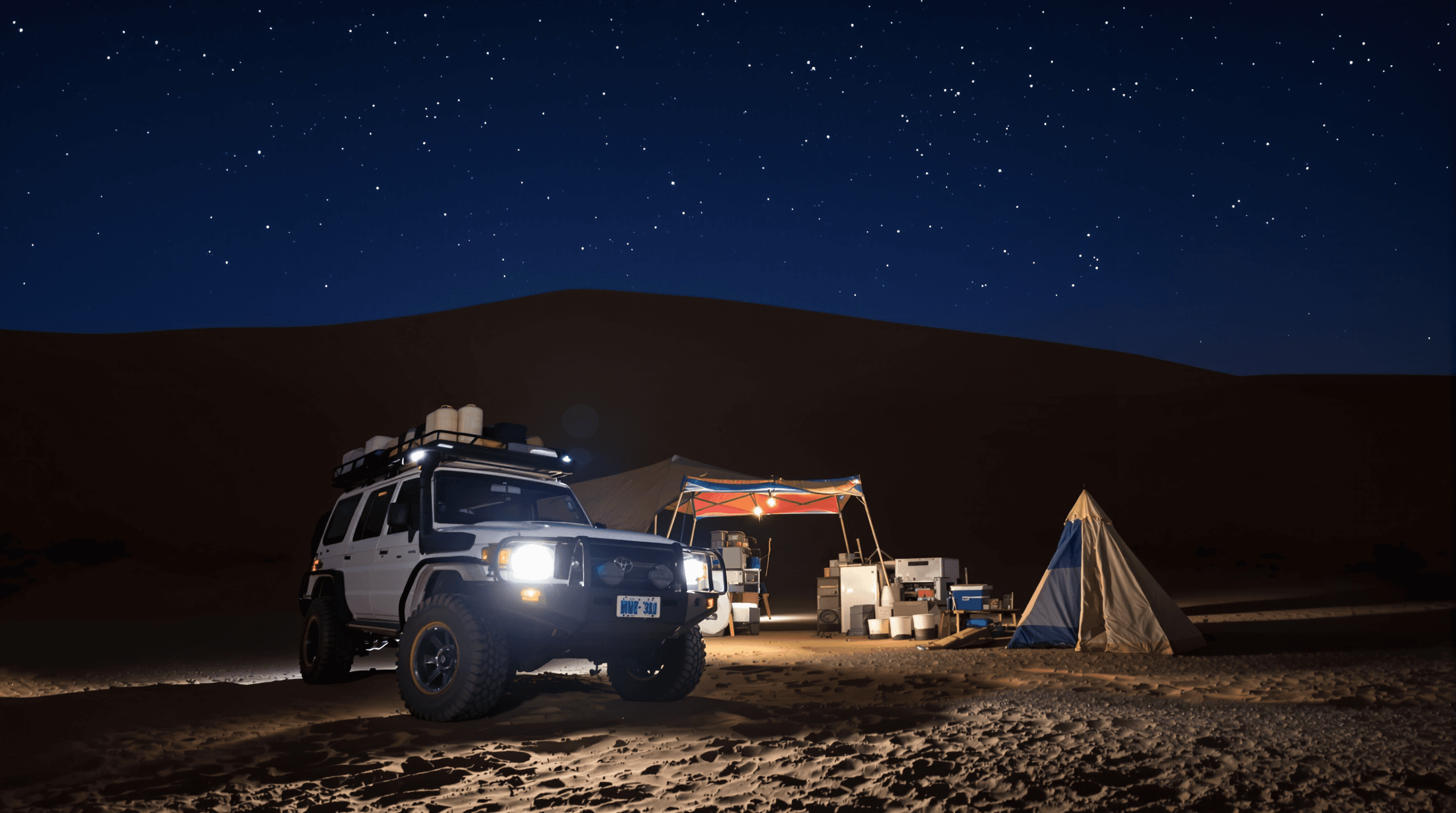
For sleeping, rooftop tents have taken over the local scene because they go up in minutes, keep you off the sand, and ride out the wind better than a ground tent on loose ground. They're not cheap, though — a good ground tent with proper sand pegs is a perfectly valid way to start. The gear directory is a place to compare what's available locally.
The kit that actually changes the experience:
- A 12V fridge. This is the upgrade everyone wishes they'd bought sooner — cold drinks and food that keeps for the whole trip.
- Decent lighting. Headlamps plus something to light the camp.
- A camp stove and cookware you don't mind getting sandy.
- A way to deal with rubbish and waste — pack out everything you bring in.
One thing people forget: desert nights in winter get genuinely cold, well below what the daytime heat suggests, and colder again up in the mountains. Bring a real sleeping bag, not a summer throw.
Navigation
Phone GPS works fine for most of this, but download your maps offline before you leave town — coverage drops out in the dune fields and you don't want to find that out at a junction. Apps like Gaia and Avenza are popular for offline use. We go deeper on this in the offline maps guide.
Whatever you use, don't rely on a single device. A phone dies, a screen overheats and shuts off. Keep a backup — a second phone, a dedicated GPS unit, even a sense of the bailout direction to the nearest road. Local clubs often share GPX tracks for known routes, which is the easiest way to follow a line someone's already proven.
Permits, legality and insurance
Camping in the open desert sits in a grey area here — it's not generally prohibited, but you need to use your head about where. Stay well clear of private land, oil and industrial areas, and anything fenced or signed as restricted; those carry real penalties. If you're heading into Musandam, that's Oman, so you'll need the visa and a vehicle import permit at the border.
Worth checking before you go: whether your motor insurance actually covers off-road use. Plenty of UAE policies have exclusions that an insurer could read to mean desert driving, so confirm rather than assume.
Don't go alone, and tell someone
The single biggest safety factor isn't gear, it's not being out there by yourself. For your first overnight trips, go with people — ideally with someone who's done it before. UAE clubs run organised overlanding trips with experienced leaders, and that's by far the best way to learn the ropes; the clubs directory lists active ones.
If you do go in a small group, somebody back home should know your rough route and when to expect you back. Out past cell coverage, a satellite messenger (the Garmin inReach is the common one) is what gets a message out if things go badly wrong. And keep an eye on the weather — sandstorms here can drop visibility to nothing quickly, and that's not something you want to be driving blind through.
When to go
October through March is the season. Comfortable days, cool nights, stable weather — this is when nearly all the multi-day trips happen and when you should plan yours.
The shoulder months on either side are doable but the midday heat starts to bite, so you end up driving early and late. Full summer is for experienced people with the right setup only; the heat out there in May to August is genuinely dangerous to camp in, and most regulars simply don't.
Building up to it
Overlanding is just day-trip skills carried into a longer, more committing format. Get your sand driving, your recovery, and your navigation solid on day runs first — every one of those becomes a much bigger deal when you're hours from help and it's getting dark.
If you want to fast-track the driving side, a proper course is money well spent before you start camping out. The courses directory lists training providers.
A few honest answers
How much experience do I really need? Enough that sand driving, getting yourself unstuck, and basic navigation are second nature. If you're still nervous about any of those on a day trip, sort that out before you add darkness, distance and a full vehicle to the mix.
Can I do it solo? You can, but don't, not as a beginner. Go with a group or at least one other vehicle, build the experience, and revisit the question later.
Do I need permits to camp? Not for ordinary open-desert camping, but you do need to avoid private property, industrial and protected areas. Check what you're driving into ahead of time and respect anything signed off-limits.
Reviewed by experienced desert drivers. Our team personally visits operators and tests courses across the UAE.
Explore the Directory
Find off-road clubs, courses, garages and events across Dubai & UAE.
View Directory →