Overnight Camping in the UAE Desert — A Safety-First Guide
What actually keeps you safe spending a night out in the UAE dunes: water, comms, wildlife, fire and picking a campsite that won't catch you out.
Overnight Camping in the UAE Desert: A Safety-First Guide
A night out in the dunes is one of the best things you can do with a 4x4 in this country. The quiet after sunset, the cold air rolling in, the stars once you're away from the city glow — it's the payoff for all the airing-down and recovery practice. But the desert is not a forgiving place to get something wrong overnight, and the gap between a great trip and a bad one usually comes down to a few unglamorous basics: water, communication, and not camping somewhere stupid.
This is what I'd tell a mate heading out for their first overnighter. It's not exhaustive, and it's not a substitute for going out with people who've done it before. If you've never camped in the desert, your first night should be with an experienced group, not solo.
A word on rules and permits
The honest answer here is: it depends on where you go, and it changes. Some areas are fine for informal camping, some are protected reserves where you absolutely cannot stay, and some private or military land is off-limits entirely. Rules also shift seasonally to protect wildlife breeding areas.
Don't take a forum post (including this one) as the final word. Check the current situation with the relevant municipality or environment authority for the emirate you're heading into before you commit to a spot. Pack out everything you bring in — that's both the law and the bare minimum for keeping these places open to the rest of us.
If you want to build the skills before you commit to a night out, our courses directory lists instructors who run desert driving and camping sessions.
Water comes first
Everything else is negotiable; water isn't. The desert pulls moisture out of you even on a mild winter night, through breathing as much as sweating. Plan for several litres per person per day across drinking, cooking and basic hygiene, and then carry more than you think you need.
Split it across multiple containers rather than one big tank. If a single jerry can splits or leaks, you don't want that to be your entire supply gone. Keep a sealed emergency reserve separate from your day-to-day water and don't dip into it casually.
Watch your group for the early signs of trouble: headache, nausea, confusion, a fast weak pulse. Dark urine is a simple, reliable warning that someone's behind on fluids. Heat exhaustion can tip into heat stroke fast — at that point you're cooling the person aggressively (shade, wet clothing, air movement) and getting them out, not waiting to see if it improves.
Alcohol makes all of this worse by accelerating dehydration, and drinking in public desert areas is illegal here anyway. Leave it at home.
Communication and getting help
This is the one people underestimate. Mobile coverage disappears quickly once you're properly away from the highways, and "I'll just call if something happens" is not a plan when you have one bar or none.
If you're going somewhere remote, carry a satellite communicator — something like a Garmin inReach — that can send an SOS and two-way messages independent of the cell network. A second person in the group with the same kind of device is better still.
Before you leave, give a reliable contact your route, your planned campsite, who's in the group, and when you expect to be back. Agree what they should do, and when, if you don't check in. That single conversation is what turns "missing" into "overdue and being looked for." The UAE emergency number is 999; pass GPS coordinates if you ever need to call it in.
Picking a campsite
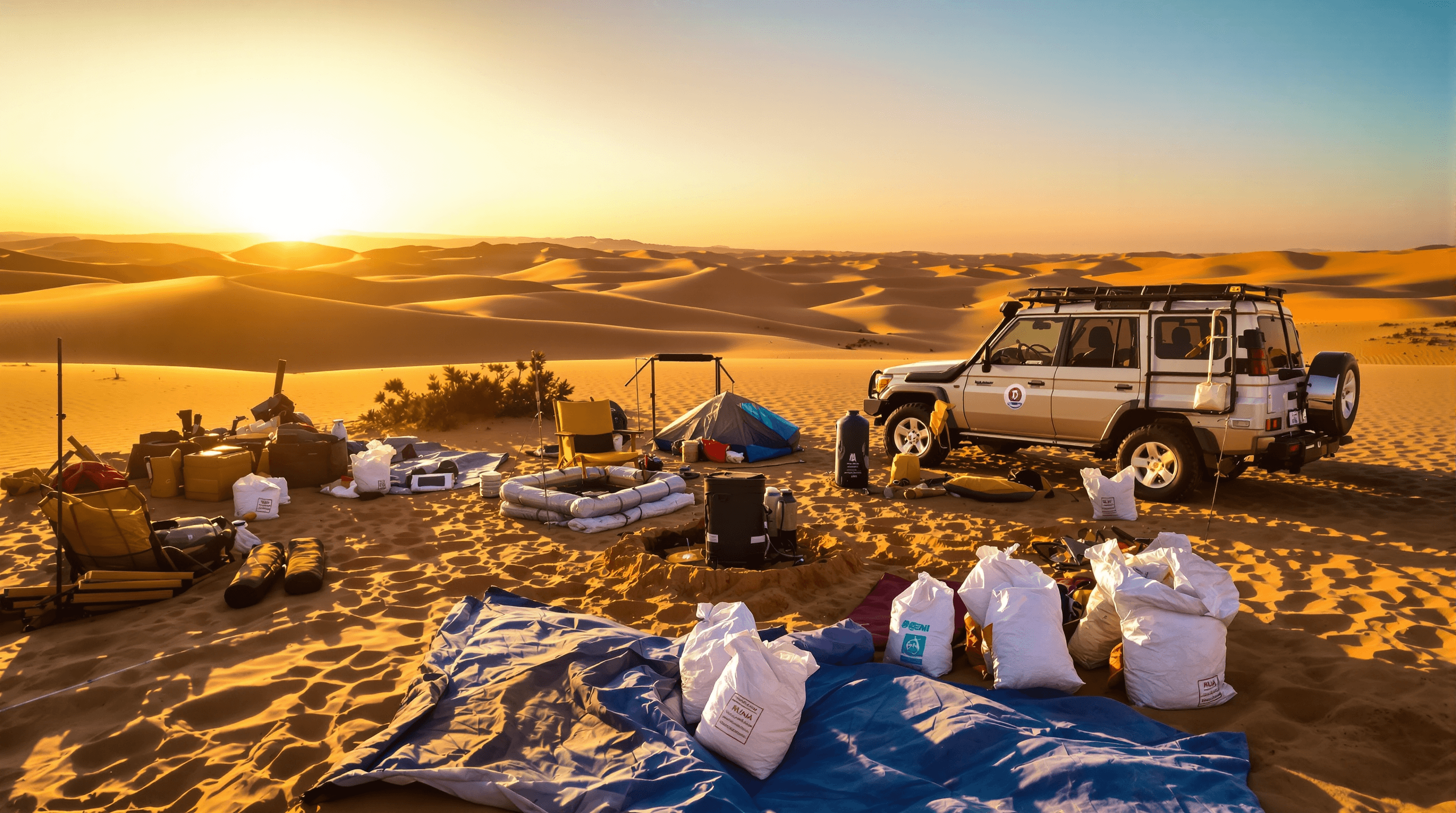
Get this right and most of the other risks shrink. A few things I always look for:
- Firm, slightly elevated ground. Easier to set up on, and it keeps you out of low spots.
- Stay out of wadi bottoms and drainage channels. Most of the year they're bone dry, but the UAE gets the bulk of its rain in winter, and a dry creek bed can run with fast water from rain that fell kilometres away. Never sleep in one.
- A way out. Know your exit line before dark, and ideally have more than one. Position vehicles so you're not boxed in.
- Wind awareness. Desert wind picks up after dark and can be strong. Pitch tents with the entrance out of the prevailing wind, anchor your guy lines properly with sand pegs or buried deadweights, and keep loose gear stowed before you turn in.
Build any fire well clear of vehicles and tents, and check the ground around camp before you settle — more on wildlife below.
For more on reading terrain and conditions, see our desert driving safety guide.
Weather and season
Realistically, the camping season runs through the cooler months. Winter nights inland get genuinely cold — pack a proper sleeping bag and a warm layer, people always underestimate this. The shoulder months are still pleasant. High summer overnight camping is for the experienced and well-equipped only; the heat doesn't let up much after dark.
Sand and dust storms can blow up with little warning and drop visibility to almost nothing. Check the National Center of Meteorology forecast before you head out, and have a plan for what you do if a storm comes through while you're set up — usually that's batten down and wait it out, not try to drive through it.
Wildlife
There are venomous snakes and scorpions out there, and yes, the big fat-tailed scorpions deserve respect. But encounters are uncommon and almost always avoidable with a bit of routine:
- Shake out your boots and shoes before putting them on. Every time.
- Check your sleeping area before you get in. A UV torch makes scorpions glow, which is a genuinely useful trick.
- Keep food sealed and off the ground, and don't leave scraps around camp — that's what draws animals in.
- Watch where you put your hands, especially around rocks and dead wood at dawn and dusk when things are moving.
If someone is bitten or stung badly, keep them calm and still, and get help moving early via your satellite communicator rather than waiting to "see how it goes."
One thing people don't expect: camels. Wild and roaming camels can be unpredictable and are surprisingly fast, and you do not want to be near a territorial one. Give them a wide berth and don't approach for photos.
Fire and cooking
A gas stove with a windshield is safer and more practical than an open fire for actually cooking, and in dry, windy conditions it's the only sensible option. If you do have a fire, clear the ground around it down to bare soil, ring it with rocks, keep water or sand on hand to kill it, and never walk away from it. Strong wind and open flames don't mix — if it's gusting, don't light up.
Some basic discipline around cooking:
- Never run a stove or any flame inside a tent or closed space — carbon monoxide is silent and deadly.
- Store fuel sensibly: in proper containers, in the shade, and check for leaks.
- In the heat, food spoils fast. Use a good cooler, keep meat cold, cook it through, and pack waste out in sealed bags so it doesn't attract wildlife.
A short gear checklist
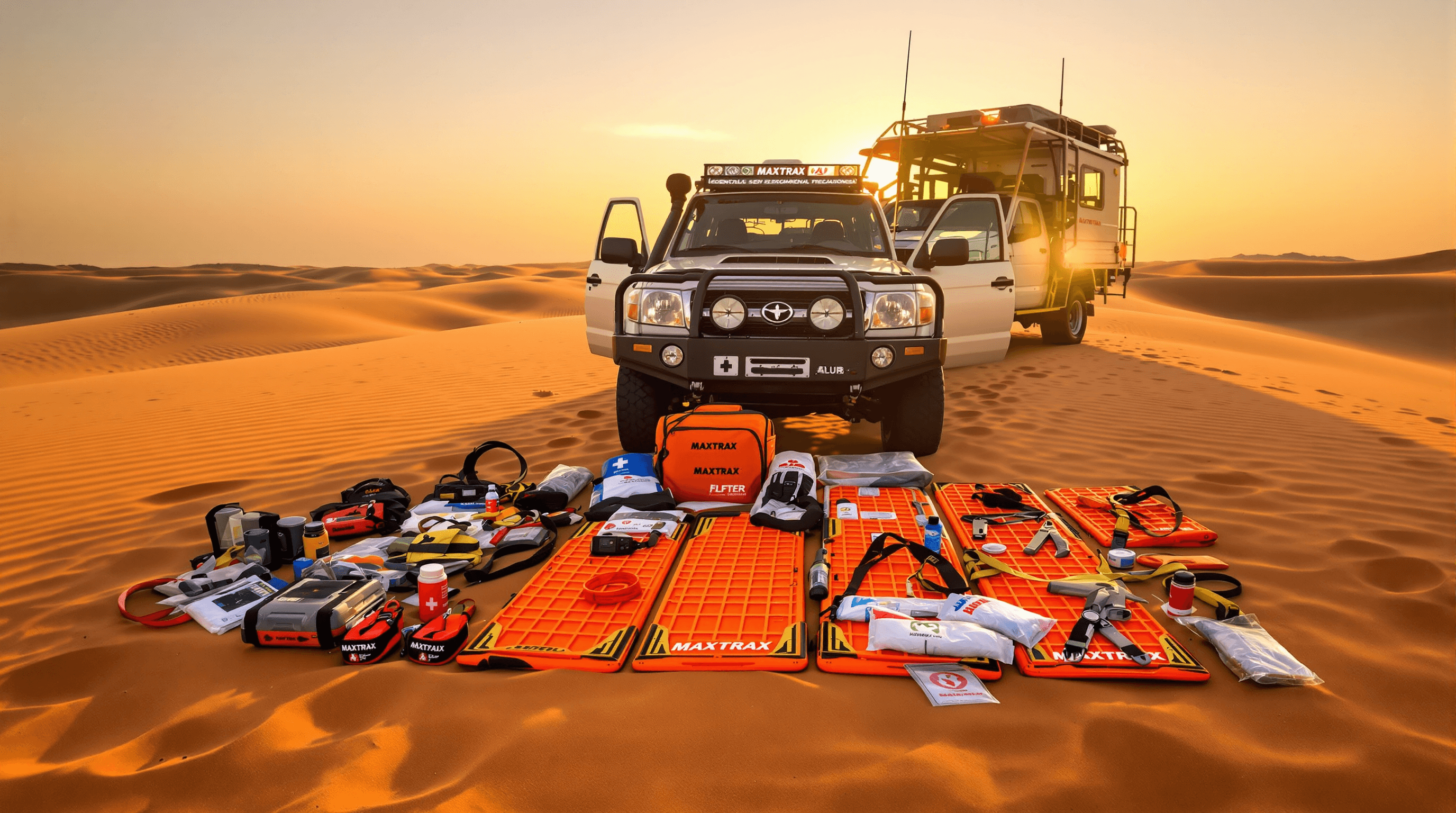
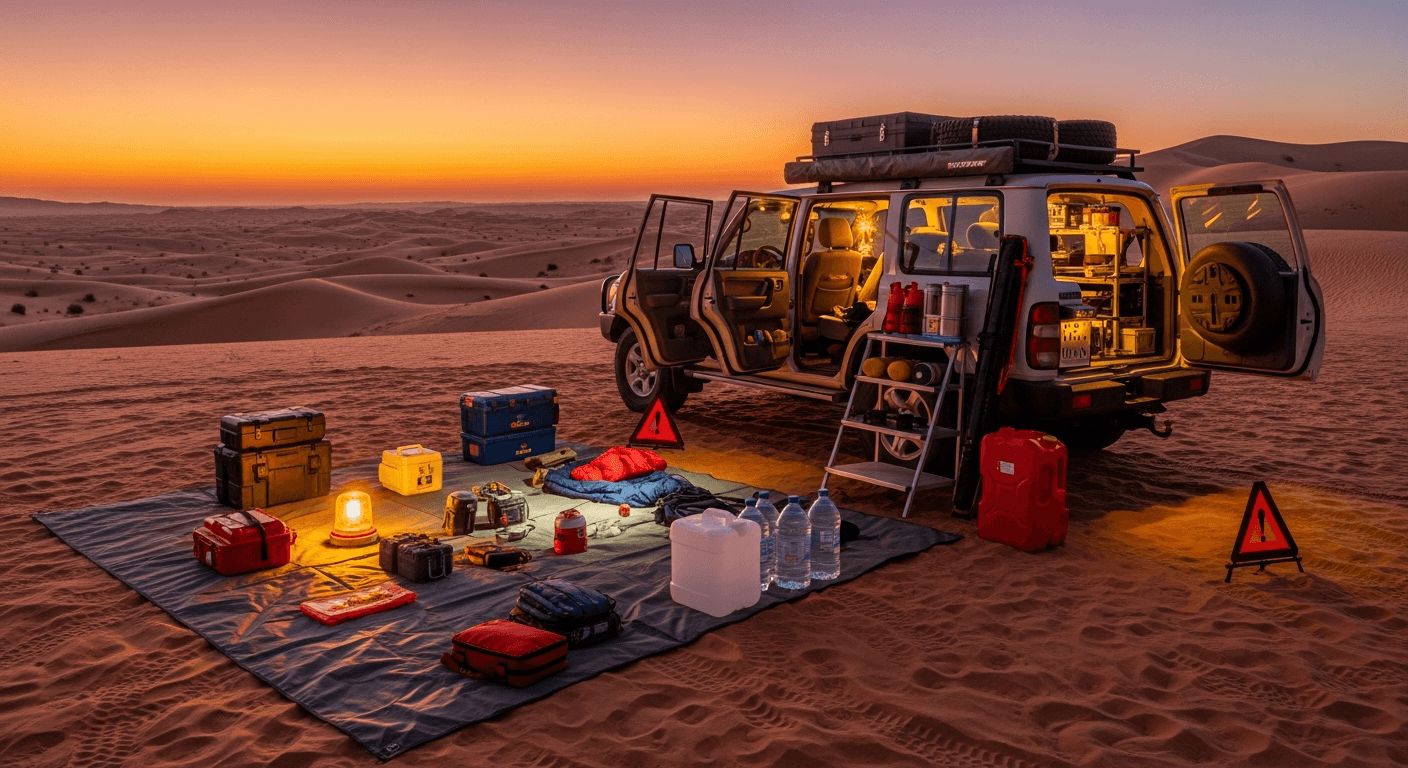
You don't need everything in a catalogue, but you do want redundancy on the things that matter — navigation, water, comms, recovery, first aid:
- Offline maps on your phone or a GPS, plus a satellite communicator for emergencies
- Recovery gear you know how to use — traction boards, tow strap, a way to air back up
- A tyre repair kit and a 12V compressor
- A proper first aid kit, and a torch (headlamp plus spare batteries)
- Warm layers and a real sleeping bag for winter nights
- Water in multiple containers, with a sealed reserve
For more on what to carry and how to use it, see our recovery gear guide.
A few common questions
Which months are best for overnight camping? The cooler half of the year, roughly October through March. Daytimes are comfortable and nights are pleasant to cold. Avoid high summer unless you're very experienced — the overnight heat stays dangerous.
How much water should I bring? More than you think. Plan several litres per person per day for drinking, cooking and hygiene, carry it in multiple containers, and keep a separate sealed emergency reserve.
What's the one thing first-timers get wrong? Going too remote, too soon, without proper comms. Your first overnighter should be with an experienced group, somewhere you can get out of easily, with a way to call for help that doesn't depend on a mobile signal.
Reviewed by experienced desert drivers. Our team personally visits operators and tests courses across the UAE.
Explore the Directory
Find off-road clubs, courses, garages and events across Dubai & UAE.
View Directory →