Roof Tents for UAE Off-Road Camping: What Actually Matters
A practical look at choosing and living with a roof tent for desert camping in the UAE - hard shell vs soft shell, fabric and ventilation, roof loads, and keeping sand from wrecking it.
Roof Tents for UAE Off-Road Camping: What Actually Matters
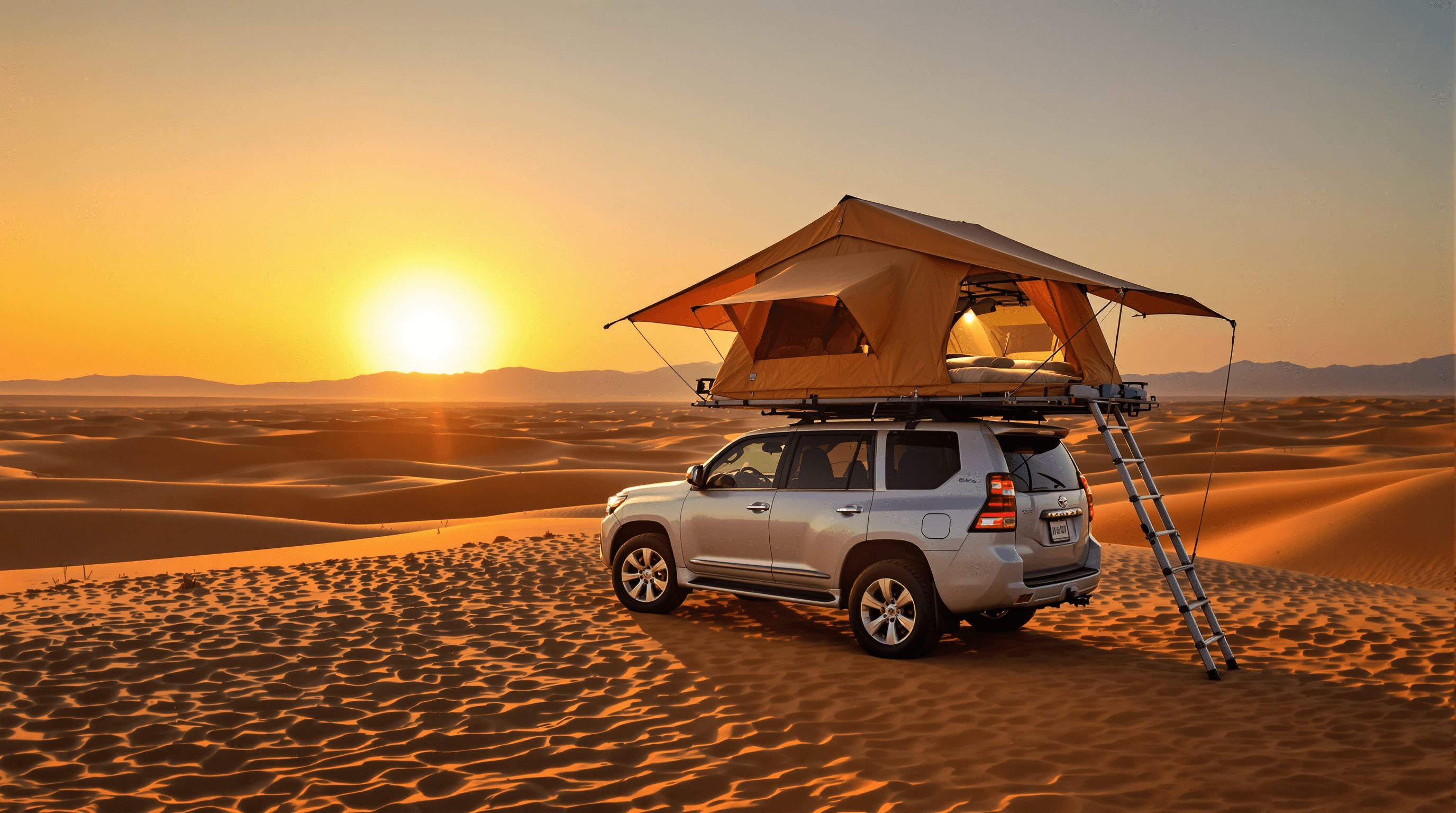
The first time I slept in a roof tent out near Liwa, the thing that sold me wasn't the view - it was not having to clear scorpions and sand off a groundsheet at 11pm. You're up off the floor, the mattress is already there, and on a one-night trip you go from "parked" to "in bed" in a few minutes. That convenience is real, and it's why so many people in the UAE end up with one bolted to the roof.
It's also a chunk of money and a permanent change to how your truck drives, so it's worth thinking about before you buy.
Hard shell or soft shell
This is the decision that matters most, and both styles work fine in the desert. The trade-off is simple.
Hard shells live inside a rigid clamshell or wedge case. They pop open fast, the case keeps sand and dust off the fabric while it's closed, and the smoother profile is kinder on fuel and quieter at highway speed. The downsides are price and space - you generally get less floor area for your money, and the case adds weight up top.
Soft shells fold out from under a fabric or PVC cover. You usually get a bigger sleeping area and an awning section for the money, which is nice if two or three of you are camping regularly. In exchange the cover collects sand, setup and pack-down take longer, and you have to be more careful folding the fabric away clean.
If you do a lot of quick overnighters and value getting set up fast, lean hard shell. If you camp less often but want more room when you do, a soft shell makes sense. Neither is "the desert one" - plenty of people run both happily out here.
Fabric, ventilation and hardware
The desert is hard on gear in a specific way: relentless UV, big day-to-night temperature swings, fine sand that gets into everything, and the odd surprise of rain or heavy dew. A tent that survives that comfortably tends to share a few traits.
Look for a heavy ripstop canvas or poly-cotton with a proper UV-resistant treatment - the sun fades and weakens cheap fabric fast here. Double-wall construction with a separate flysheet helps a lot with the condensation you get on cold winter nights when warm bodies meet cold canvas. Good mesh on the windows and doors lets you sleep with airflow without inviting insects in.
Pay attention to the small stuff too. Decent zippers with storm flaps over them, and metal hardware rather than exposed plastic that goes brittle in the heat. Zippers are usually the first thing to fail on a roof tent, and sand is what kills them, so anything that shields them is worth having.
Roof loads: the number people get wrong
This is where I see the most trouble. Roof racks and roof bars carry two different ratings, and they're far apart.
The static rating is what the roof will hold when the vehicle is parked - that's the one that matters when you, a partner and the bedding are all up there asleep, and it's usually generous. The dynamic rating is what it'll carry while you're driving, especially over rough ground, and it's a lot lower. Off-road, every bump multiplies the load, and the dynamic figure is the one you must not exceed when the truck is moving.
So the maths is: the tent itself, plus the rack, has to sit comfortably under your vehicle's dynamic roof load while driving. You sleep in it parked, where the static rating applies. Get the actual numbers from your vehicle's manual and the rack maker - don't guess, and don't trust a number you read on a forum. A heavy tent on a roof load you've quietly exceeded is exactly how people end up with cracked mounts or a sagging roof.
There's a handling cost too. A tent and rack put 50-plus kilos up high, which raises your centre of gravity and makes the truck feel tippier on side-slopes and softer in the dunes. It's manageable, but it changes the car, and it's another reason to keep total roof weight as low as you sensibly can.
Mounting it
Vehicles with strong factory roof rails - the usual Land Cruiser and Patrol crowd - give you good mounting points to build off. Most people fit a flat rack or cross bars rated for the job and bolt the tent to that rather than straight to thin factory bars.
If you're not confident about load ratings or you need custom mounts, get it done by a workshop that's fitted tents before. A good one will check your roof's rated capacity, mount it square so it doesn't whistle or shift, and not void anything in the process. The garages directory lists shops around the Emirates that do this kind of fit-out.
Living with one in the sand
A roof tent will last years if you look after it, and die early if you don't. The enemy is always sand and moisture.
Before you fold it away, get the sand out - sweep the floor, brush the fabric creases, and clear the zipper tracks especially, because grit in a zipper chews it apart. When you pack a soft shell, try to fold the fabric clean rather than trapping sand inside the cover.
If the tent gets wet or even just heavy with dew, dry it fully before it goes into long storage. Folding away damp canvas in this climate grows mould and mildew fast, and that smell never really leaves. If you've been camping near the coast, give the metal hardware an extra look now and then - salt air corrodes fittings quicker than the inland dust does.
Beyond that it's just occasional checks: fabric for UV wear and thin spots, zippers running smoothly, bolts still tight after a season of corrugations.
A few honest questions before you buy
Is it worth it over a ground tent? If you camp once or twice a year, probably not - that's a lot of money and permanent weight on the roof for a few nights. If you're out monthly and you hate setup faff, the convenience is genuinely worth it.
Does it work in summer? The cooler months from roughly November to March are when desert camping is actually pleasant, and that's when most people use these. Through the worst of summer the heat makes any tent rough overnight, roof or ground - good ventilation helps, but it won't make July comfortable.
Do I need a permit to camp out there? For ordinary camping in open public desert, generally no, but stay off private land and protected reserves, and check whether the specific spot or emirate has its own rules before you go. If you're new to overnighting in the dunes, our overnight camping in the UAE desert guide covers the practical side of picking a spot and setting up.
Reviewed by experienced desert drivers. Our team personally visits operators and tests courses across the UAE.
Explore the Directory
Find off-road clubs, courses, garages and events across Dubai & UAE.
View Directory →