Toyota Land Cruiser 300 in the UAE: Is It Worth the Money?
A practical look at the Land Cruiser 300 for UAE desert use — what the V6 twin-turbo and electronics actually do in the sand, and who it suits.

Toyota Land Cruiser 300 in the UAE: Is It Worth the Money?
The 300 Series replaced one of the most loved off-roaders Toyota ever built, and a lot of UAE regulars were nervous about it — mostly because it dropped the V8 for a twin-turbo V6. Several years on, the answer is pretty clear: it's an excellent desert vehicle, and the engine swap turned out to be the right call. Whether it's worth the asking price is a different question, and that's the one worth actually thinking about before you buy.
This is a look at what the LC300 does well in local conditions, where the money goes, and who it really suits.
The engine, and why the V6 worked out
The LC300 runs a 3.5-litre twin-turbo V6 petrol, making roughly 415hp and 650Nm. On paper that's more power and more torque than the old V8, but the number that matters for sand is where the torque arrives — it comes in low and stays flat across a wide rev range. In practice that means it pulls cleanly up a soft dune face without you having to wind it out, and the turbos don't fall on their face in summer heat the way you might fear.
It's paired with a 10-speed automatic that's genuinely good off-road. It holds a gear on a climb instead of hunting, and gives you useful engine braking coming down the other side. If you've driven the V8 cars, the V6 doesn't sound as good — that's the honest trade-off. But for getting across the desert it's the better engine.
What the electronics actually do
The 300 is loaded with off-road tech, and unlike a lot of systems it's worth using rather than switching off.
- Multi-Terrain Select has a Sand mode that genuinely helps — it backs off the traction-control intervention so you keep momentum instead of the car braking itself to a stop in soft stuff.
- Crawl Control is a low-speed off-road cruise control. It's not something you'll use much in open dunes, but it's handy on technical rock and steep, loose descents where you want to focus on the line.
- KDSS (the hydraulic anti-roll system on the higher variants) lets the suspension articulate over rough ground while staying composed on the road. It's one of the things that makes the 300 feel planted on a side slope.
None of this replaces knowing how to drive sand. A stock 300 in the hands of someone who's done a proper desert driving course will out-drive a heavily modified truck with an inexperienced driver behind the wheel.
How it behaves in the sand
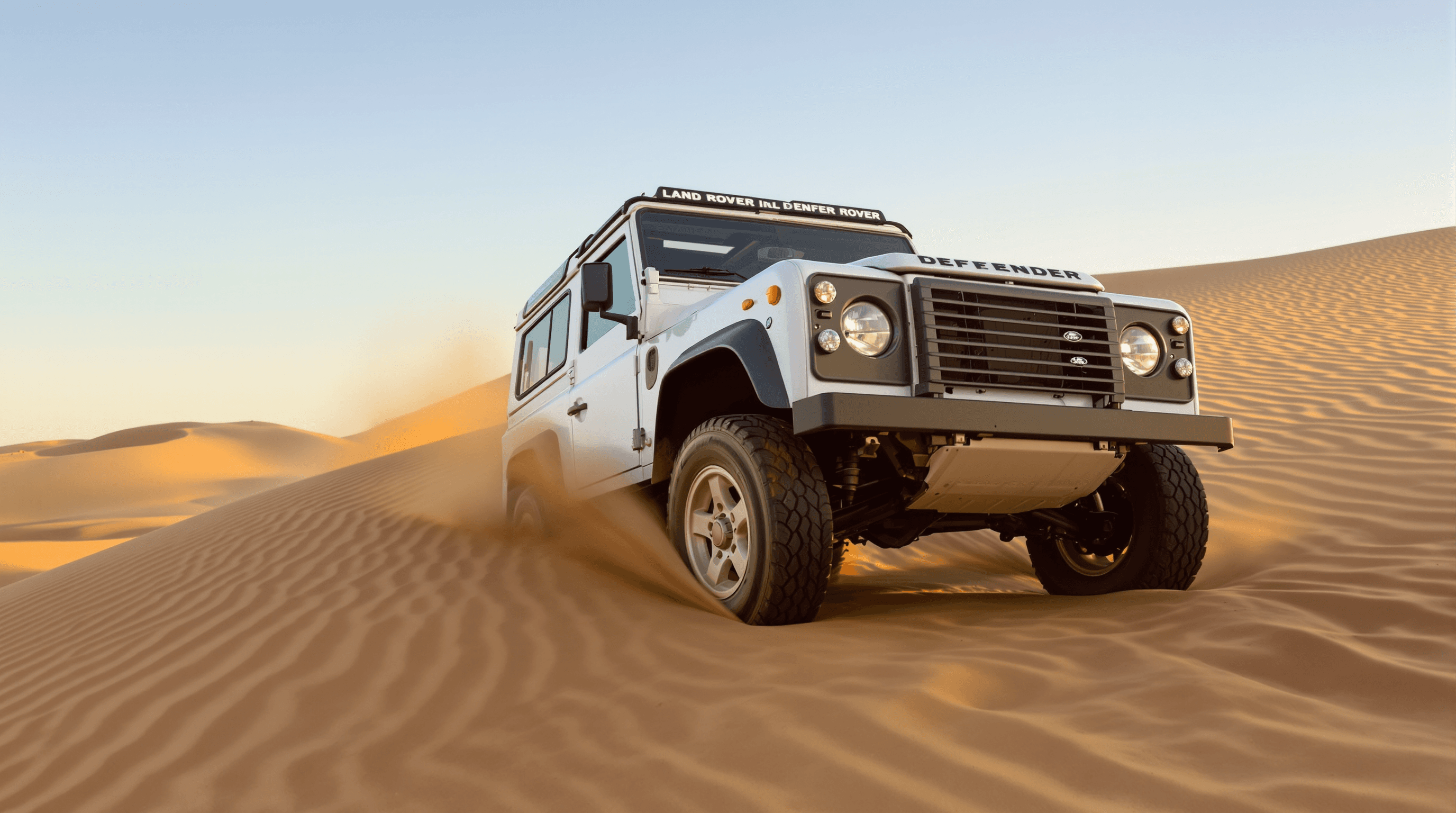
The 300 floats well for its size. Aired down to sensible pressures it carries momentum across soft sections, and the weight that you'd think would be a liability actually helps it settle and grip. Ground clearance is around 230mm and the approach and departure angles are fine for dunes — you'll rarely run out of geometry before you run out of nerve.
Where you notice the size is in tight wadi work and steep, narrow bowls — it's a big, wide vehicle and it doesn't shrink around you. For pure dune driving that's a non-issue.
Real-world fuel use off-road sits high — working it in the dunes you'll burn through a tank fast, which is normal for anything this size and worth planning your trips around. On the road it's far more reasonable.
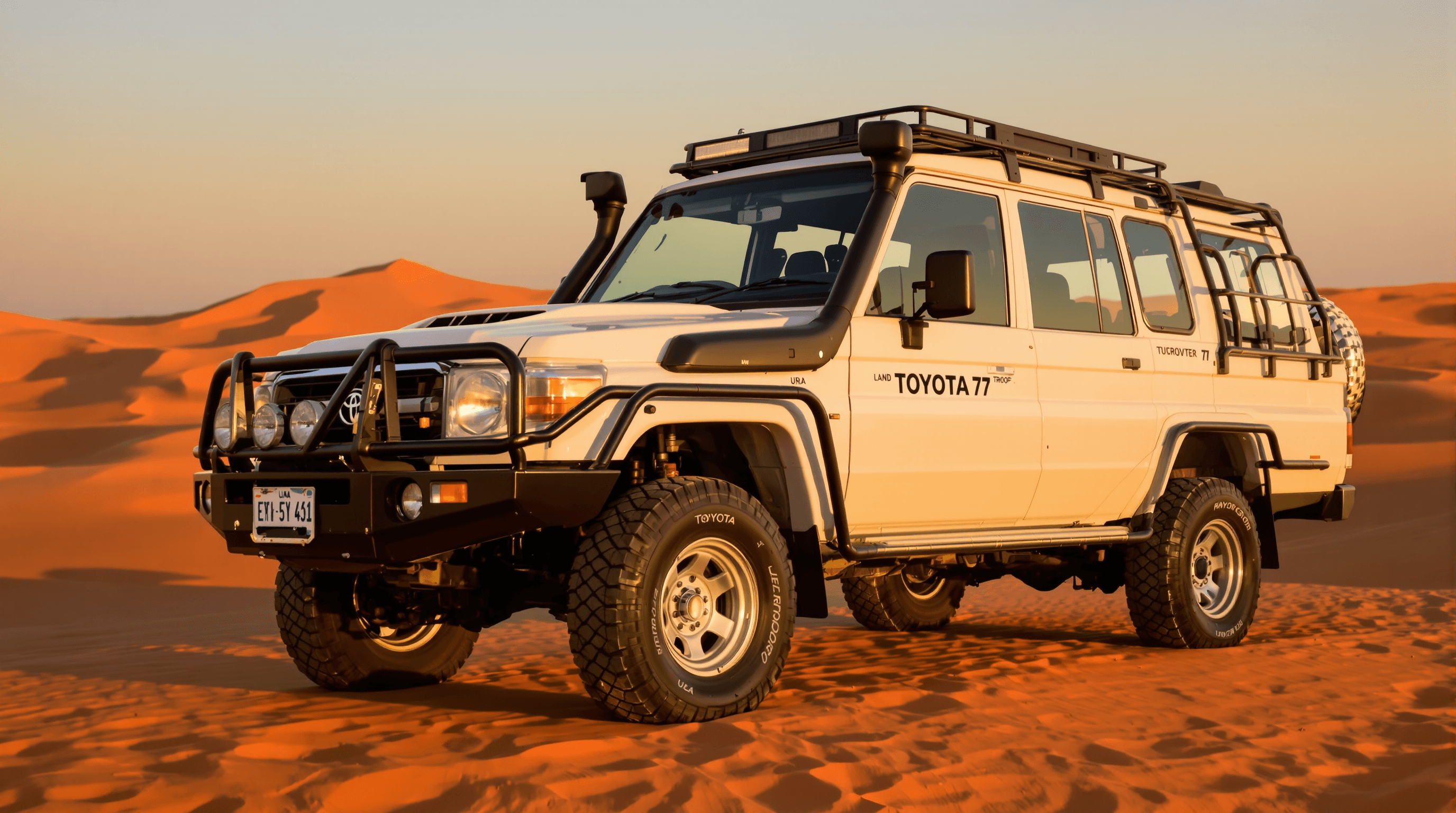
A stock 300 will handle the vast majority of UAE terrain without any modifications at all. The first sensible spend is the same as for any desert vehicle: a decent set of off-road tyres and proper recovery gear, not a lift kit.
Modifications
The aftermarket support is strong, and most of it is bolt-on stuff that won't cause warranty grief. The popular early additions are practical rather than exotic:
- Rated front and rear recovery points (the stock tie-down points are not recovery points)
- Underbody and diff protection
- A mild suspension setup and a set of all-terrain tyres
- Auxiliary lighting if you do night runs
There's no shortage of Dubai workshops that know the 300 well. Resist the urge to throw a big lift and 35s at it on day one — drive it stock for a season, learn what it actually needs, then build from there.
Ownership and running costs
This is where the 300 earns part of its premium. It's a Toyota in a country full of Toyotas, so parts are easy and any competent workshop can work on it — you're not tied to the dealer, and labour is reasonable. Servicing is straightforward, and resale on Land Cruisers stays strong, which softens the high purchase price over time.
If you drive it hard in the dunes regularly, do more frequent air-filter checks and underbody inspections than the standard service schedule suggests — fine sand finds its way into everything. A bit of attention there pays off, and so does washing it down properly after a trip.
So is it worth it?
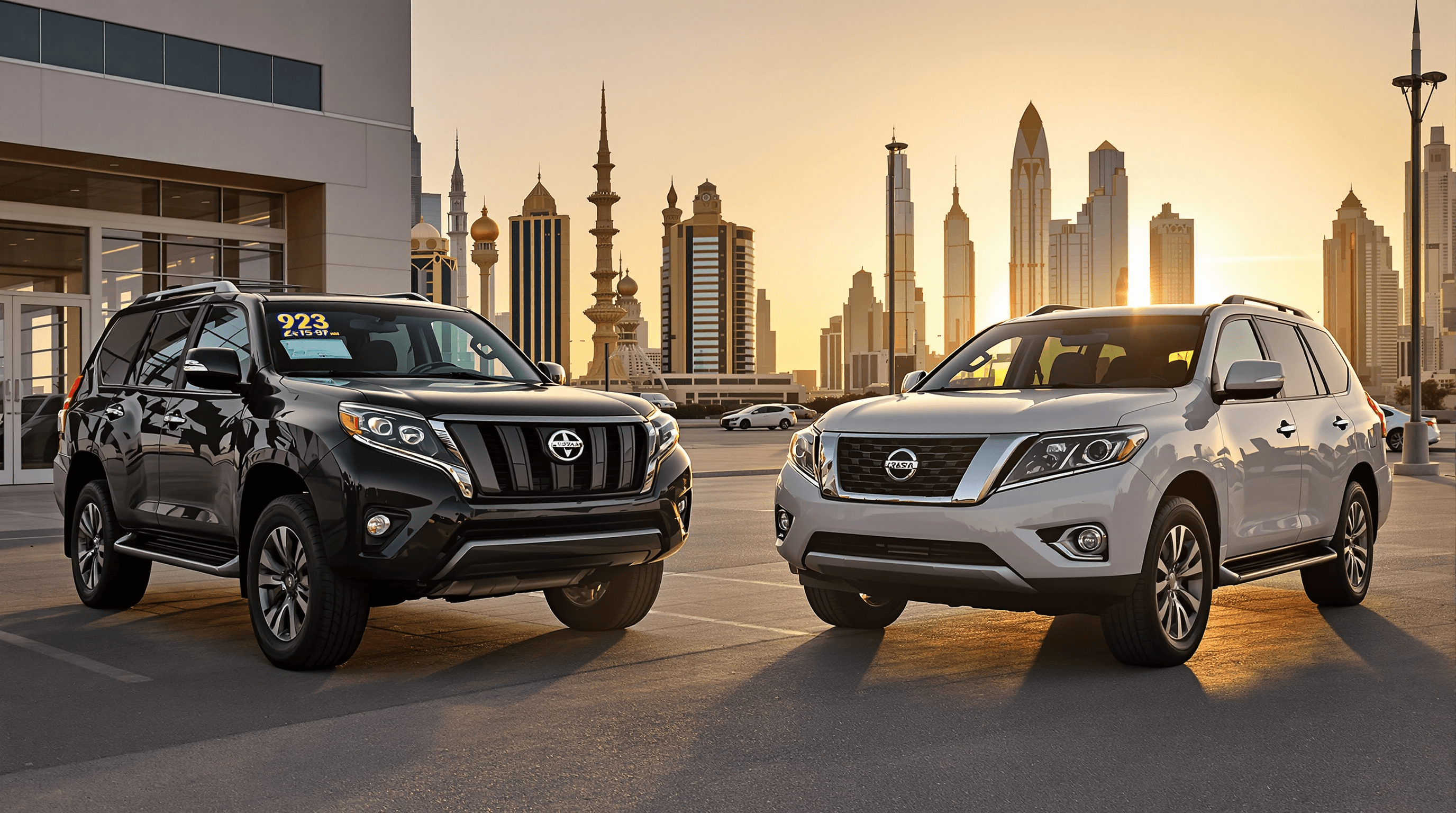
Honestly, it depends on what you're comparing it to. Against a Nissan Patrol the choice usually comes down to feel and budget more than capability — both are serious desert vehicles. Against something cheaper, the 300's case is reliability, resale and the ease of living with a Toyota in this region, not that it's twice the off-roader.
If you want one vehicle that does the school run, the highway and serious desert weekends without complaint, and you can stomach the price, the 300 is very hard to fault. If your budget is tighter and the desert is the main event, there are vehicles that get you just as far for a lot less.
A few common questions
Should I worry about the V6 compared to the old V8? No. The V6 makes more torque, lower down, and copes well with the heat. You lose the V8 noise — that's the only real downside for most owners.
Can I take a stock 300 into the deep desert like Liwa? The vehicle itself is more than capable of Liwa's terrain stock. What you must add is recovery gear and the knowledge to use it — and don't go out there alone. Run in a convoy with people who know the area.
What tyre pressure for sand? Air down well below road pressure for soft sand, and adjust to conditions and load. The tyre pressure for sand guide walks through how to read it rather than just giving you one number to memorise.
Reviewed by experienced desert drivers. Our team personally visits operators and tests courses across the UAE.
Explore the Directory
Find off-road clubs, courses, garages and events across Dubai & UAE.
View Directory →