What to Do When You're Stuck in the Desert
Bogged or broken down in the UAE desert? Here's how to stay safe, try a self-recovery, call for help, and avoid getting into trouble in the first place.

What to Do When You're Stuck in the Desert
Everyone gets stuck eventually. Spend enough weekends in the sand and it's not a question of if, it's when — you misjudge a bowl, lose momentum on a climb, or stop where you shouldn't and the car sinks to the axles. Most of the time it's nothing serious and you're moving again in twenty minutes. The trouble starts when people panic, dig themselves in deeper, or wander off into the heat. This is the order I'd work through it.
First, stop and look around
The instinct is to mash the throttle and try to power out. Don't. Spinning the wheels just digs you in deeper and buries the car to the chassis, which turns an easy recovery into a long one. Take your foot off, get out, and actually look at how the car is sitting and what's under it.
Check everyone's okay, and check the car isn't doing anything alarming — fuel smell, smoke, a wheel hanging off a ledge. If it's high-centred or balanced on something, sort that out before anyone climbs underneath. Then take stock: how much water do you have, how much daylight, and where exactly are you. If anyone's hurt or the situation is genuinely bad, that's a 999 call, not something to tough out.
Try a self-recovery
Most sand stucks come free with the basics, in this rough order:
- Drop your tyre pressure. This is the single biggest thing. Letting air out spreads the tyre's footprint and floats you on top of the sand instead of ploughing through it. For soft dunes most people run somewhere around the high single digits to low teens in PSI — see our tyre pressure for sand guide for how low to go and when. A lot of "stucks" simply vanish once the tyres are aired down properly.
- Dig out the sand. Clear it from in front of (or behind, depending on your exit) all four wheels and from under the belly if you're sitting on it. A folding shovel earns its space in the boot.
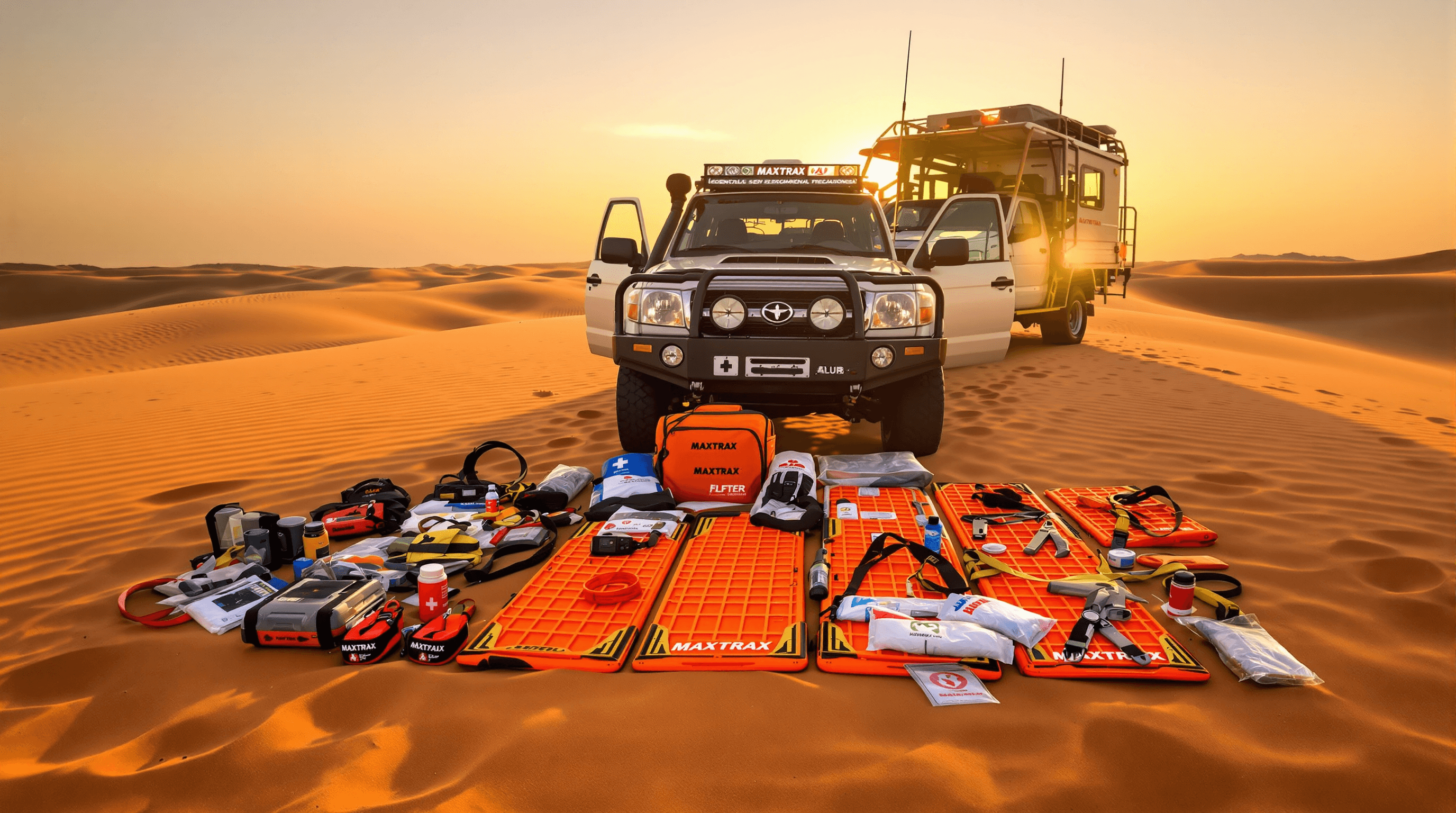
- Get something under the tyres. Recovery boards under the driving wheels give you grip to climb out. Floor mats work in a pinch but get chewed up and fired backwards, so stand clear.
- Pick your direction and go gently. Usually reversing back out the way you came in, where the sand is already compressed, is easier than going forward. Smooth, steady throttle — wheelspin is the enemy.
If that doesn't work and you've got another vehicle with you, a proper snatch recovery with rated gear and decent recovery points is the next step — done wrong it's genuinely dangerous, so it's worth knowing what you're doing first. The gear listings cover the straps, shackles and boards worth carrying.
Calling for help and sharing your location
The hard part about a desert emergency isn't usually the car, it's telling people where you are when there are no road names or landmarks. A few things help:
- 999 reaches police across the UAE and is the number to use for any real emergency.
- Use What3Words or just read your GPS coordinates straight off your phone's maps app — both work without a data connection and give a recovery crew something exact to drive to.
- Coverage is patchy out there. If you've no signal, moving to higher ground or the top of a dune sometimes finds a bar or two.
This is also where rolling with other people pays off. Most regulars never drive alone, and the off-road clubs run convoys and group chats where someone with a winch and experience is usually a message away.
Staying safe while you wait
The desert swings hard — well over 50°C on a summer afternoon, and genuinely cold on a clear winter night. Either way, the advice is the same: stay with the car. It's shade, it's shelter, it holds your water, and it's far easier for someone to spot than a person on foot. Most of the bad outcomes happen when people abandon the vehicle and walk.
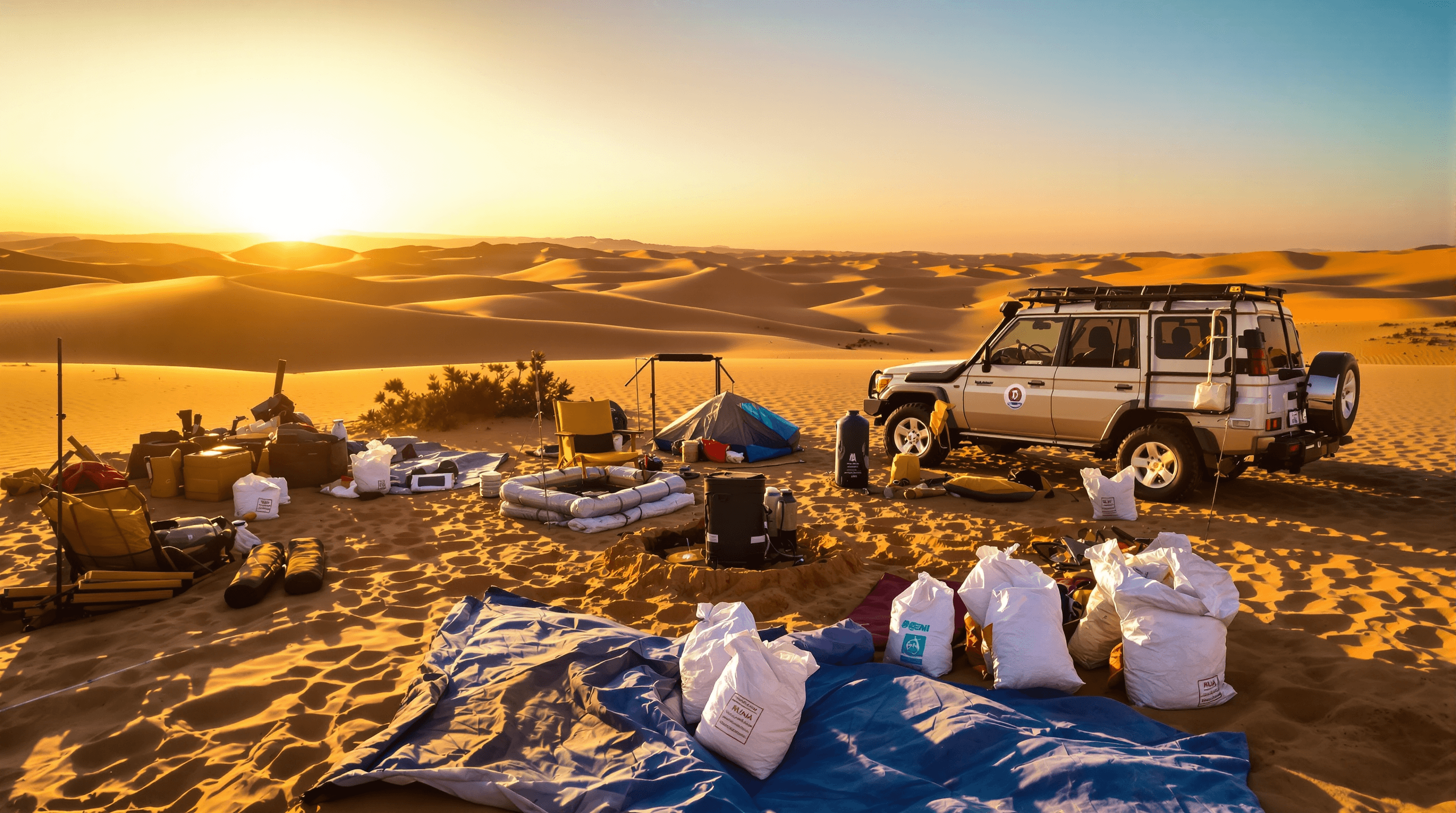
Get into the shade, sit still, and don't burn energy in the midday heat. Sip water regularly rather than gulping it. If it's cold overnight, mats and seat covers make decent insulation. The goal is just to be comfortable and visible until help arrives.
Not getting stuck in the first place
Most of this you avoid with a bit of prep:
- Tell someone your route and when you expect to be back.
- Carry more water than you think you need — plan on several litres per person per day, and then some.
- Pack the basics: shovel, recovery boards, a tow/recovery strap, a first aid kit, and a way to keep your phone charged.
- Air down before you hit the soft stuff, not after you're already buried.
- Don't drive alone if you can help it, especially as a beginner.
The bigger thing, honestly, is technique. A lot of stucks come down to reading the sand and keeping momentum, and that's a learned skill. If you're new to it, a day with a proper instructor will teach you more than a season of getting bogged on your own — have a look at the courses listings. And if something does break, the garages directory has workshops that actually understand what desert running does to a vehicle.
A few common questions
Should I leave the car and walk for help? Almost never. Unless you can see exactly where you're going and know it's close, stay put. The car is shelter and it's far easier to find than you are.
How low should my tyres go? Soft dune driving usually means dropping well below road pressure, into single-digit or low-teen PSI territory. Carry a compressor so you can air back up before you hit tarmac. The tyre pressure guide covers it properly.
What's the one thing I should never forget? Water. Everything else you can improvise or wait out, but you can't fake hydration in 50-degree heat.
Reviewed by experienced desert drivers. Our team personally visits operators and tests courses across the UAE.
Explore the Directory
Find off-road clubs, courses, garages and events across Dubai & UAE.
View Directory →