Why You Should Learn to Off-Road on a Stock Car First
Before you spend on lift kits and big tyres, learn what your factory 4x4 can do. Why starting stock makes you a better desert driver in the UAE.

Why You Should Learn to Off-Road on a Stock Car First
Almost every new off-roader I meet has a wishlist before they've done a single drive: a lift, a set of fat all-terrains, maybe a winch. I get it — modified rigs look the part, and the forums are full of build threads. But the honest advice, and the advice most experienced UAE drivers will give you, is to leave the car alone for a while and learn to drive it first.
A stock car is just the vehicle as it left the dealership — factory suspension, factory tyres, no lockers you didn't pay for, no oversized rubber. That sounds like a handicap. It's actually the best teacher you'll get, because it makes you feel exactly what the sand is doing and punishes lazy inputs immediately.
If you want structured help getting started, a beginner course on a stock vehicle will teach you more in a day than a month of guessing on your own.
Why stock makes you a better driver
The whole point of a modification like a locker or a big lift is to make hard terrain easier. That's great when you know what you're doing. When you're learning, it's the opposite of what you want — it hides your mistakes. You bog the throttle, you pick a bad line, you carry too much speed into a bowl, and the kit bails you out before you ever feel that you got it wrong.
A stock car gives you that feedback straight away. Spin a wheel and you feel it dig. Pick the wrong line up a dune and you'll stop short. Lift off too early and you'll lose momentum and sink. None of it is dangerous if you're with a sensible group, but all of it teaches you. After a few months of that, throttle control and line choice stop being things you think about and start being things you feel.
Those instincts transfer to any vehicle. A driver who learned to read sand on a factory Patrol will be good in a built rig too. It rarely works the other way around.
What "stock" actually means
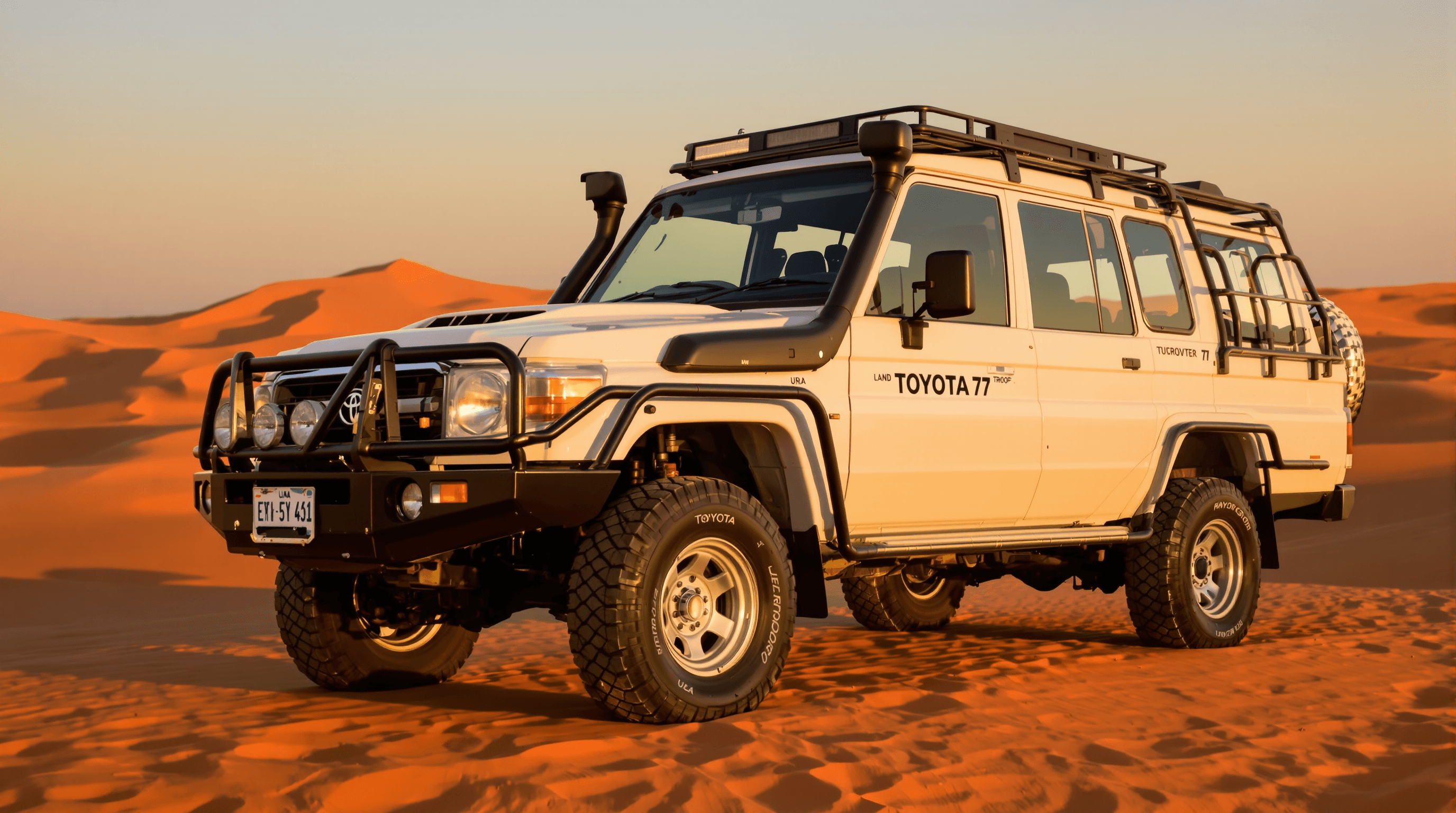
Stock means original factory configuration — no aftermarket suspension, no taller tyres, no added diff locks or skid plates. A standard Land Cruiser, Nissan Patrol, Prado or Ford Bronco straight off the showroom floor is a stock vehicle, and every one of those is a genuinely capable desert platform out of the box.
That last part surprises people. Modern 4x4s come with traction control, hill-descent control and selectable terrain modes that do a lot of work for you. Plenty of beginners never find the limits of the car they already own because they upgrade before they've explored it. Lift kits and tyres aren't cheap, and a fair number of people who buy them early end up wishing they'd spent the money on seat time and a course instead.
A modern platform like the Land Cruiser 300 or Patrol has a surprising amount of capability built in before you touch anything.
Reading sand on a stock car
The single most important skill in the dunes is reading the sand — knowing where it's firm, where it's soft, and how the surface changes through the day. Sand that's drivable at 7am can turn into a trap by midday once the sun's been on it.
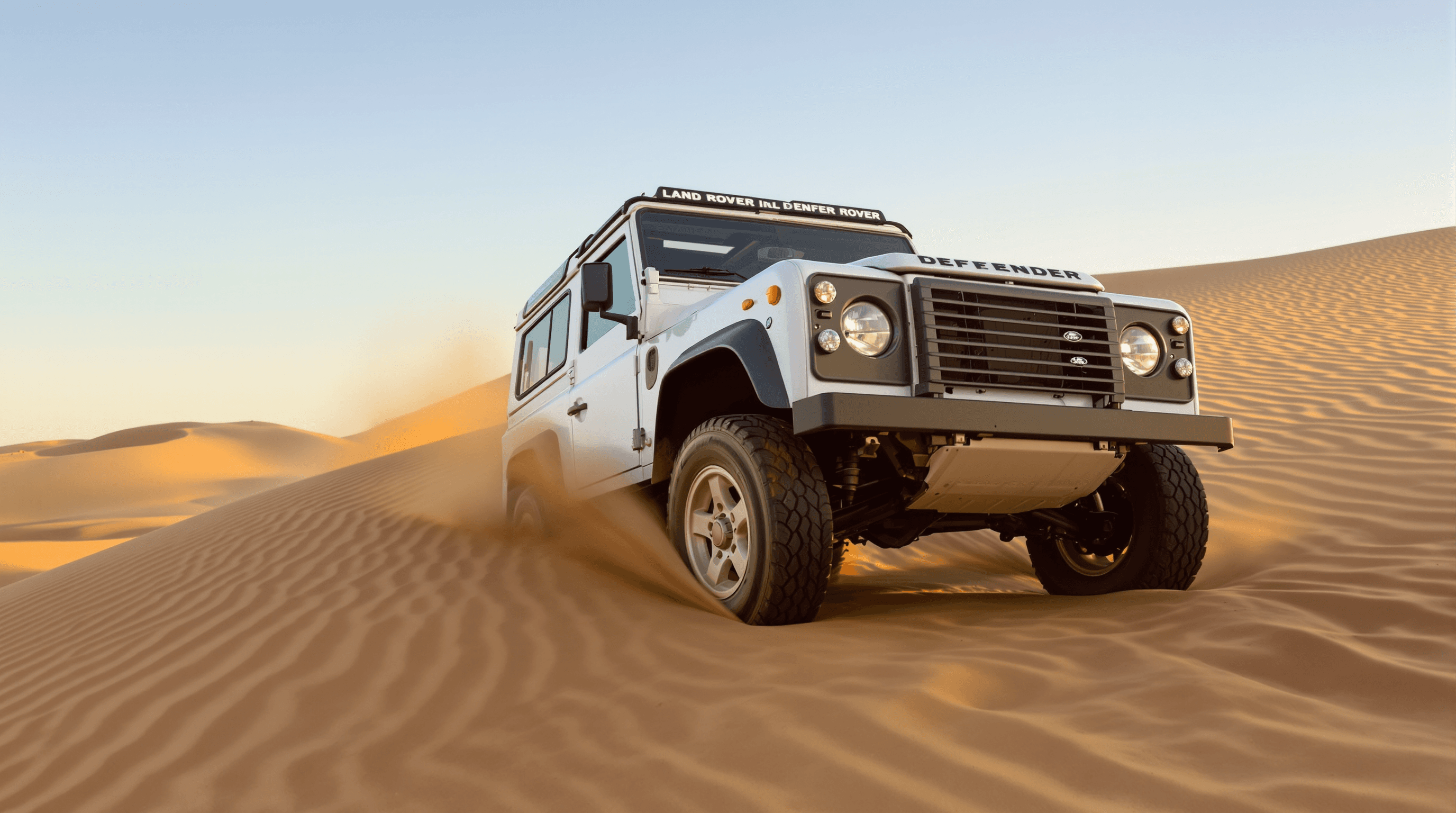
A stock car forces you to learn this faster, because your margin is smaller. You can't just power through a soft patch on torque and big tyres, so you learn to spot it coming, carry the right momentum, and modulate the throttle to keep moving without digging in. That's the core of dune driving, and it's a habit you build by feeling the car struggle, not by buying your way past the struggle.
Dropping your tyre pressures is part of this too — it's the single biggest thing you can do to a stock car to help it in sand, and it costs nothing. Our tyre pressure guide covers how far to drop and why.
Rocky and wadi terrain
The wadis and rocky tracks in places like Hatta and the Hajar Mountains are a different test. Here it's about clearance, articulation and patience rather than momentum. On a stock car you have less clearance to spare, so you learn to pick your line carefully, place each wheel, and use steering angle and gentle throttle to keep tyres on the ground.
Learning to crawl a rocky climb without bashing your factory skid plate teaches obstacle judgment that no amount of added clearance gives you. That judgment is what keeps you and your group safe on the trail later, and the rocky tracks around Hatta are a good place to build it.
The myths worth ignoring
A few things get repeated that aren't really true:
- "Stock can't handle dunes." Most beginner-to-intermediate UAE dune terrain is well within reach of a factory 4x4 driven properly.
- "You need a lift straight away." Factory clearance is fine for building your core skills. The driver is the limit long before the car is.
- "Stock tyres are useless in sand." Aired down to the right pressure, factory tyres work fine for learning.
- "Modifications make you a better driver." They don't. Skill does. Mods just change what the car can do once you already have the skill.
When it's actually time to modify
There's a real point where modifications make sense — it's when you're consistently and confidently reaching the limits of what your stock car can do, not when you just want a meaner-looking rig. For most people that takes a year or two of regular driving across different terrain, not a few weekends.
When you get there, modify for a reason. If you keep wishing for more articulation on technical rock, that points you toward suspension. If you're doing long remote trips, recovery and tyres matter more. Match the build to where you actually drive — a desert car and a mountain-trail car aren't the same build. A good garage can talk you through what's worth doing once you're at that stage.
A few tips for starting out
- Go out with an experienced group for your first handful of drives — having someone read the terrain with you is worth more than any accessory.
- Do a proper course so you learn throttle control, line selection and recovery from the start.
- Air down before you hit soft sand. For most stock setups that means dropping well below road pressure; your instructor or group will give you a number for the conditions.
- Start on easier terrain and build up. There's no prize for jumping straight onto the big dunes.
- Carry recovery gear — at minimum a snatch strap and rated shackles — and never go solo into remote terrain.
A few common questions
Can a completely stock SUV handle UAE dunes? Yes, in the hands of a driver who knows what they're doing. The car is rarely the limiting factor on beginner-to-intermediate terrain — technique and tyre pressure matter far more.
How long until I'm a confident desert driver? Most people get to a solid intermediate level inside the first year if they're driving regularly and going out with experienced people rather than learning entirely on their own. Doing a course early speeds it up.
Is it worth modifying before I learn? Generally no. Mods mask the feedback you need to build terrain-reading instincts, so you end up spending money and learning slower. Drive the stock car first, then modify for the specific things it can't do.
Reviewed by experienced desert drivers. Our team personally visits operators and tests courses across the UAE.
Explore the Directory
Find off-road clubs, courses, garages and events across Dubai & UAE.
View Directory →