Al Qudra — An Easy Desert Day Out From Dubai
A practical guide to driving Al Qudra: what you can do in a normal car, where the 4x4 sand starts, the lakes and wildlife, and how to plan the day.

Al Qudra: An Easy Desert Day Out From Dubai
If you're new to the desert around Dubai and not ready to commit to proper dune bashing, Al Qudra is where a lot of people start. It sits south of the city off the Al Qudra Road, maybe 40-odd minutes from Dubai Marina depending on traffic, and the appeal is simple: you get real desert, lakes and wildlife, with a long stretch of sealed and graded road that any car can handle. You can ease into it and turn back whenever you've had enough.
It's not a technical off-road area, and that's the point. Treat it as a scenic drive with the option to go softer-going if you've got the right vehicle.
What you can do in a normal car
The main draw for most visitors is the lakes and the easy circuit. The sealed cycling-track road and the firm graded tracks near the lakes are fine in a regular 2WD car or a soft-roader SUV — you don't need a 4x4 just to see Al Qudra Lakes or the heart-shaped Love Lakes and take it in.
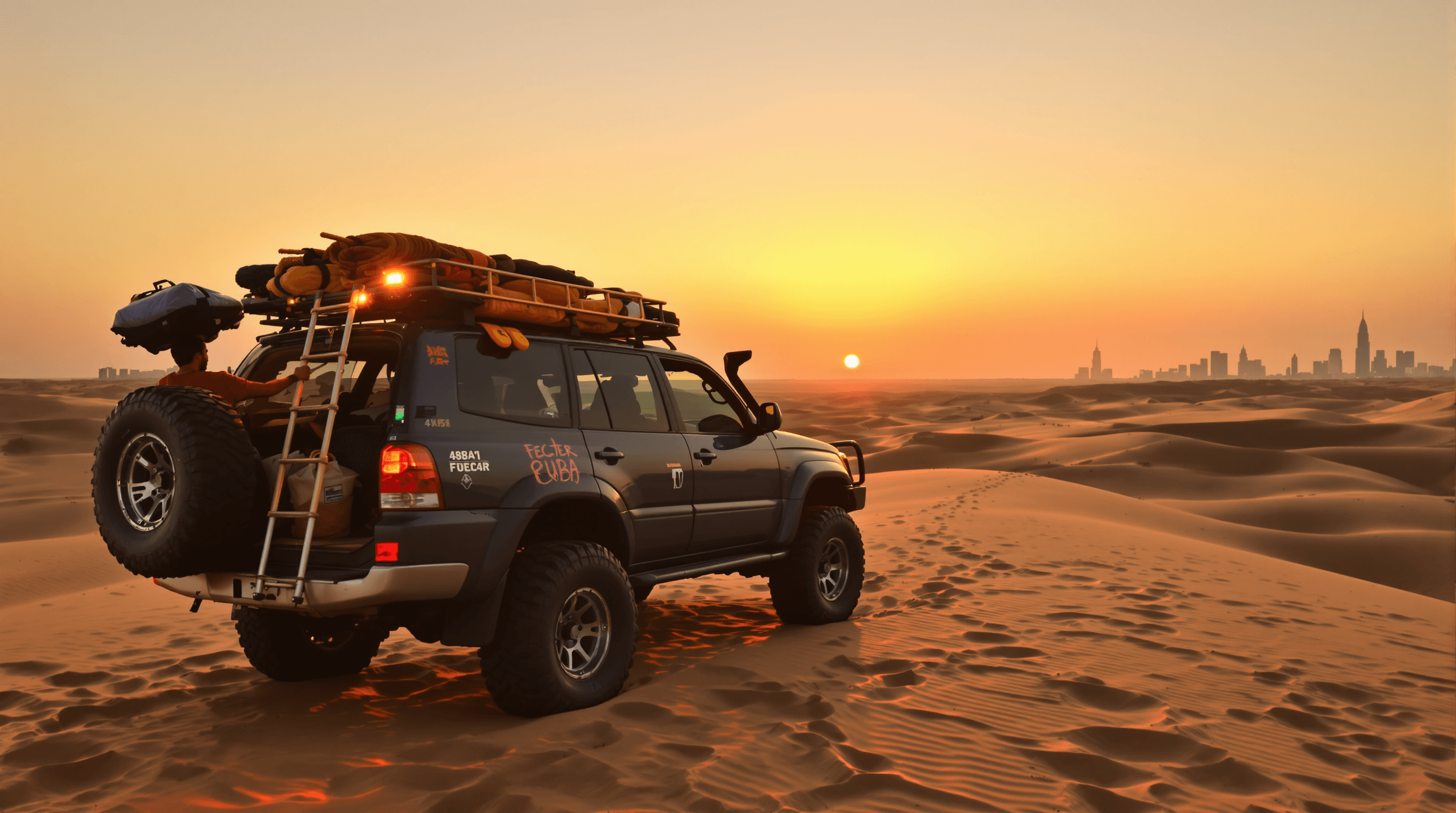
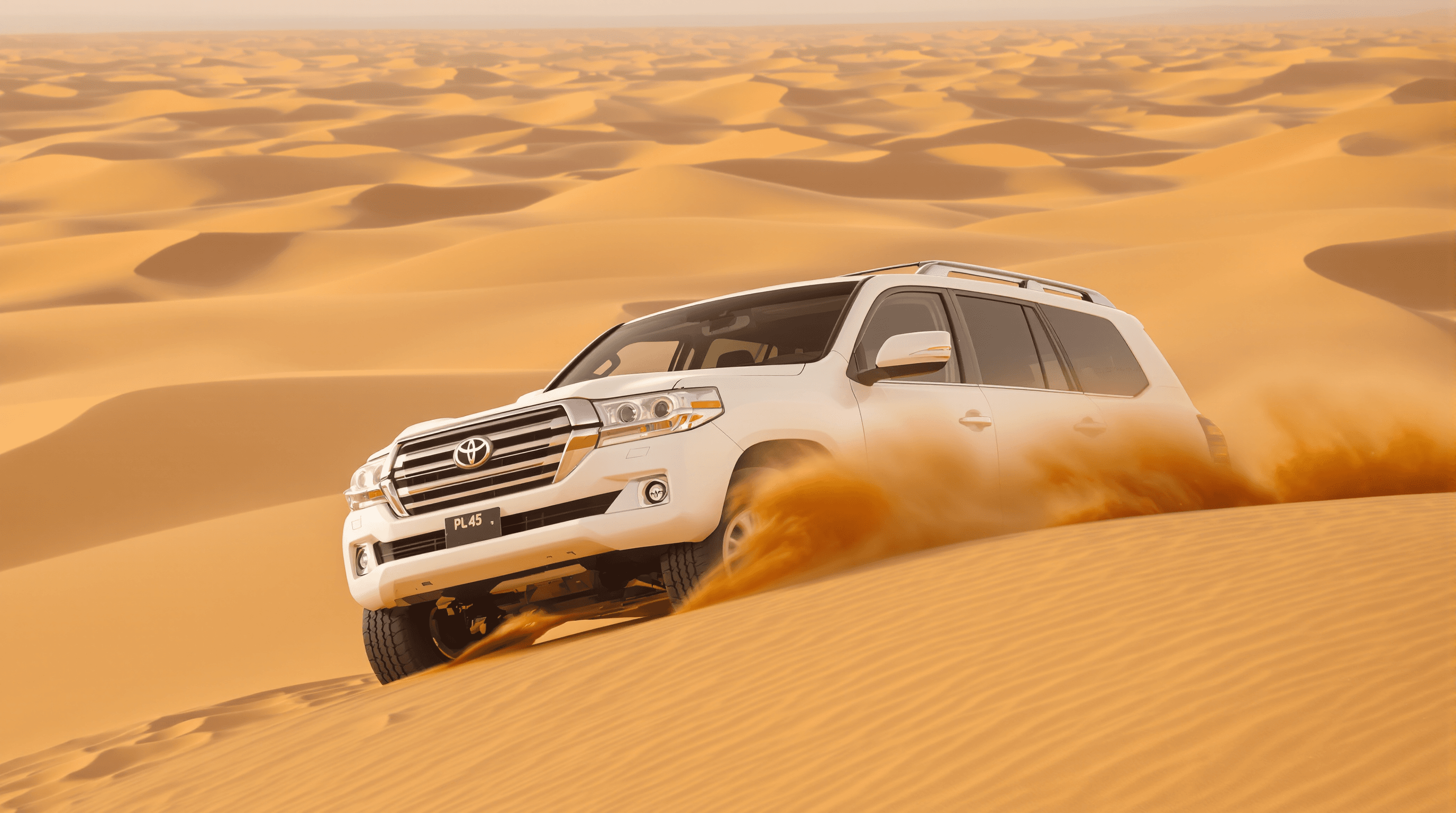
Where you do need a proper 4x4 is the moment you leave the graded surface for the soft sand. It looks tame, but soft sand will bury a 2WD quickly, and Al Qudra has a long history of stuck cars that wandered off the firm track thinking it would be fine. The rule is easy: stay on the graded roads in a 2WD, and only head into the sand if you're in a low-range 4x4 set up for it.
If you do take the sand:
- Drop your tyre pressures before you go in — softer tyres float on sand instead of digging. (Our tyre pressure guide covers what to run and why.)
- Don't go alone. A second vehicle turns a recovery from a problem into a non-event.
- Carry recovery gear you actually know how to use, and water — more than you think you need.
The lakes and the wildlife
Al Qudra Lakes are man-made, but they've turned into a genuine draw for birdlife, and on a calm morning the variety is the surprise of the trip. Flamingos and various waterbirds turn up over the cooler months, and the area is popular with birdwatchers as well as drivers. Love Lakes, the pair shaped into hearts, is the spot everyone photographs — it gets busy at sunset, so go early if you want it quieter.
The wider Al Marmoom reserve to the south is home to Arabian oryx and gazelle, and you'll sometimes see them from the track. Early morning and late afternoon are far better than the middle of the day, both for the animals and for the light. Keep your distance and don't chase anything for a photo — these are protected animals in a protected area, and rangers do patrol.
When to go
This is a cool-season trip. From roughly October through March the temperatures are pleasant and the area is at its best — it's also when it's busiest, especially on weekends and at sunset around Love Lakes. If you want space and good wildlife viewing, come on a weekday or get there early.
In the deep summer it's genuinely punishing out there. If you go at all in the hot months, go at dawn and be back before the heat builds — and don't underestimate how fast a hot, soft-sand recovery turns dangerous.
Camping and the rules
Al Qudra falls inside a conservation area, so the casual "pitch a tent anywhere" approach doesn't apply the way it might elsewhere in the emirate. Rules and signage change, so check what's currently permitted rather than assuming — and if you want a proper overnight, there are organised desert camps nearby set up for it. Drones near the wildlife and lakes are restricted; leave it at home unless you've confirmed you can fly.
Worth it for a first desert trip?
For a newcomer, yes. You get the feel of the desert, somewhere genuinely scenic, and a low-stakes place to dip into soft sand without being miles from help. If you want to go further than the graded tracks and you're not confident, do a session with an instructor first rather than learning the hard way mid-recovery — the courses directory lists people who run beginner desert training.
A few common questions
Can I drive Al Qudra in a regular car? Yes, for the lakes and the sealed and graded tracks. Stay off the soft sand unless you're in a 4x4 — that's where 2WD cars get stuck.
Is there an entry fee? The main lakes and tracks are open access with no gate or ticket. Some managed areas and organised activities are separate and may need booking.
When are the flamingos around? The cooler months, roughly late autumn through early spring. Early morning is the best time to see birdlife and the calmest water.
Reviewed by experienced desert drivers. Our team personally visits operators and tests courses across the UAE.
Explore the Directory
Find off-road clubs, courses, garages and events across Dubai & UAE.
View Directory →