Big Red Dune: A Newcomer's Guide to Dubai's Famous Desert Spot
An honest look at Big Red, the big reddish dune on the Hatta road that most Dubai off-roaders cut their teeth on: how to get there, who it suits, and how to stay safe.

Big Red: Where Most Dubai Off-Roaders Cut Their Teeth
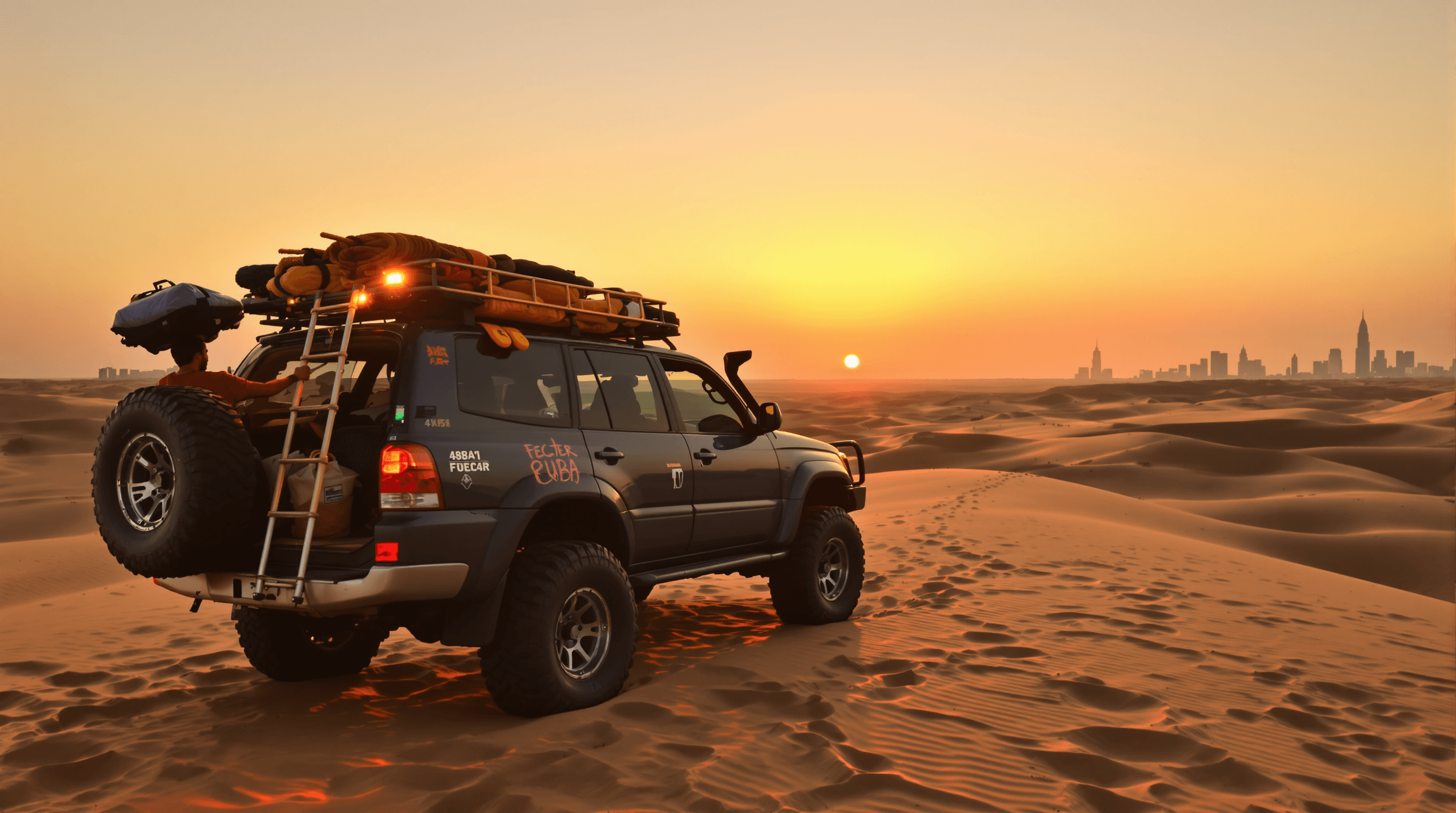
If you ask around about where to start off-roading near Dubai, someone will point you at Big Red. It's the big reddish dune you can't miss on the right as you drive out the E44 toward Hatta, and it's been the unofficial training ground for the city's off-roaders for years. The sand really does have that orange-red colour, and it glows at sunrise and sunset.
The reason it's so popular isn't that it's the best dune in the country — it isn't. It's that it's close, it's easy to find, and there's almost always someone else around. For a first taste of sand driving, being half an hour from the highway with other groups nearby beats being deep in unmarked desert on your own.
Getting there
Big Red sits right off the Dubai–Hatta road (E44), roughly southeast of the city. You genuinely can't miss it — it's a huge dune that rises right beside the tarmac, and there's a well-used pull-off area along that stretch with quad-bike rental stalls and parking on the firm sand at the base.
Drive straight down the highway, pull off where everyone else does, and you're there. No tricky navigation, no remote track to find. The hard-packed area at the bottom is fine for any 4WD; the soft stuff and the climbs start once you head up.
What it's actually like to drive
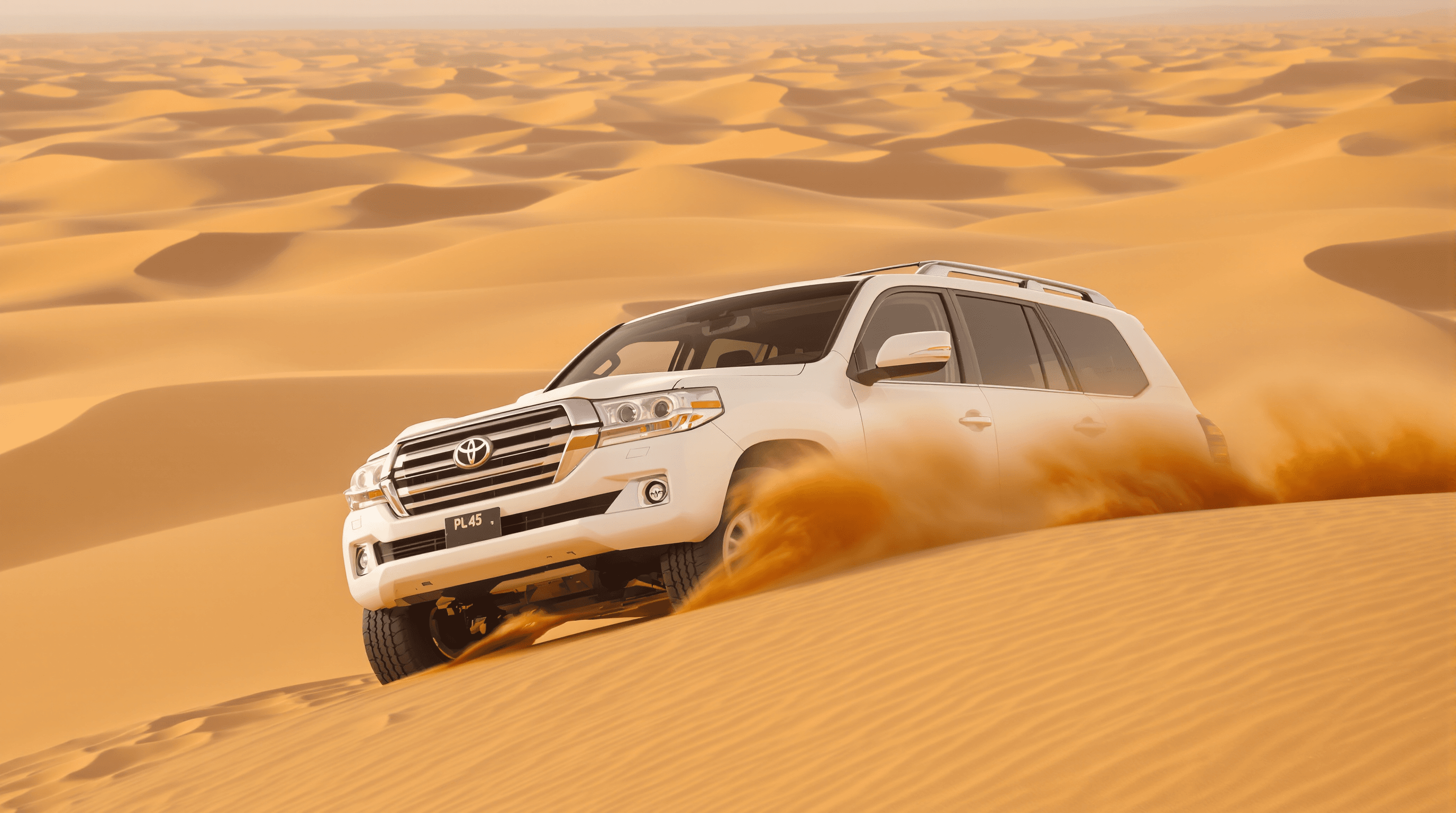
The thing that makes Big Red good for learning is that it offers a range in one spot. The lower, gentler slopes near the base let you get a feel for how the car behaves in soft sand without much consequence if you stall. The main face is steep and tall — climbing it cleanly is the local rite of passage, and plenty of people don't make it the first few tries. That's normal. You back down, let some more air out, pick a better line, and go again.
Where a lot of beginners come unstuck is treating it like a road. Sand rewards momentum and a light, steady throttle, not stabbing the accelerator. If you bog down on a climb, don't sit there spinning the wheels — that just digs you in. Roll back down in a straight line and try again with more speed and lower pressures.
A stock 4WD with low range handles the easier parts of Big Red fine. You don't need a modified rig to enjoy it. The steepest climbs reward experience and a properly set-up vehicle, but there's no need to throw yourself at the big face on day one.
Tyre pressure
The single most important thing you'll do here is let air out of your tyres. Dropping pressure spreads the contact patch and lets the tyre float over soft sand instead of digging in. Most people running on sand here drop well below road pressure — start conservative, see how the car floats, and air down further if you're still struggling for traction.
Bring a compressor (or know where one is) so you can air back up before you hit the tarmac again. Driving the highway home on sand pressures is a good way to ruin a tyre.
When to go
October through March is the season. The rest of the year it's drivable but brutally hot, and summer surface temperatures make midday sessions genuinely unpleasant and harder on both you and the car. Even in the cooler months, early morning is the sweet spot — the sand is firmer after the cool night, and you beat both the heat and the weekend crowds.
And it does get crowded. On a winter weekend Big Red is busy with cars, quad bikes and tour groups all sharing the same hill. Go on a weekday morning if you want space to practice without an audience.
Safety
The basics don't change just because Big Red is close to the road:
- Don't go alone. A second vehicle that can pull you out turns a stuck car from a problem into a five-minute delay.
- Carry recovery gear and know how to use it — at minimum a rated tow strap, shackles and something to dig with.
- Bring more water than you think you need.
- Phone coverage is patchy once you're off the highway, so don't rely on it as your only plan.
Big Red being beginner-friendly doesn't mean it's risk-free. People roll cars on that main face every season, usually by going up at an angle and losing it near the top. Keep your climbs straight, and if a line doesn't feel right, back off it.
Learning properly
You can learn a lot at Big Red just by watching, deflating your tyres, and putting in laps on the gentle slopes. But if you want to skip the worst beginner mistakes, a session with an instructor is worth it — they'll teach you recovery, line choice and how to read the sand far faster than trial and error. Our courses directory lists providers who run desert training near here, and the clubs listings are a good way to find a group to tag along with so you're never out there solo.
If you want the wider picture before your first trip, our desert driving safety guide covers gear and what to do when things go wrong.
A few common questions
Can a complete beginner drive Big Red? Yes, on the gentler lower slopes, with your tyres aired down and ideally someone experienced along. Leave the big main face until you've got a feel for the car in sand.
Do I need a modified vehicle? No. A stock 4WD with low range is fine for the easier parts. Modifications matter for the steepest climbs, not for getting started.
Is it free to visit? There's no entry fee for the dune itself — you just pull off the highway. Quad-bike rentals and the stalls at the base are separate.
Reviewed by experienced desert drivers. Our team personally visits operators and tests courses across the UAE.
Explore the Directory
Find off-road clubs, courses, garages and events across Dubai & UAE.
View Directory →