Moreeb Dune Liwa UAE 2026: Complete Off-Road Guide
Conquer the world's tallest sand dune at Moreeb Hill, Liwa. Essential guide to navigation, preparation, and safety for UAE's ultimate off-road challenge.

Moreeb Dune Liwa: The Ultimate Off-Road Challenge in the UAE
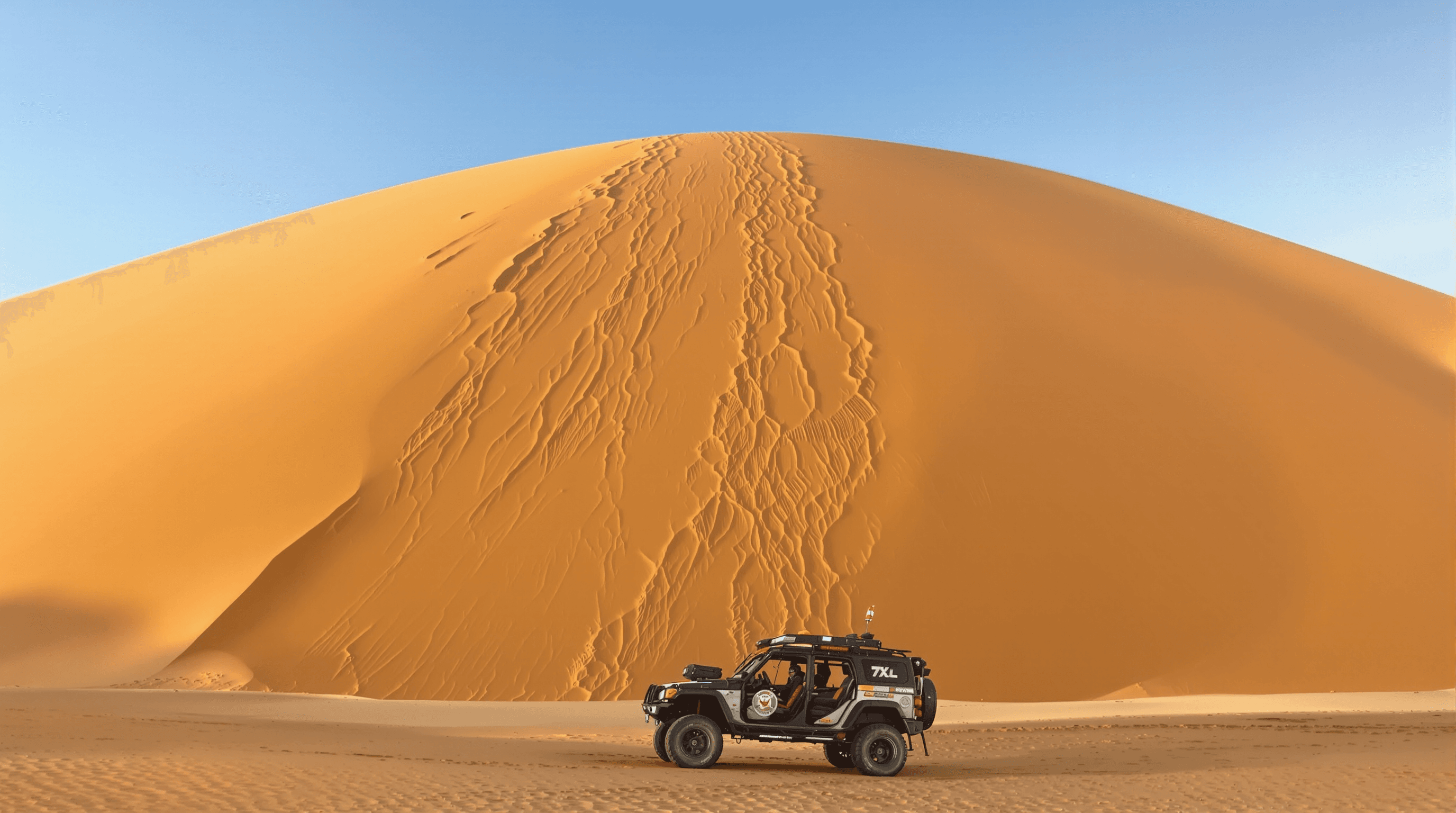
Moreeb Dune in the Liwa Desert stands as the world's tallest sand dune at 300 meters, offering the UAE's most challenging off-road experience. Located 230 kilometers southwest of Abu Dhabi, this massive sand mountain tests even the most experienced desert drivers with its 50-degree incline and shifting sand conditions.
The dune has become legendary among off-road enthusiasts, hosting international hill climb competitions and serving as a proving ground for modified 4x4 vehicles. Unlike the more accessible desert areas covered in our Big Red dune Dubai guide, Moreeb demands advanced skills, proper preparation, and specialized equipment.
For drivers ready to tackle this ultimate challenge, understanding the terrain, timing, and techniques becomes critical for both success and safety. Our desert driving course Dubai provides the foundation skills needed before attempting Moreeb's steep faces.
Location and Access to Moreeb Dune
Moreeb Dune sits within the Rub' al Khali (Empty Quarter) at coordinates 23.1167°N, 53.9833°E, approximately 43 kilometers from Liwa Oasis. The journey from Dubai requires 3.5 hours of highway driving followed by 45 minutes on desert tracks.
Primary access routes:
- E11 to E45: Main highway route via Tarif
- Liwa Road (E45): Direct access from Abu Dhabi (2.5 hours)
- Desert tracks: Multiple approach points from Liwa Oasis village
The final 15 kilometers involve soft sand driving, requiring deflated tires and 4WD engagement before reaching the dune's base. GPS coordinates become essential as mobile coverage drops significantly beyond Liwa village.
Key landmarks for navigation:
- Qasr Al Sarab Desert Resort (20km northeast)
- Liwa Date Festival grounds (seasonal marker)
- Moreeb Hill Competition area (permanent structures)
Most drivers combine Moreeb with broader Liwa desert off-road exploration, making it a multi-day adventure rather than a single-dune visit.
Climbing Techniques for Moreeb's Steep Face
The 50-degree incline requires momentum-based climbing with precise throttle control and optimal tire pressure. Successful ascents depend on choosing the right approach angle and maintaining steady power delivery without wheel spin.
Essential climbing technique:
- Approach speed: Build momentum from 200 meters back
- Tire pressure: 8-12 PSI for maximum sand contact
- Throttle control: Steady acceleration, avoid sudden inputs
- Line selection: Follow the fall line, avoid diagonal approaches
- Commitment: Once started, maintain momentum to avoid getting stuck mid-face
The dune's windward side offers better climbing conditions with firmer sand, while the leeward slope presents softer, more challenging conditions. Morning climbs benefit from overnight sand compaction, while afternoon attempts face looser surface conditions.
Power requirements by vehicle type:
| Vehicle Category | Minimum Power | Success Rate | Recommended Modifications |
|---|---|---|---|
| Stock SUV | 250hp | 15% | Tire pressure reduction only |
| Modified 4x4 | 350hp | 60% | Lift kit, performance tires |
| Competition Prep | 500hp+ | 90% | Full suspension, paddle tires |
Professional drivers recommend practicing on smaller dunes in areas like Sweihan desert before attempting Moreeb's full face.
Vehicle Requirements and Modifications
Moreeb Dune demands high-performance 4x4 vehicles with significant power-to-weight ratios and specialized sand driving equipment. Stock vehicles rarely complete full ascents without modifications tailored for extreme sand conditions.
Minimum vehicle specifications:
- Engine power: 300+ horsepower recommended
- Ground clearance: 250mm minimum
- Differential locks: Rear diff lock essential
- Cooling system: Upgraded radiator and oil coolers
- Fuel capacity: 100+ liter tank for extended desert driving
Popular vehicle choices include the Toyota Land Cruiser 300 (covered in our comprehensive review), Nissan Patrol Y62, and Ford Raptor with proper modifications. Each platform requires specific upgrades for optimal Moreeb performance.
Critical modifications for success:
- Suspension lift: 2-3 inches for approach angles
- Performance air intake: Prevent sand ingestion
- Skid plates: Protect undercarriage on steep descents
- Sand tires: Paddle or aggressive all-terrain patterns
- Recovery points: Front and rear rated for vehicle weight
Dubai's specialized off-road garages offer Moreeb-specific preparation packages, including dyno tuning and suspension setup for sand climbing.
Safety Protocols and Recovery Preparation
Moreeb's extreme terrain and remote location require comprehensive safety planning beyond standard desert driving precautions. The combination of steep angles, soft sand, and limited access creates unique risks requiring specialized preparation.
Essential safety equipment:
- Sand ladders: Minimum 2 sets per vehicle
- Winch: 12,000lb+ capacity with synthetic rope
- Recovery straps: Multiple lengths and capacities
- Communication: Satellite communicator or PLB
- Medical kit: Trauma supplies for serious injuries
The dune's rollover risk increases significantly above 30-meter height, where steep angles and side slopes create dangerous conditions. Professional instruction, like that offered in our courses directory, becomes invaluable for understanding safe approach limits.
Emergency procedures:
- Stuck vehicle: Signal convoy, begin systematic recovery
- Rollover situation: Evacuate uphill side immediately
- Medical emergency: Activate satellite beacon, prepare helicopter landing zone
- Vehicle breakdown: Establish shade, conserve water, signal for help
Recovery operations on Moreeb require uphill anchor points and specialized rigging techniques due to the extreme slope angles. Standard recovery methods often prove inadequate without proper training and equipment.
Best Times and Weather Conditions
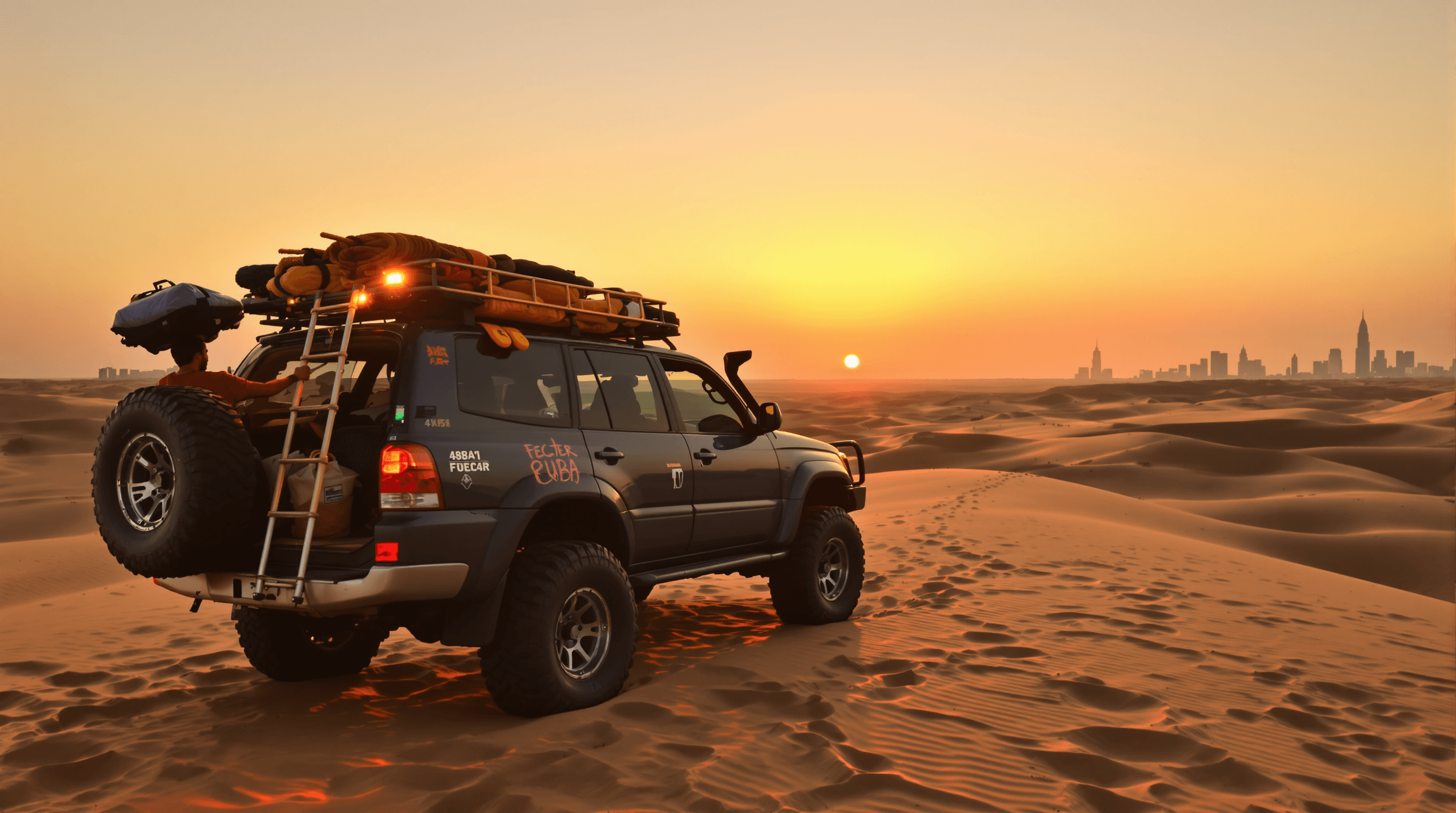
October through March provides optimal Moreeb climbing conditions with cooler temperatures and more stable sand conditions. Summer attempts (April-September) become extremely dangerous due to surface temperatures exceeding 65°C and increased vehicle stress.
Ideal climbing conditions:
- Temperature: Below 35°C ambient
- Wind: Light winds under 15 km/h
- Time of day: Early morning (6-10 AM)
- Sand moisture: Slight overnight moisture for firmer surface
- Visibility: Clear conditions with good contrast definition
The Liwa Date Festival (December-February) brings increased traffic and organized events, offering both spectacle and additional safety support. However, competition periods may restrict access to certain dune sections.
Monthly condition breakdown:
- December-February: Peak season, coolest temperatures, best sand
- March-April: Good conditions, increasing heat
- May-September: Extreme heat, dangerous surface temperatures
- October-November: Excellent conditions, post-summer recovery
Weather monitoring becomes critical as sandstorms can develop rapidly, creating zero visibility and dangerous driving conditions within minutes.
Competition Events and Spectating
The Moreeb Dune Festival hosts international hill climb competitions featuring purpose-built vehicles attempting speed records on the dune's steepest face. These events showcase extreme modifications and professional driving techniques while providing entertainment for thousands of spectators.
Annual competition highlights:
- International Hill Climb: Modified 4x4s and buggies
- Motorcycle climb: Specialized sand bikes
- Vintage vehicle class: Classic 4x4 demonstrations
- Women's competition: Female drivers category
- Junior events: Youth ATV competitions
Spectator areas provide safe viewing positions with organized parking and basic facilities. The competition demonstrates advanced techniques and vehicle capabilities that exceed normal recreational driving by significant margins.
Professional drivers achieve sub-30 second ascents using vehicles producing 800+ horsepower with specialized paddle tires and stripped interiors. These machines represent the pinnacle of sand climbing technology and technique.
Spectator information:
- Access: Organized shuttle service during events
- Facilities: Temporary food vendors and restrooms
- Parking: Designated areas away from competition zone
- Safety: Barriers and marshals control spectator access
The festival typically coincides with cooler winter months, making it an ideal time for recreational visits combined with world-class competition viewing.
Navigation and GPS Considerations
Remote desert navigation to Moreeb requires offline GPS systems and traditional compass backup due to unreliable mobile coverage beyond Liwa village. The shifting sand environment can obscure familiar landmarks and create navigation challenges for unprepared drivers.
Essential navigation tools:
- Offline GPS: Downloaded maps covering Empty Quarter region
- Compass: Magnetic compass for backup navigation
- Paper maps: Military grid reference system maps
- Waypoints: Pre-programmed coordinates for key locations
- Landmarks: Photo documentation of distinctive features
The approach to Moreeb involves multiple track options that change seasonally based on sand movement and vehicle traffic patterns. GPS coordinates for the main climbing face (23.1167°N, 53.9833°E) remain consistent, but approach routes vary significantly.
Critical waypoints for navigation:
- Liwa Oasis: 23.1333°N, 53.9667°E
- Moreeb base camp: 23.1150°N, 53.9850°E
- Emergency meeting point: 23.1200°N, 53.9800°E
- Fuel station (last): Liwa village center
Sand movement can relocate tracks by hundreds of meters between visits, making previously used routes impassable or dangerous. Experienced guides familiar with seasonal changes provide valuable navigation support for first-time visitors.
Group Planning and Convoy Requirements
Moreeb expeditions require minimum three-vehicle convoys for safety and recovery support, with each vehicle carrying specialized equipment and experienced crew members. Solo attempts violate basic desert safety protocols and create unnecessary rescue risks.
Convoy organization standards:
- Lead vehicle: Experienced navigator with communication equipment
- Sweep vehicle: Strongest recovery capability and medical supplies
- Support ratios: Maximum 2 novice crews per experienced team
- Communication: VHF radios on agreed frequency (typically 27.145 MHz)
Each team member requires specific role assignments including navigation, recovery operations, medical response, and mechanical support. Cross-training ensures backup capability if crew members become incapacitated.
Essential convoy equipment distribution:
- Recovery gear: Distributed across all vehicles
- Medical supplies: Comprehensive kit in sweep vehicle
- Tools and spares: Mechanical repair capability
- Communication: Multiple radios and emergency beacons
- Supplies: Water, food, and shelter for extended periods
Our off-road clubs Dubai directory includes groups regularly organizing Moreeb expeditions with experienced leaders and proper safety protocols.
Frequently Asked Questions
Can stock 4x4 vehicles climb Moreeb dune successfully? Stock vehicles have less than 20% success rate on full ascents due to insufficient power and ground clearance. Most stock attempts stall mid-climb, requiring difficult recovery operations on steep terrain.
What tire pressure works best for Moreeb climbing? Optimal pressure ranges from 8-12 PSI depending on vehicle weight and tire type. Lower pressures increase traction but risk tire damage on sharp sand edges and rocks near the base.
How dangerous is Moreeb compared to other UAE desert driving? Moreeb presents significantly higher risks including rollover potential, difficult recovery positions, and extreme remoteness. It requires advanced skills beyond typical desert driving covered in our desert driving safety UAE guide.
What's the best time of day to attempt climbing Moreeb? Early morning (6-9 AM) provides firmest sand conditions and coolest temperatures. Afternoon sand becomes loose and hot, reducing traction and increasing engine stress significantly.
Do I need special permits to drive on Moreeb dune? No permits required for recreational access, but competition events may restrict access during festival periods. Check local authorities for current restrictions before traveling.
How much fuel should I carry for a Moreeb trip? Plan for 150-200% normal consumption due to sand driving and multiple climbing attempts. Carry minimum 20 liters extra fuel beyond full tanks, with jerry can storage systems properly secured.
Reviewed by experienced desert drivers. Our team personally visits operators and tests courses across the UAE.
Explore the Directory
Find off-road clubs, courses, garages and events across Dubai & UAE.
View Directory →