Where to Go Off-Road Near Dubai
A practical rundown of the off-road spots close to Dubai — from easy desert near the city to the rocky mountain stuff — and what each one is actually like.

Where to Go Off-Road Near Dubai
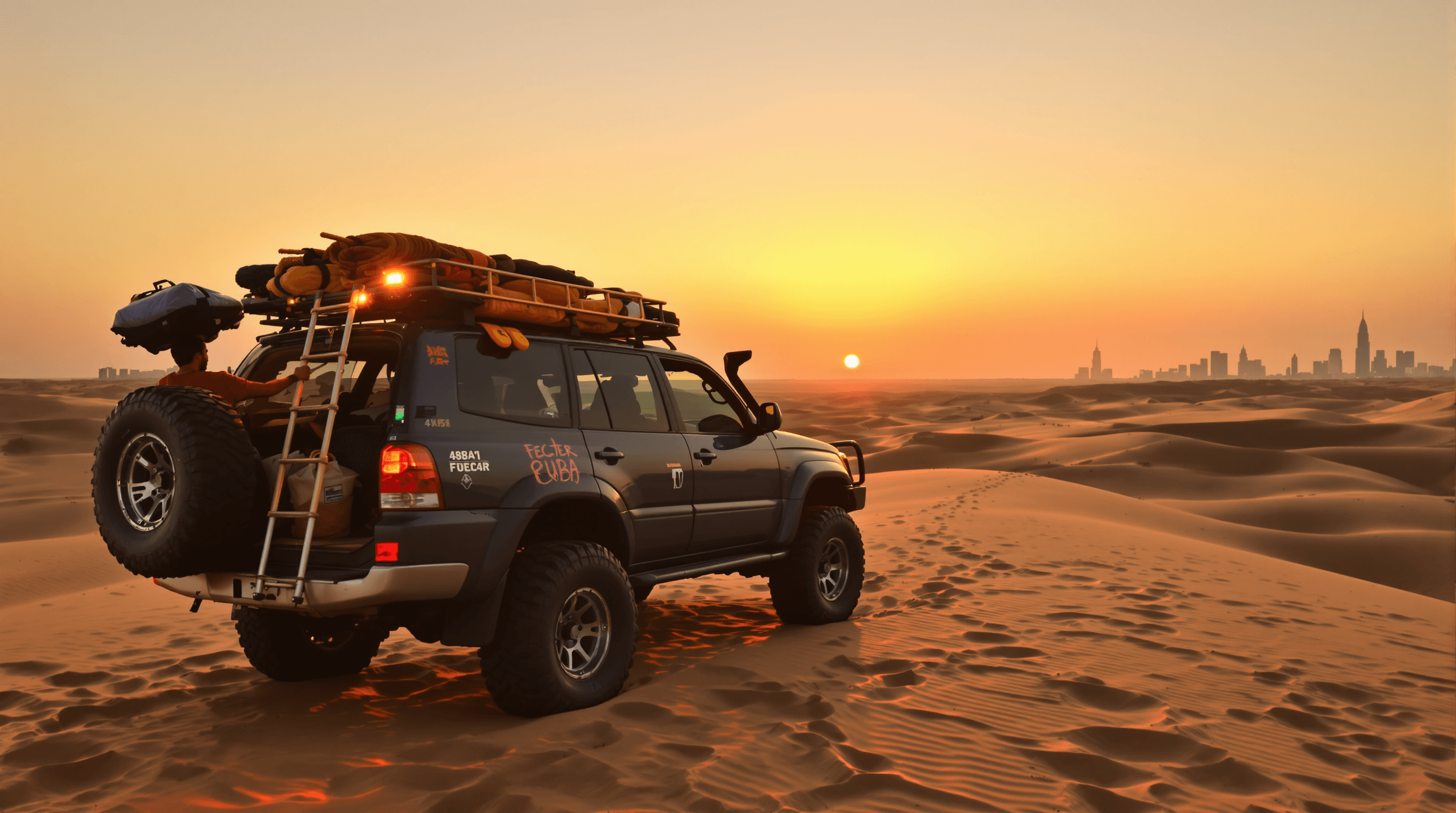
One of the underrated things about living in Dubai is how quickly you can be out of the city and onto sand. You don't need to plan a road trip — plenty of decent spots are inside an hour's drive, and the terrain changes enough between them that you can spend years working through it all. Soft red dunes one weekend, rocky mountain tracks the next.
This is a guide to the places most people end up driving, what each one is good for, and the honest version of when to go and what you'll need.
The closer desert spots
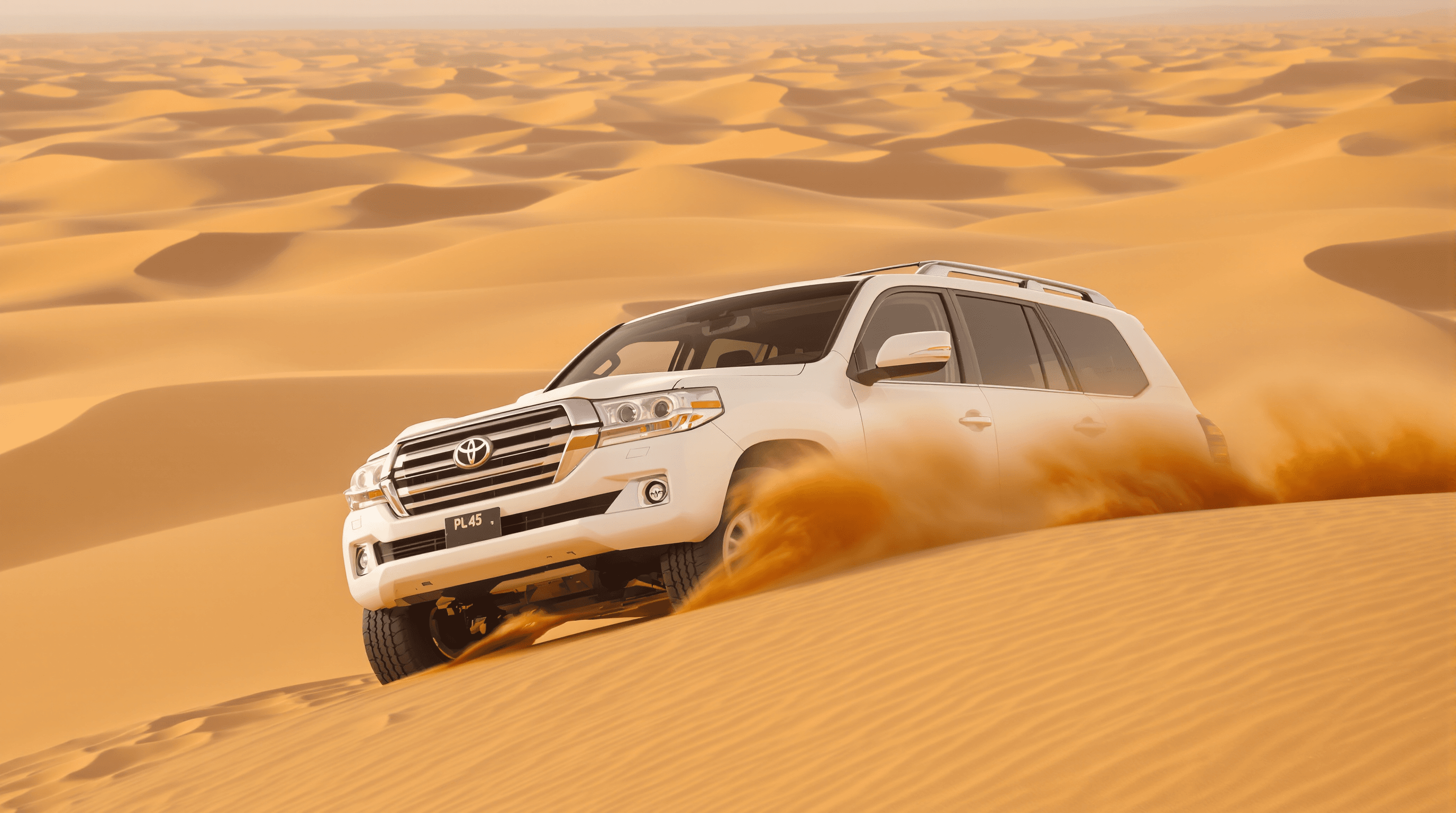
If you're new or you just want an easy run, start with the desert south and east of the city. Al Qudra is the default — it's close, it has gentle stuff for learning as well as steeper faces if you want to push it, and there's fuel and food nearby. It also gets busy, so it's a known quantity: if you get stuck, someone will be along shortly. That's exactly why instructors run beginner sessions there.
Big Red (Al Hamar), out past Lahbab on the way to Hatta, is the famous one — a big dune right by the road that draws crowds on weekends, especially quad-bike rental traffic. It's a good place to practise climbing a single big face and watching how others handle it, but don't expect solitude. The roadside areas are the busiest; the dunes further back from the road thin out.
Al Faya, over in Sharjah, is quieter and has a mix of sand colours and shapes that make it a favourite for photos. Facilities are limited, so go in already fuelled up and self-sufficient.
A general rule for all of these: the sand is softer and harder work in summer, firmer and more forgiving in the cooler months. The same dune that's an easy climb in January can be a recovery lesson in July.
The mountain and wadi side
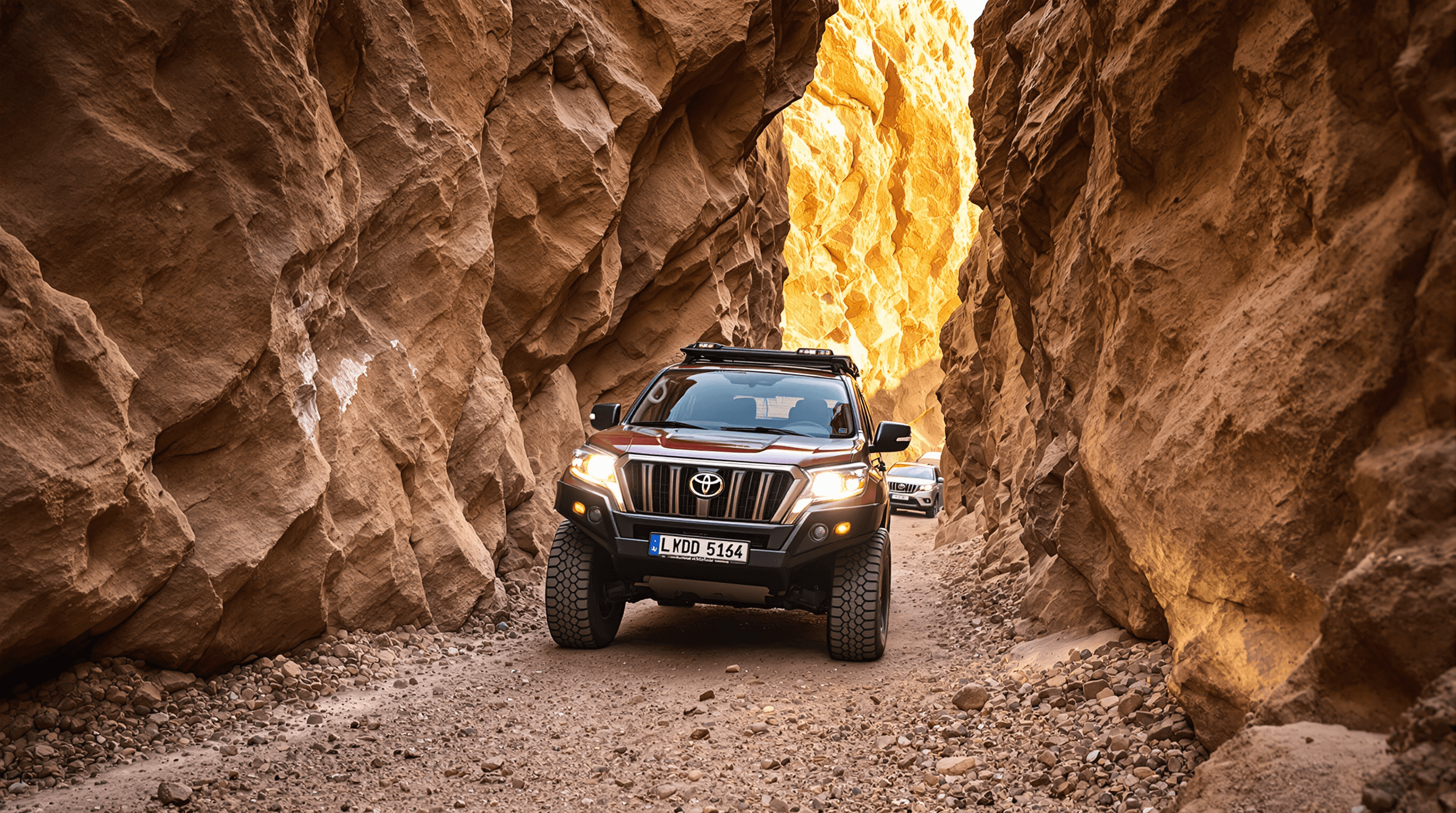
When you've got the sand sorted, the rocky stuff is a different game entirely. Fossil Rock (Jebel Maleihah, in Sharjah) is the usual step up — a mix of sand approach and rocky climbs with proper views from the top. It rewards low-range and a bit of patience, and it's the kind of place where ground clearance and good tyres start to matter more than power.
Hatta is the other direction altogether: hard-packed tracks, rock sections and water crossings up toward the mountains. The Hatta Dam area has easy, scenic routes that work for families, with tougher trails branching off into the hills. The water crossings depend on the season and recent rain — sometimes they're there, sometimes the wadi is bone dry — so it's worth checking conditions before you commit.
Wadi Shawka, up near Ras Al Khaimah, is further out but gives you a proper variety in one trip: desert, mountain climbs and wadi-floor driving through palm groves. It's a longer day, so treat it like one.
For the mountain and remote stuff, the basics actually matter: tell someone your route and when you'll be back, carry plenty of water, and don't assume help is close. Phone signal drops out in the wadis. If you're heading somewhere genuinely remote, our desert driving safety guide is worth a read first.
When to go
The cooler months, roughly November through March, are the good season — comfortable daytime temperatures, firmer sand, easy conditions for learning and recovery. The trade-off is crowds. Popular spots get packed on weekends, so an early start (before the heat and before everyone else) makes a real difference.
Summer is a different proposition. By mid-morning it's brutally hot, the sand is soft, and recovery is hard work in the heat. People do still drive in summer, but they go out at dawn, keep it short, and carry more water than they think they need. The shoulder months (April and October) sit in between, with the occasional windy, low-visibility day in open desert.
What you actually need
Genuine four-wheel drive with low-range is the baseline for sand. Some soft-roaders can scrape along on firm tracks in good conditions, but you don't want to learn the limits of an AWD crossover halfway up a dune. If you're not sure whether your vehicle is up to it, that's worth sorting out before you commit to soft sand.
The single most important thing — more than the vehicle, honestly — is dropping your tyre pressures for sand. Running road pressures on dunes is how beginners get stuck within minutes. Let them down before you drive, and carry a compressor so you can pump back up before you hit tarmac again.
Beyond that, once you start going off the beaten tracks you want recovery gear and the knowledge to use it: a set of recovery boards, a rated tow strap, properly rated shackles, and a shovel. Plenty of water for everyone in the vehicle. A basic tool kit. None of it is exotic — the garages directory lists shops that prep desert vehicles if you want a hand setting up.
Getting started
The fastest, safest way in is a proper course. A good instructor gets you through tyre pressures, reading sand, basic recovery and the unwritten convoy etiquette in a few hours, in controlled terrain you can come back to on your own. Most of the Dubai outfits run at Al Qudra for exactly that reason — you learn somewhere you'll actually return to. The courses directory lists who's operating.
You can self-teach if you're mechanically minded and patient: start on easy tracks in the cool season, always go with at least one other vehicle, and work on one thing per trip rather than trying everything at once. Joining a club is the middle path — regular drives, people who've done it for years, and backup when something goes wrong. However you do it, getting comfortable takes a good number of sessions across different conditions, not one big weekend.
A few common questions
What's the closest off-road spot to the city? Al Qudra is the usual answer — it's an easy run out via Emirates Road and has entry points for different skill levels, which is why so many people learn there.
Do I need a 4x4, or will an AWD do? For sand, you want real 4WD with low-range. AWD can manage firm, easy tracks in good conditions, but sand driving is where proper four-wheel drive earns its keep.
What do I do if I get stuck? Don't panic and don't floor it — spinning the wheels just digs you deeper. Drop your tyre pressures further, clear the sand from around the tyres, and use recovery boards under the driven wheels. Most of the time that's enough.
Reviewed by experienced desert drivers. Our team personally visits operators and tests courses across the UAE.
Explore the Directory
Find off-road clubs, courses, garages and events across Dubai & UAE.
View Directory →