Off-Roading in Ras Al Khaimah — What to Expect
A practical look at off-roading in Ras Al Khaimah: the mix of sand, gravel and mountain tracks, how it differs from Dubai's dunes, and what to prepare before you go.
Off-Roading in Ras Al Khaimah: What to Expect
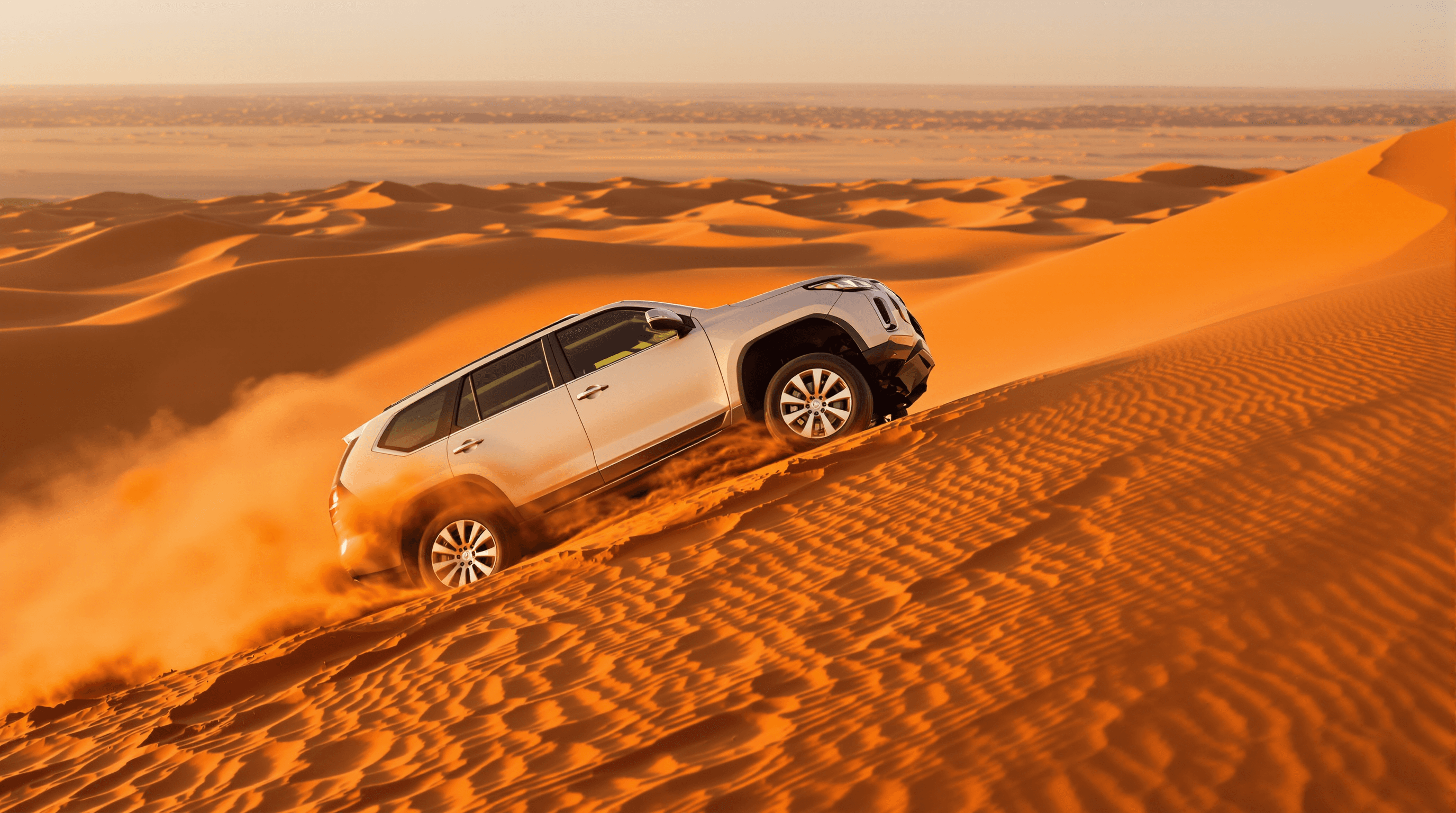
If you've only ever driven the soft dunes around Dubai, Ras Al Khaimah feels like a different sport. It's roughly 90 minutes north, and instead of an endless sand sea you get a bit of everything — coastal flats, gravel tracks, wadis and the rocky foothills of the Hajar Mountains. That variety is the appeal, but it also means you can't just air down to your usual dune pressure and assume you're sorted.
This isn't a "best secret routes" listicle. RAK's better tracks tend to be ones you learn from people who already know the area, and the terrain near the Hajar range and the Oman border can change fast. What follows is what's worth knowing before you point the car north.
The terrain is mixed, and that changes everything
The single most useful thing to understand about RAK is that you're rarely on one surface for long. You'll move from firm coastal sand to loose gravel to rock in the space of a single run. That has a few practical knock-on effects.
On sand, RAK's surfaces are often firmer than the soft stuff at Liwa or Al Qudra, so you don't always need to drop pressures as low. Air down for the soft sections, but be ready to think about reinflating before you hit long gravel or rock, where very low pressure just chews up your sidewalls. A compressor on board is close to essential here for exactly that reason — see our notes on running an air compressor for desert use.
On rock and in the wadis, ground clearance and your approach and departure angles matter far more than power. Limestone shelves and dry riverbed crossings will catch an underbody long before they trouble the engine. This is where stock isn't always enough — not because you need lift, but because you need protection (more on that below).
Gear: a few things you don't always pack for Dubai
Most of your usual desert kit still applies — recovery boards, a snatch strap, shackles, a decent first-aid kit. A couple of additions are worth thinking about specifically for RAK:
- Tyre repair gear. Sharp rock causes punctures that soft sand never will. Carry plugs, spare valve cores and the tools to use them. A slow leak miles from anywhere is a bad day.
- Underbody protection. Skid plates and rock sliders earn their keep here. The same hits that scratch paint in the dunes can puncture a sump on rock.
- Proper navigation. GPS and phone signal get patchy in deeper wadis and near the mountains, so download offline maps before you set out rather than relying on coverage. Our guide to offline maps in the desert covers the basics.
If you're new to this kind of mixed driving, the mountain side of RAK rewards a bit of training rather than learning the hard way on a limestone shelf. A foundation off-road course gets you the fundamentals; the rest comes from going out with people who know the area.
Border proximity is a real consideration
This is the part that catches people out. Several popular tracks in northern RAK run close to — or across — the Oman border, sometimes without any obvious marker on the ground. Carry passports and your vehicle papers, know roughly where the line is on your route, and don't assume an unmarked track stays inside the UAE. It's not worth an accidental crossing.
Safety and timing
Two things are worth flagging that differ from open-desert driving:
Winter rain can bring flash flooding to the wadis. A dry riverbed is a dry riverbed right up until it isn't, and water moves fast through narrow mountain channels. If there's been rain in the hills, stay out of the wadis.
Rescue access is slower here. On open sand a stuck car is an inconvenience; in a deep wadi it can be genuinely remote. Travel with at least one other vehicle, tell someone your route and expected return, and don't push into technical terrain alone. The general principles in our desert driving safety guide all apply, with extra weight on self-recovery because help is further away.
As everywhere in the UAE, the comfortable season is roughly October through March. Start early — getting the harder sections done before the midday heat is easier on both you and the car's cooling system.
Do you need to modify the car?
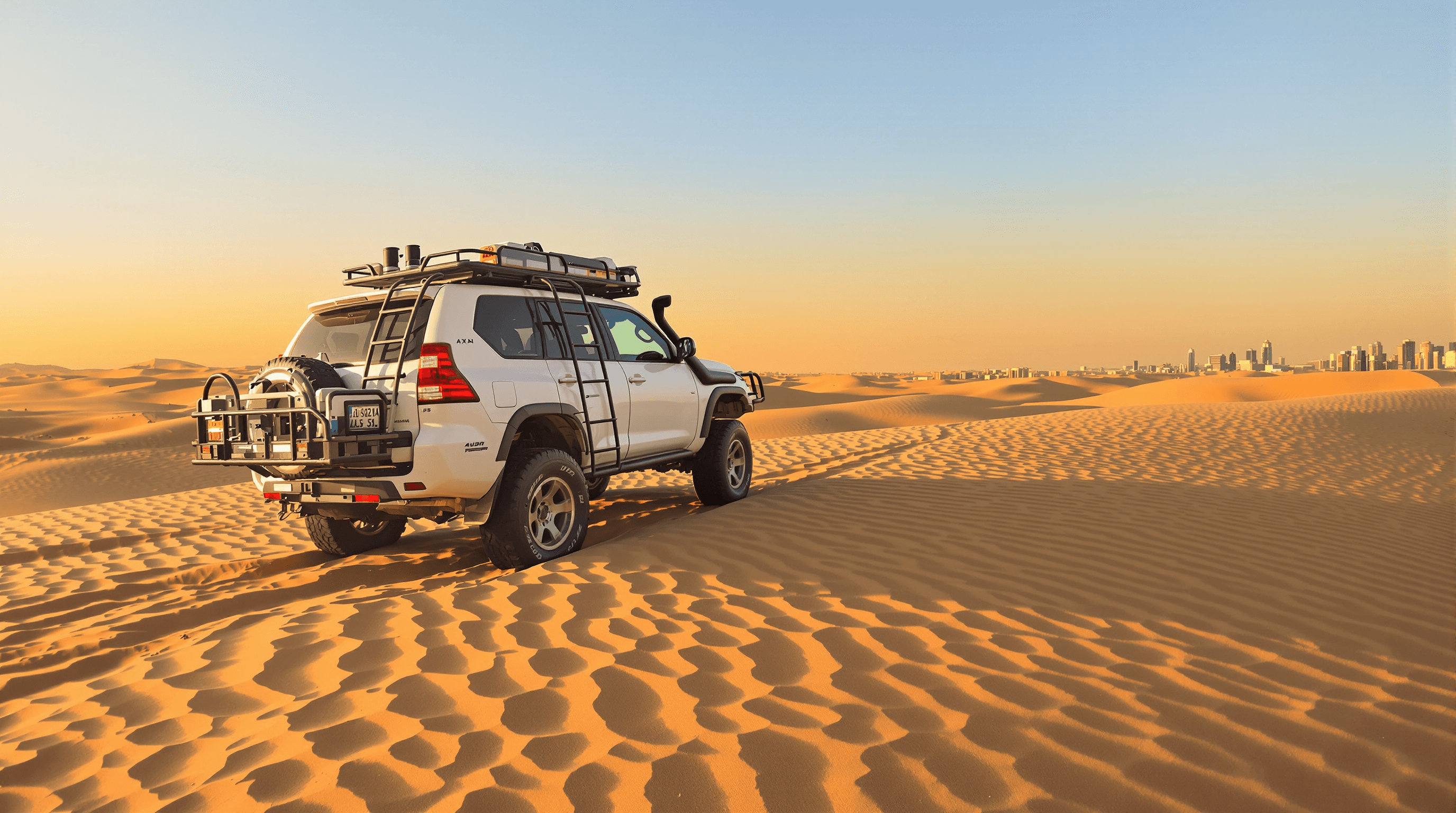
Mostly, no. A capable stock 4WD — a Land Cruiser, a Patrol, a Prado — handles the bulk of RAK's tracks fine with the right tyres and a driver who knows what they're doing. The mixed terrain actually favours a balanced setup over a car built purely for dunes or purely for rock crawling.
If you are going to spend money, spend it on protection before performance. Skid plates, rock sliders and decent recovery points do more to keep you moving in RAK than a big lift or extra travel. If you want a setup dialled in for this kind of terrain, it's worth talking to a workshop that actually knows the area — our garages directory is a starting point.
A few common questions
When's the best time to go? October through March. Comfortable daytime temperatures and lower rain risk, though if it has rained recently in the mountains, give the wadis a miss.
Can a beginner go to RAK? Better to start on the easier coastal and gravel sections, ideally with a group who know the routes, and get some basic training under your belt first. The mountain terrain is less forgiving than open dunes if something goes wrong.
Do I need permits? Most established tracks don't require one, but routes near the Oman border or protected areas can be restricted. Carry registration, insurance and passports, and don't drive into areas you're not sure about.
Reviewed by experienced desert drivers. Our team personally visits operators and tests courses across the UAE.
Explore the Directory
Find off-road clubs, courses, garages and events across Dubai & UAE.
View Directory →