Desert Driving Checklist UAE 2024: Complete Safety Guide
Essential desert driving checklist for UAE off-roaders. Pre-trip inspections, safety gear, and emergency protocols for safe dune driving in Dubai and Abu Dhabi.
Desert Driving Checklist UAE 2024: Complete Safety Guide
Desert driving in the UAE requires meticulous preparation and the right safety protocols to ensure successful off-road adventures. This comprehensive desert driving checklist covers everything from pre-departure vehicle inspections to emergency gear requirements, specifically designed for UAE conditions where summer temperatures exceed 45°C and rescue services may be hours away.
Whether you're planning a weekend trip to Al Qudra, exploring the challenging dunes of Liwa, or joining organized expeditions through our courses directory, following a systematic checklist prevents breakdowns and ensures your safety in the UAE's harsh desert environment.
Pre-Departure Vehicle Inspection
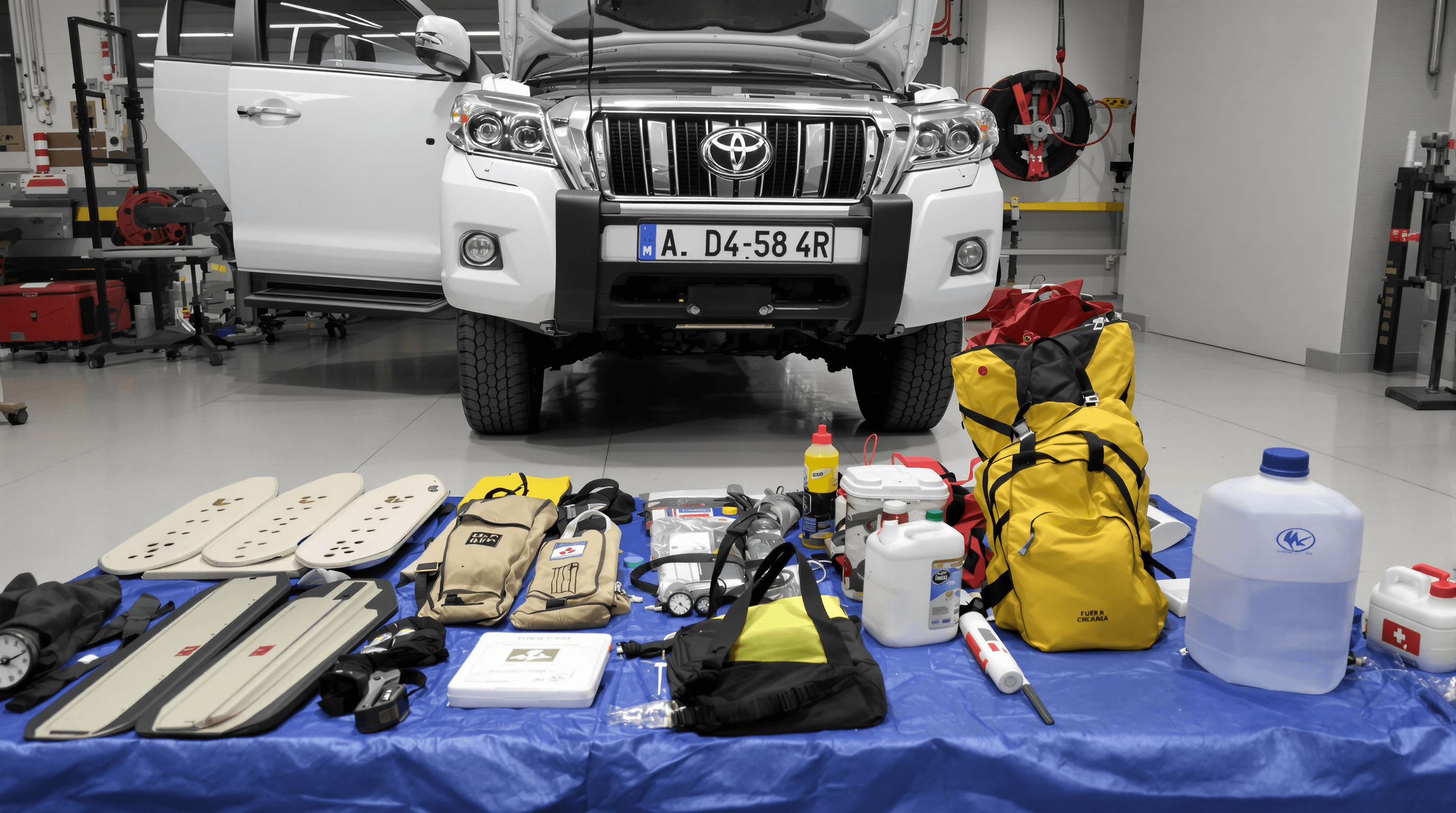
Your vehicle inspection must be completed 24-48 hours before departure, allowing time to address any issues discovered. Start with fluid levels: engine oil should be within the upper quarter of the dipstick range, coolant reservoir filled to maximum, brake fluid clear and at proper levels, and power steering fluid topped up.
Tyre condition requires special attention for desert driving. Check tyre pressure when cold - typically 32-35 PSI for highway driving to your deflation point. Inspect sidewalls for cuts, bulges, or embedded objects that could cause failure when running at reduced pressure. Tread depth should exceed 4mm across the entire surface, with even wear patterns indicating proper alignment.
Battery terminals must be clean and tight, with no corrosion visible. Test battery voltage with engine off (should read 12.6V minimum) and under load (above 12V with headlights and air conditioning running). Carry battery terminal cleaner and protection spray in your tool kit.
• Engine oil: Upper 25% of dipstick range, changed within last 5,000km • Coolant: Maximum level, 50/50 antifreeze mix for UAE conditions • Brake fluid: Clear amber color, no moisture contamination • Power steering: Proper level, no leaks at reservoir or lines • Windshield washer: Full reservoir with desert-grade cleaner
Essential Safety Equipment
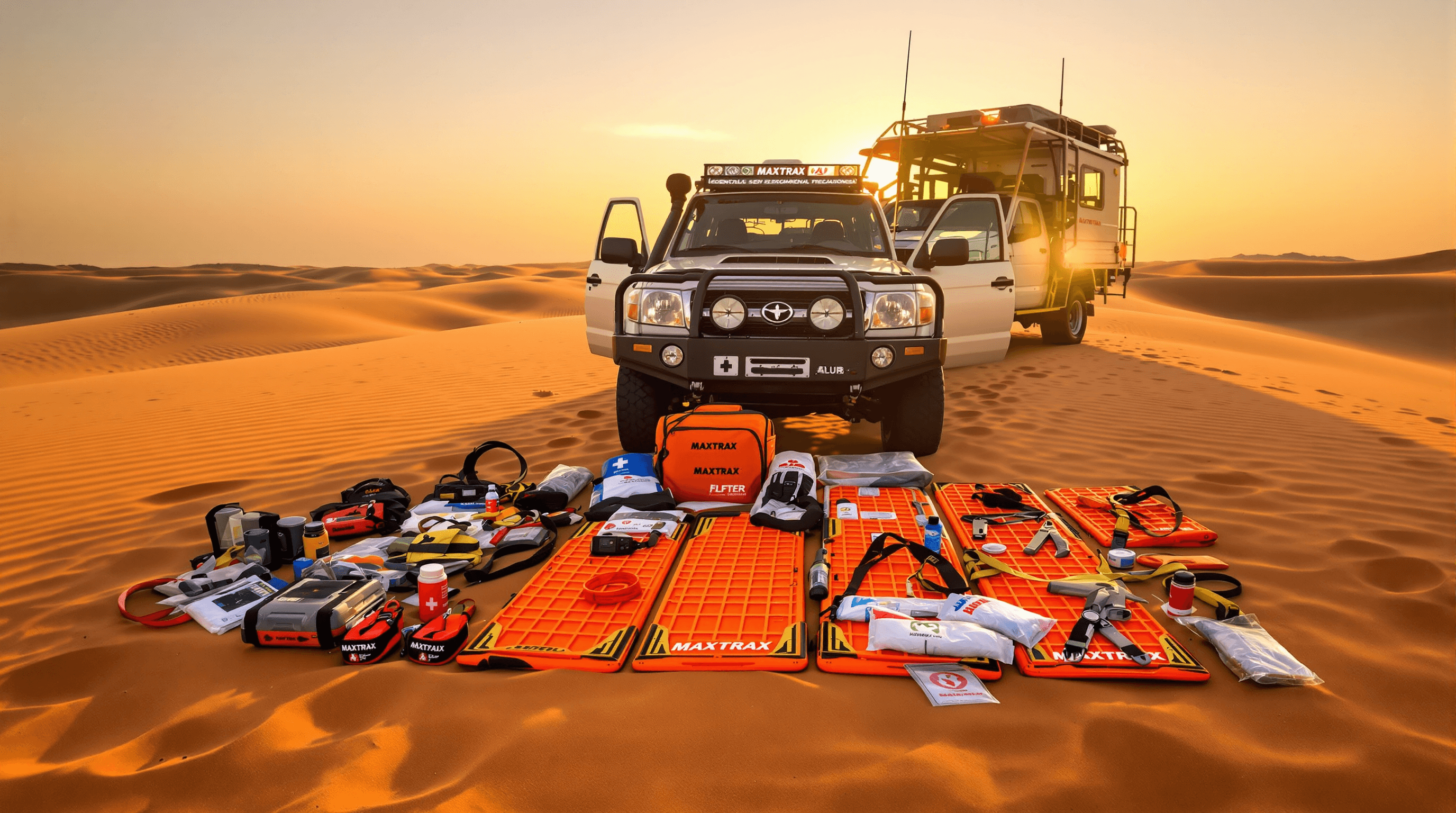
Recovery gear forms the foundation of your desert safety equipment, with specific items required for UAE sand conditions. Sand ladders or MaxTrax are mandatory - carry at least two recovery boards rated for your vehicle's weight. A proper recovery strap (minimum 8,000kg rating) with soft shackles prevents damage during vehicle extraction.
Communication equipment ensures you can summon help when needed. Satellite communicators like Garmin inReach provide two-way messaging and GPS coordinates to emergency services. Mobile phone coverage extends to most popular UAE desert areas, but carry a portable charger or dual battery setup for extended trips.
First aid supplies must address heat-related injuries and trauma from accidents. Include instant cold packs, electrolyte replacement tablets, burn gel for exhaust or metal contact burns, and comprehensive wound care supplies. Update supplies every 6 months and ensure all drivers know basic first aid procedures.
| Essential Safety Item | Minimum Specification | UAE-Specific Notes |
|---|---|---|
| Recovery Boards | 2 pieces, vehicle weight rated | MaxTrax preferred for sand |
| Recovery Strap | 8,000kg minimum breaking strength | Kinetic straps for stuck vehicles |
| Satellite Communicator | Two-way messaging capability | Garmin inReach or similar device |
| First Aid Kit | 4WD-specific trauma kit | Include heat exhaustion treatment |
| Fire Extinguisher | 1kg dry powder, vehicle mounted | Check pressure gauge monthly |
Navigation and Communication Setup
GPS navigation in the UAE desert requires redundant systems and offline capabilities. Download detailed topographic maps for your planned route using apps like Gaia GPS or offline mapping solutions. Mark key waypoints including fuel stops, emergency exits, and checkpoint locations before departure.
Emergency contact protocols should be established with reliable personnel who know your planned route and expected return time. Provide GPS coordinates for your destination, planned stops, and alternative routes. Schedule check-in times every 2-4 hours depending on remoteness.
Coordinate systems in the UAE use UTM Zone 40N for northern emirates and Zone 39N for western regions. Ensure all navigation devices use the same datum (WGS84) to prevent coordinate confusion during emergency situations. Practice using backup navigation methods including compass bearings and landmark recognition.
Communication range testing should be completed before entering remote areas. Mobile towers provide coverage along major highways and popular destinations like Al Marmoom and Big Red, but signal strength degrades rapidly in mountainous terrain near Fujairah and Ras Al Khaimah.
Water and Food Provisions
Water requirements in UAE desert conditions exceed normal consumption due to extreme heat and physical exertion. Calculate minimum 4 liters per person per day for moderate activity, increasing to 6-8 liters for strenuous activities or summer driving. Store water in insulated containers and distribute across multiple locations in your vehicle.
Emergency food supplies should require no preparation and have extended shelf life in high temperatures. Energy bars, nuts, dried fruits, and canned goods provide necessary calories without spoilage risk. Avoid chocolate, dairy products, and items requiring refrigeration that become unsafe quickly in desert heat.
Electrolyte replacement becomes critical during extended desert exposure. Pack sports drink powder, salt tablets, or electrolyte solutions to replace minerals lost through sweating. Symptoms of electrolyte imbalance include muscle cramps, dizziness, and fatigue that can compromise driving ability.
• Individual water: 4L minimum per person per day • Emergency reserve: Additional 2L per person for unexpected delays • Electrolyte supplements: Sport drink powder or salt tablets • Non-perishable food: 48-hour supply requiring no cooking • Cooler management: Ice packs replaced every 4-6 hours in summer
Fuel and Fluid Management
Fuel consumption increases significantly during desert driving due to sand resistance, air conditioning load, and lower tyre pressures. Plan for 30-50% higher consumption than highway driving, particularly when navigating soft sand or steep dunes. Fill your main tank and carry additional fuel in approved containers.
Reserve fuel calculations must account for detours, getting stuck, and emergency evacuation routes. Carry minimum 20-40 liters additional fuel depending on your vehicle's consumption and planned distance. Metal jerry cans withstand desert conditions better than plastic containers that can fail in extreme heat.
Engine oil consumption may increase due to sustained high RPM operation and extreme temperatures. Check oil levels daily on multi-day trips and carry 2-4 liters additional oil matching your vehicle's specification. Monitor coolant levels closely as cooling system stress increases dramatically in desert conditions.
Brake fluid requires attention during mountain descents common in areas like Jebel Jais and Hatta. Extended braking generates heat that can boil contaminated brake fluid, causing brake failure. Ensure fluid is clear and within service intervals.
Emergency Procedures and Protocols
Vehicle breakdown procedures require immediate assessment of safety versus repair options. Move to shade if available, activate hazard lights, and deploy emergency triangles or markers. Attempt repairs only if you have proper tools and knowledge - incorrect repairs can worsen problems or create safety hazards.
Heat emergency recognition saves lives in UAE desert conditions where temperatures inside vehicles can exceed 70°C within minutes. Symptoms include dizziness, nausea, rapid heartbeat, and confusion. Move affected persons to shade immediately, remove excess clothing, and provide water if conscious.
Emergency signaling methods must work in areas without mobile coverage. Signal mirrors reflect sunlight up to 50km in clear conditions. Ground signals using bright fabric or vehicle panels create visible markers for aircraft. Smoke signals work during daylight hours but require fire safety precautions.
Search and rescue coordination in the UAE involves multiple agencies including Dubai Police Air Wing, Abu Dhabi Aviation, and National Search and Rescue Center. Provide precise GPS coordinates, vehicle description, number of people, and medical condition when requesting assistance.
Vehicle fire procedures require immediate action due to rapid fire spread. Turn off engine, exit vehicle quickly, and move upwind from flames. Use fire extinguisher on small fires but evacuate for fuel or electrical fires. Remove persons and valuable items if safe to do so.
Weather and Timing Considerations
Weather monitoring becomes critical for UAE desert safety, particularly during winter off-road season when flash flooding can occur in wadis and low-lying areas. Check forecasts 24-48 hours before departure, monitoring temperature extremes, wind speeds, and precipitation probability.
Summer driving restrictions apply from May through September when afternoon temperatures exceed safe operating limits for both vehicles and humans. Plan departures before sunrise, seek shade during peak hours (10am-4pm), and carry extra cooling capacity including wet towels and cooling vests.
Sandstorm warnings require immediate route modification or trip cancellation. Visibility can drop to zero within minutes, making navigation impossible and creating respiratory hazards. Monitor UAE National Center of Meteorology alerts and local weather apps for current conditions.
Wind speed affects vehicle stability on exposed dune crests and during high-speed desert sections. Sustained winds above 40km/h create challenging driving conditions, while gusts above 60km/h can cause control loss, particularly in top-heavy vehicles with roof racks or roof tents.
Frequently Asked Questions
What's the minimum safety gear required for desert driving in the UAE? Every desert trip requires recovery boards, tow strap, first aid kit, extra water (4L per person minimum), emergency food, fire extinguisher, and communication device. Add satellite communicator for remote areas without mobile coverage.
How much extra fuel should I carry for UAE desert driving? Carry 30-50% additional fuel beyond your planned consumption, typically 20-40 liters in approved containers. Desert driving increases fuel consumption due to sand resistance, air conditioning, and potential detours or recovery situations.
What should I do if my vehicle breaks down in the desert? Move to shade immediately, activate hazard lights, and assess the situation. Contact emergency services with GPS coordinates if you have communication. Attempt repairs only if you have proper tools and knowledge - stay with your vehicle for rescue.
When is it unsafe to drive in the UAE desert due to weather? Avoid desert driving during sandstorms (zero visibility), summer midday hours (10am-4pm May-September), or when flash flood warnings are active for wadi areas. Monitor UAE National Center of Meteorology for current conditions.
How often should I check my vehicle during a desert trip? Inspect fluid levels, tyre pressure, and temperature gauges every 2-3 hours or 100km. Check for leaks, unusual noises, or warning lights immediately. Daily inspections are mandatory on multi-day trips before starting each day's driving.
What emergency contact information should I provide before departing? Give reliable contacts your planned route with GPS coordinates, departure/return times, vehicle description, and participant list. Establish check-in schedule every 2-4 hours depending on remoteness and include emergency service numbers for your destination area.
Reviewed by experienced desert drivers. Our team personally visits operators and tests courses across the UAE.
Explore the Directory
Find off-road clubs, courses, garages and events across Dubai & UAE.
View Directory →